<?xml version="1.0" encoding="UTF-8"?>
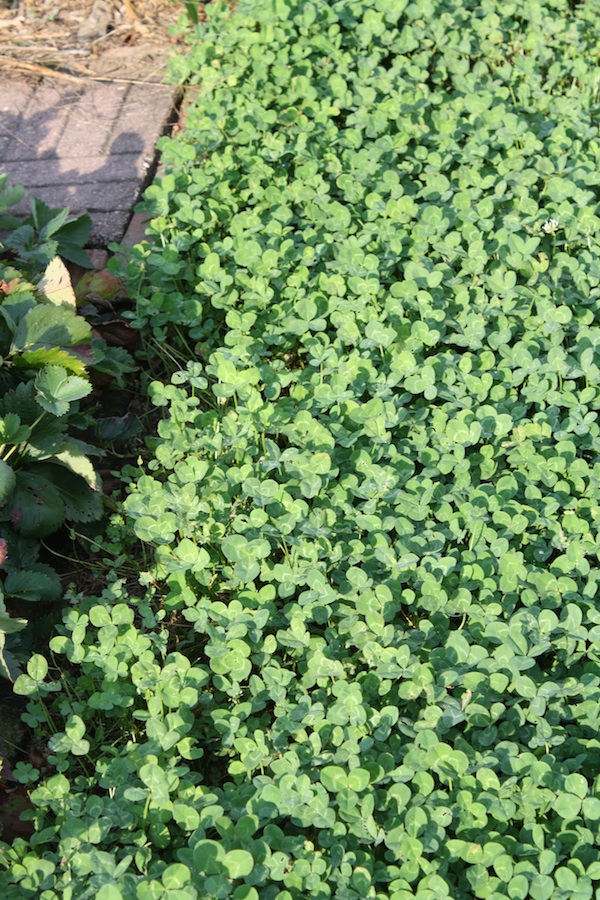
<!--Generated by Squarespace V5 Site Server v5.13.594-SNAPSHOT-1 (http://www.squarespace.com) on Sun, 25 Oct 2026 00:16:46 GMT--><rdf:RDF xmlns:rdf="http://www.w3.org/1999/02/22-rdf-syntax-ns#" xmlns:rss="http://purl.org/rss/1.0/" xmlns:dc="http://purl.org/dc/elements/1.1/" xmlns:sy="http://purl.org/rss/1.0/modules/syndication/" xmlns:admin="http://webns.net/mvcb/" xmlns:content="http://purl.org/rss/1.0/modules/content/" xmlns:cc="http://web.resource.org/cc/"><rss:channel rdf:about="/the-daily-broadfork/"><rss:title>The Daily Broadfork</rss:title><rss:link>/the-daily-broadfork/</rss:link><rss:description></rss:description><dc:language>en-US</dc:language><dc:date>2026-10-25T00:16:46Z</dc:date><admin:generatorAgent rdf:resource="http://www.squarespace.com/">Squarespace V5 Site Server v5.13.594-SNAPSHOT-1 (http://www.squarespace.com)</admin:generatorAgent><rss:items><rdf:Seq><rdf:li rdf:resource="/the-daily-broadfork/2013/4/26/walkways-in-the-farm-and-garden-dutch-white-clover.html"/><rdf:li rdf:resource="/the-daily-broadfork/2013/3/20/spring-has-sprung-the-year-ahead.html"/><rdf:li rdf:resource="/the-daily-broadfork/2012/9/28/in-defense-of-okra.html"/><rdf:li rdf:resource="/the-daily-broadfork/2012/8/26/the-natural-medicine-cabinet-elderberries-for-immune-support.html"/><rdf:li rdf:resource="/the-daily-broadfork/2012/8/11/an-afternoon-with-food-legend-joan-gussow.html"/><rdf:li rdf:resource="/the-daily-broadfork/2012/6/1/growing-food-to-feed-your-baby.html"/><rdf:li rdf:resource="/the-daily-broadfork/2012/5/28/reclaiming-your-own-locust-trees-for-use.html"/><rdf:li rdf:resource="/the-daily-broadfork/2012/2/12/biochar-101.html"/><rdf:li rdf:resource="/the-daily-broadfork/2011/12/4/organic-yuletide-the-no-pesticide-tree.html"/><rdf:li rdf:resource="/the-daily-broadfork/2011/11/3/what-survives-after-a-freak-snow-storm-in-october.html"/></rdf:Seq></rss:items></rss:channel><rss:item rdf:about="/the-daily-broadfork/2013/4/26/walkways-in-the-farm-and-garden-dutch-white-clover.html"><rss:title>Walkways in the farm and garden: Dutch White Clover</rss:title><rss:link>/the-daily-broadfork/2013/4/26/walkways-in-the-farm-and-garden-dutch-white-clover.html</rss:link><dc:creator>Pam</dc:creator><dc:date>2013-04-26T12:30:41Z</dc:date><dc:subject>Dutch white clover Organic gardening Permaculture Soil Management joan gussow</dc:subject><content:encoded><![CDATA[<p><span class="full-image-float-left ssNonEditable"><span><img style="width: 400px;" src="/storage/1.jpg" alt="" /></span></span>After the last few super rainy seasons our farm walkways between the raised beds have gotten a beating.&nbsp; Where we had originally planned to have wood chips, torrential rains have managed to wash them away to the bottem level and on top of that, eroding the pathways as well.&nbsp; Since then, we've been trying to figure out how to solve this problem assuming that extreme weather patterns will continue.&nbsp; This season, inspired by <a href="/the-daily-broadfork/2012/8/11/an-afternoon-with-food-legend-joan-gussow.html">Joan Gussow's garden</a>, we've decided to plant dutch white clover inbetween all the raised beds.&nbsp; You've seen dutch white clover before: it's typically in non-chemically treated lawns (along with dandelions) and produces a white flower if left to grow.&nbsp; We needed something that has mutiple functions.&nbsp; It needed to be:</p>
<p>1) steppable and tolerate, at times, high traffic conditions</p>
<p>2) provide erosion control</p>
<p>3) benficial to the farm by producing nitrogen and attracting beneficial insects and be</p>
<p>4) asthetically pleasing</p>
<p>Because this serve multiple functions, it is considered a permaculture plant.&nbsp; Sounds great?&nbsp; We hope so!</p>
<p>&nbsp;</p>
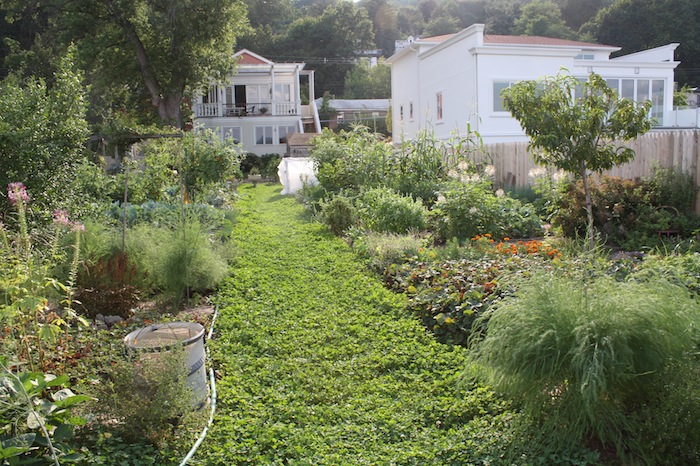
<p>Here is a snapshot from Joan's garden...she told us the trick with planting these is to be very vigorous in pulling out competing weeds in the beginnng.&nbsp;</p>
<p>&nbsp;</p>
<p><span class="full-image-block ssNonEditable"><span><img src="/storage/IMG_4348.jpg" alt="" /></span></span></p>]]></content:encoded></rss:item><rss:item rdf:about="/the-daily-broadfork/2013/3/20/spring-has-sprung-the-year-ahead.html"><rss:title>Spring Has Sprung: The Year Ahead</rss:title><rss:link>/the-daily-broadfork/2013/3/20/spring-has-sprung-the-year-ahead.html</rss:link><dc:creator>Pam</dc:creator><dc:date>2013-03-20T18:34:59Z</dc:date><dc:subject>Greenhouse Growing Livestock Nutrient Density Growing Organic Pest Control Organic gardening ameraucana artichokes bearss lime chickens dwarf citrus four wind growers greenhouse kaffir lime meyer lemon plymouth barred rock trovita orange</dc:subject><content:encoded><![CDATA[<p><span class="full-image-float-left ssNonEditable"><span><img style="width: 400px;" src="/storage/IMG_2043.jpg" alt="" /></span></span>Well, this isn't what you would expect for the second day of spring.&nbsp; Forecast calls for even more snow today and tomorrow.&nbsp; Though St. Patrick's day is the usual signal for us to get the peas into the ground, snow on the very last day of winter has deferred our plans giving us a little more time to plan.</p>
<p>This year we have decided to forego our seedling sales at the farmers markets and local plant sales and concentrate efforts on really perfecting things on our micro-farm.&nbsp; It's a bittersweet decision.&nbsp; We are relieved that the hard work that starts from February and ends around Memorial Day will come to an end but we are sad at losing that seasonal connection we have with our community.&nbsp; We've already gotten so many emails from people who have grown our plants in the previous seasons, wondering if we'll be doing them again.&nbsp; Marie from Nyack told us that she was only able to grow a certain Italian eggplant with our seedlings because of their strength and vitality; prior to that she had tried many times and failed.&nbsp; This makes me a bit sad, but with a toddler, I have the pull the reigns in and prioritize!</p>
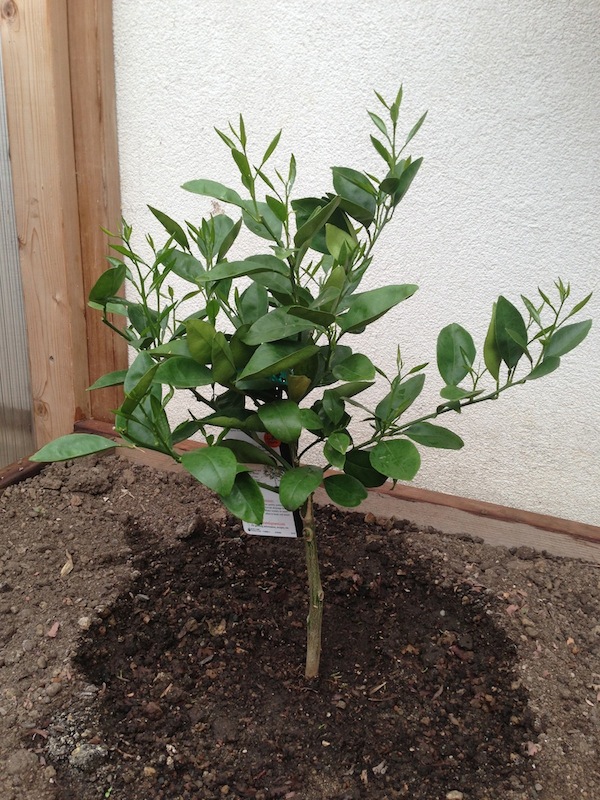
<p>So the key words for this season are "simplicty and abundance".&nbsp; With that in mind, we're opting for less maintenance and more permenance. For example, we made our greenhouse just a place for dwarf citruses: Sweet navel orange called "Trovita", "Golden Nugget" mandarin orange, Bearss Lime, Keffir Lime and Meyer Lemon trees.&nbsp; We found a great source for them at <a href="https://www.fourwindsgrowers.com/index.php">Four Winds Growers </a>in California.&nbsp; They were really exceptional at helping us choose what would work in the ground in a permanent greenhouse and we look forward to citrus fruits winter through summer.</p>
<p>Where we were growing things for large yields, we realized that you can actually have too much garlic.&nbsp; We are trimming back on the amount of garlic grown and using beds to plant low yield veggies that we're interested in like artichokes.&nbsp; We already started to seed them.&nbsp; They are tricky to germinate because they need to spend 8 hours in temps of 85 degrees and the rest of the time in temps of 70 degrees.&nbsp; A heatmat in the greenhouse will serve as a place for those alternating temperatures naturally.</p>
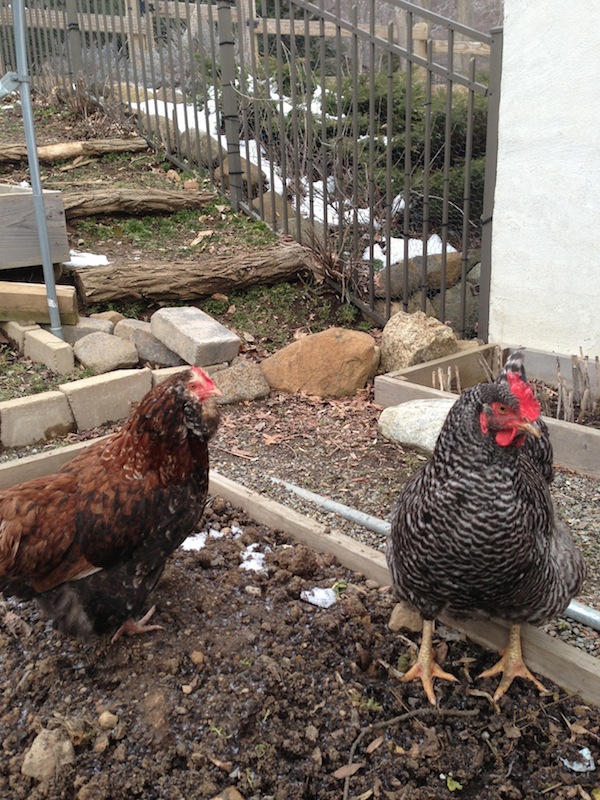
<p><span class="full-image-float-right ssNonEditable"><span><img style="width: 500px;" src="/storage/IMG_2049.jpg" alt="" /></span><span class="thumbnail-caption" style="width: 500px;">Our Plymouth Barred Rock and Ameraucana.  The Ameraucana just went through a period of broodiness which we were able to break.</span></span>New chickens will be integrated to our current flock that has been whittled down to 5 chickens after some illnesses and predator attacks (one that included our own dog).&nbsp; There's an art to integrating them so hopefully that will go smoothly.&nbsp; Two years ago we ordered day old chicks from <a href="http://www.ideal-poultry.com/">Ideal Poultry</a> in Texas and they were sexed properly - we didn't get one rooster!&nbsp; Look for updates in late spring... Speaking of animals, we are also toying with the idea of getting a cat to help keep the chipmunks and squirrels at bay this year but the thought of one more life to care for at this moment is definitely making me hesitate.</p>
<p>And finally, we want to better manage what we have already planted for the best yields.&nbsp; That means really paying attention to pruning and training especially after a year of grape vines gone wild.&nbsp; And we'll also continue more with the nutrient density soil management we were on top of before the baby came into our lives.&nbsp; Hopefully this mama will get back on track continuing the blogs about what we do here after a short hiatus due to sleep deprivation.</p>
<p><span class="full-image-block ssNonEditable"><span><img style="width: 400px;" src="/storage/IMG_2051.jpg" alt="" /></span><span class="thumbnail-caption" style="width: 400px;">Even "dwarf" citruses can grow up to 12 feet.  Ideally they should be planted 4-5 feet from each other at the very least.</span></span></p>
<p>Happy Spring and may this season bring you simplicity and abundance!</p>
<p>&nbsp;</p>
<p>&nbsp;</p>
<p>&nbsp;</p>]]></content:encoded></rss:item><rss:item rdf:about="/the-daily-broadfork/2012/9/28/in-defense-of-okra.html"><rss:title>In Defense of Okra</rss:title><rss:link>/the-daily-broadfork/2012/9/28/in-defense-of-okra.html</rss:link><dc:creator>Pippa Purdy</dc:creator><dc:date>2012-09-28T18:08:22Z</dc:date><dc:subject>Intern's Corner Recipes okra</dc:subject><content:encoded><![CDATA[<p><span class="full-image-float-left ssNonEditable"><span><img style="width: 400px;" src="/storage/IMG_0068.JPG" alt="" /></span></span></p>
<p>&nbsp;</p>
<p><em>From our farmer Pippa and nutritionist in-training...</em></p>
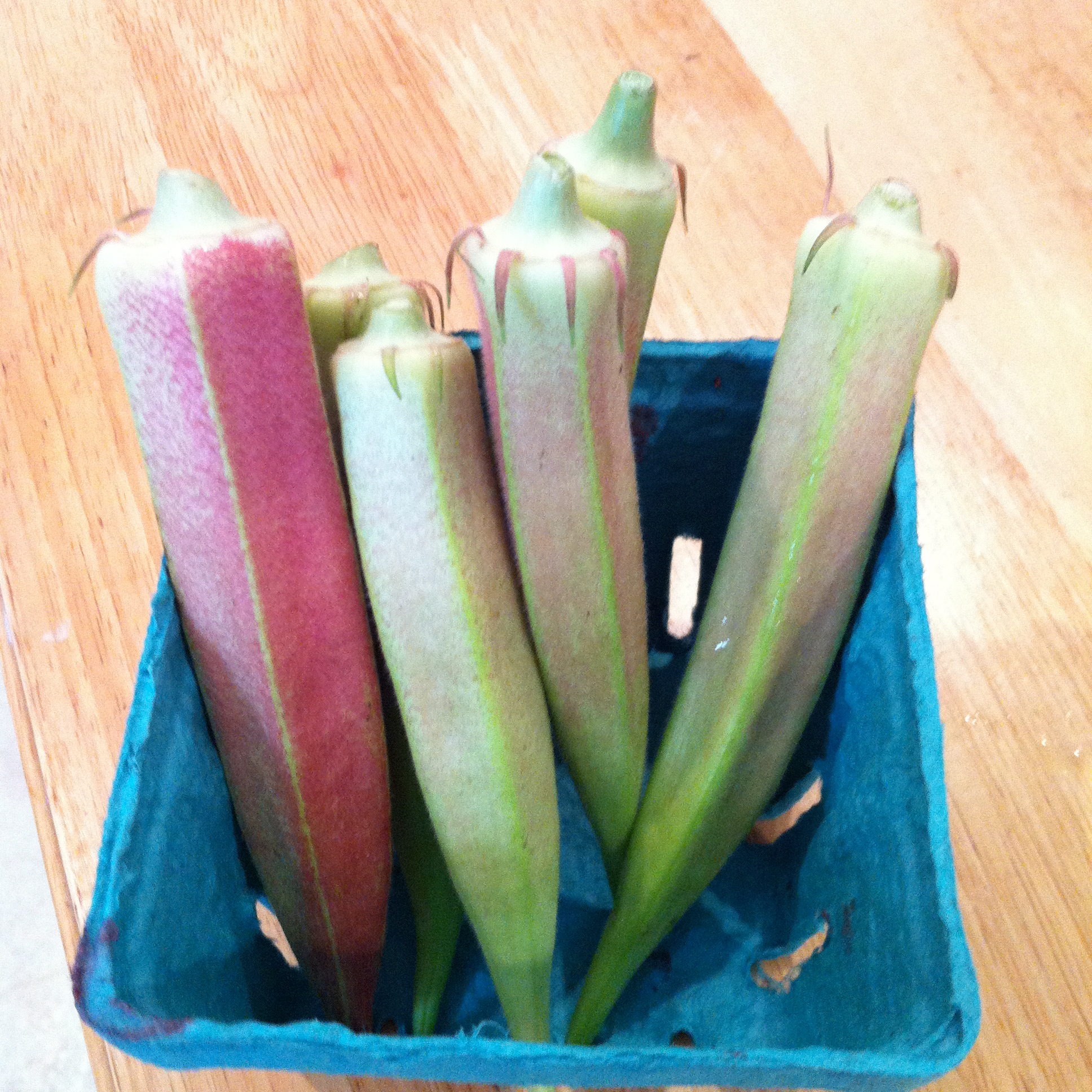
<p>What did okra ever do to you? Besides being an itchy plant when it grows, it is harmless. But, throughout so much of the country it has gotten a reputation for being slimy, unappetizing or only good for frying. I am here to stand up for okra and tell you why you should give it a second chance. I first came across okra on a trip to India in 2007. In India they call okra &ldquo;lady&rsquo;s fingers&rdquo;. The traditional dish is called bhindi masala where the okra is chopped up and mixed with onions, garlic, chilis, tomatoes and a variety of fragrant and mouth watering Indian spices. Serve me that and some warm roti (Indian whole-wheat bread) and I am in heaven. I fell in love with okra immediately. Upon my return to the states I began to seek it out. And it was then that I realized that we are a nation of okra-haters. Slowly but surely I had to make my case one dish at a time. I made jambalayas, I added it to stir-frys, I roasted it and I, of course, made a lot of bhindi masala. As a future dietitian I appreciate the fact that okra is low calorie (50 calories per cup) and high in fiber (3g per cup). But my favorite thing about cooking with okra is that it is a natural thickener. Instead of added flour or roux to a recipe, okra becomes a natural, low calorie &ndash; zero fat way of providing thickness and texture to dishes. So, the next time you see okra at the farmer&rsquo;s market don&rsquo;t run away. Pick out the smaller pods (they are the most tender) and go home and try this recipe for bhindi masala and tell me you haven&rsquo;t come over to my side! &nbsp;</p>
<h3 class="entry-title post-title">RECIPE: Punjabi Bhindi Masala (Okra saut&eacute;ed with Onions and Tomatoes)</h3>
<p>Ingredients:</p>
<p><span class="fullpost"> </span></p>
<ul>
<li><span style="font-family: Verdana;">Olive Oil - 2 tbsp</span></li>
<li><span style="font-family: Verdana;">Cumin Seeds - 1 tsp</span></li>
<li><span style="font-family: Verdana;">Nigella (kalonji) Seeds - 1/2 tsp</span></li>
<li><span style="font-family: Verdana;">Turmeric Powder - 1/2 tsp</span></li>
<li><span style="font-family: Verdana;">Green Chilies - 2 (chopped)</span></li>
<li><span style="font-family: Verdana;">Garlic - 2 cloves (chopped)</span></li>
<li><span style="font-family: Verdana;">Ginger - 1 inch piece (chopped)</span></li>
<li><span style="font-family: Verdana;">Red Onions - 2 medium (sliced)</span></li>
<li><span style="font-family: Verdana;">Plum Tomatoes - 3 (sliced)</span> </li>
<li><span style="font-family: Verdana;">Okra - 1-1.5 lbs (wash, dry, trim ends, slice)</span></li>
<li><span style="font-family: Verdana;">salt to taste</span> </li>
<li><span style="font-family: Verdana;">Red Chili Powder - 1/2 tsp</span> </li>
<li><span style="font-family: Verdana;">Coriander Powder - 2 tsp</span> </li>
<li><span style="font-family: Verdana;">Mango (Amchoor) Powder - 1 tsp (optional)</span> </li>
<li><span style="font-family: Verdana;">Garam Masala - 1/2 tsp </span> </li>
<li><span style="font-family: Verdana;">Fresh Cilantro Leaves - 1/2 handful (chopped)</span></li>
</ul>
<p>Click <a href="http://www.honeywhatscooking.com/2010/05/punjabi-bhindi-masala-okra-sauteed-with.html">HERE</a> for the recipe instructions.</p>
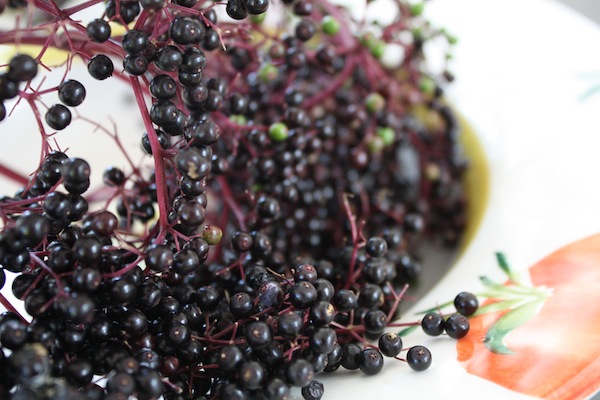
<p>&nbsp;</p>]]></content:encoded></rss:item><rss:item rdf:about="/the-daily-broadfork/2012/8/26/the-natural-medicine-cabinet-elderberries-for-immune-support.html"><rss:title>The Natural Medicine Cabinet: Elderberries for Immune Support</rss:title><rss:link>/the-daily-broadfork/2012/8/26/the-natural-medicine-cabinet-elderberries-for-immune-support.html</rss:link><dc:creator>Pam</dc:creator><dc:date>2012-08-26T16:31:13Z</dc:date><dc:subject>Elderberries Organic gardening Permaculture Preserving Food Recipes The Natural Medicine Cabinet infections influenza sambucus nigra</dc:subject><content:encoded><![CDATA[<p><span class="full-image-float-left ssNonEditable"><span><img style="width: 400px;" src="/storage/IMG_4449.JPG" alt="" /></span></span>The permaculture growing area we planted in the Spring of 2011 surprisingly began to really mature this year.&nbsp; We didn't expect to have much in the way of fruits so early on and we also didn't expect to be stripped of most of it by early summer due to squirrels and chipmunk activity.&nbsp; Fruit protection will be another venture for next spring but there were a few things that the animals left for us: blackberries and elderberries.&nbsp; While blackberries are easy to come by, elderberries, or sambucus nigra, are a rare find.&nbsp; A plant with many uses, these berries are edible, their flowers bring beneficial insects and the berries have medicinal properties.&nbsp; Elderberries have relatively strong scientic evidence that they have activity against the flu and can reduce the duration of symptoms by 56%.&nbsp; The popular extract "Sambucol", made by Nature's Way, was specifically studied.</p>
<p>You can tell that the primary flavinoids are the anthocyanidins based on the deep fuscia color in the extract (don't wear white when preparing it!).&nbsp; These anthocyanadins are thought to have immunomodulating and anti-inflammatory effects.&nbsp; Laboratory studies show activity against H1N1 virus (Swine Flu) and inhibits replication of several strains of influenza A and B.</p>
<p>Be careful not to use unripe berries, leaves or stalks of the plant which contain cyanogenic glycosides which release cyanide when consumed.</p>
<p>Uses: Drizzled on top of vanilla ice cream, in a cocktail, mashed in some bananas for baby food, and as a medicine.&nbsp; We plan on having this ready as a syrup for upper respiratory infections for us and baby during the upcoming winter months...</p>
<p>&nbsp;</p>
<p>RECIPE: ELDERBERRY SYRUP</p>
<p>I made this without honey since we have an infant under 1 year old...</p>
<p>8 ounces of elderberries</p>
<p>sugar</p>
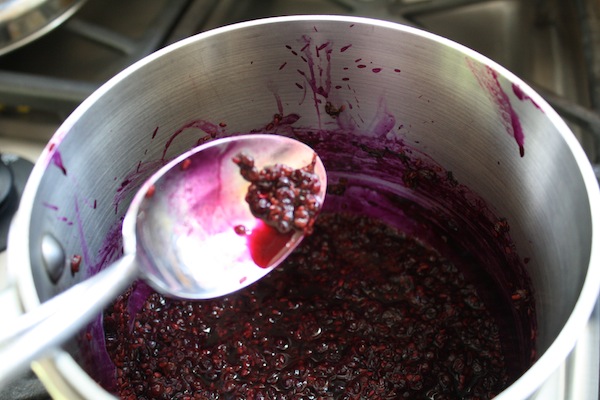
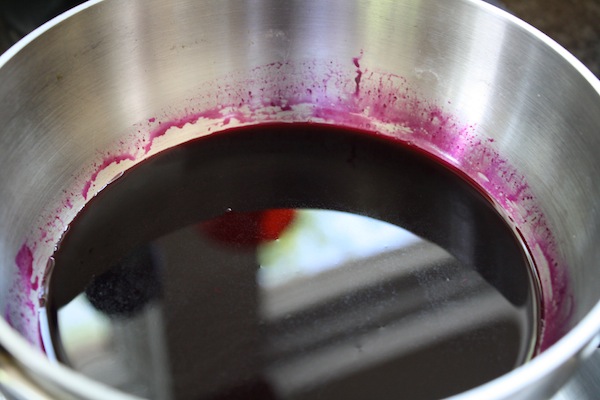
<p>Directions: Carefully heat elderberries in a small sauce pan.&nbsp; Add a few teaspoons of water to prevent burning.&nbsp; Using the back of a spoon, mash the berries as they very gently simmer.&nbsp; When you've extracted all the juices, strain through a fine sieve.&nbsp; The liquid will be a gorgeous dark fuschia color.&nbsp;</p>
<p><span class="full-image-block ssNonEditable"><span><img style="width: 400px;" src="/storage/IMG_4454.JPG" alt="" /></span></span></p>
<p>Put liquid back into sauce pan and for every 1 Tbs of liquid you extracted use a little less than 1 Tablespoon of sugar into the pan.&nbsp; Gently simmer stirring frequently.</p>
<p><span class="full-image-block ssNonEditable"><span><img style="width: 400px;" src="/storage/IMG_4455.JPG" alt="" /></span></span></p>
<p>You can use this right away or use a canning method to preserve the syrup for future use.&nbsp; The end of the summer is right upon us and this is the time to squirrel away all that food you've grown to enjoy in the upcoming months...</p>
<p>&nbsp;</p>]]></content:encoded></rss:item><rss:item rdf:about="/the-daily-broadfork/2012/8/11/an-afternoon-with-food-legend-joan-gussow.html"><rss:title>An Afternoon with Food Legend Joan Gussow</rss:title><rss:link>/the-daily-broadfork/2012/8/11/an-afternoon-with-food-legend-joan-gussow.html</rss:link><dc:creator>Pam</dc:creator><dc:date>2012-08-11T23:42:07Z</dc:date><dc:subject>Hudson Valley Food and Farm Local Food Systems Organic gardening Recipes aussie basil eggplant flea beetle joan gussow okra white clover</dc:subject><content:encoded><![CDATA[<p><span class="full-image-block ssNonEditable"><span><img style="width: 600px;" src="/storage/IMG_4367.JPG" alt="" /></span></span>Every growing season brings its successes and failures.&nbsp; What was easy to grow last year for us was much more difficult this year but on the upside what we've struggled with last year grew beautifully this year.&nbsp; When the New York Times wrote about the "bumper crop" of tomatoes this season a few days ago, I became angsty since that hasn't been our experience.&nbsp; Our tomato "trees" filled with large gorgeous fruit early in the season became a big hit with seemingly all the squirrels and chipmunks in Rockland county.&nbsp; Some furry creature must have spread the word.&nbsp; We were all but stripped of our fruit until we took action with 1) Predator netting 2) Fox urine (Shake Away: A product Eliot Coleman uses) and 3) a solar powered owl perched on one of the raised beds.&nbsp; Our eggplant were also under attack by flea beetles but on a very positive note, we somehow dropped off the radar for the squash vine borers and all of our brassica veggies grew strong, healthy and abundant.&nbsp; We are always keeping an ear open to hear about how our neighbors and other farmers compete with the pests and bugs and this past weekend we had a special visit with local and global food legend Joan Gussow to hear about her experiences.</p>
<p>Sitting on the second floor balcony of her home overlooking her garden and the Hudson River, we began comparing notes for this growing season.&nbsp; Even with decades of growing experience, gardeners like Joan are always surprised at new discoveries.&nbsp; And the best gardeners are the ones that assume very little.&nbsp; What Joan found was that when she planted her tomatoes in a bed that still had last season's brussels sprouts stalks intact, they grew vigorously and prolifically!&nbsp; I wonder if the deep undisturbed root structures allowed beneficial microbes and mycorrhizal fungi to stay intact in the soil ready for spring's tomato seedlings...</p>
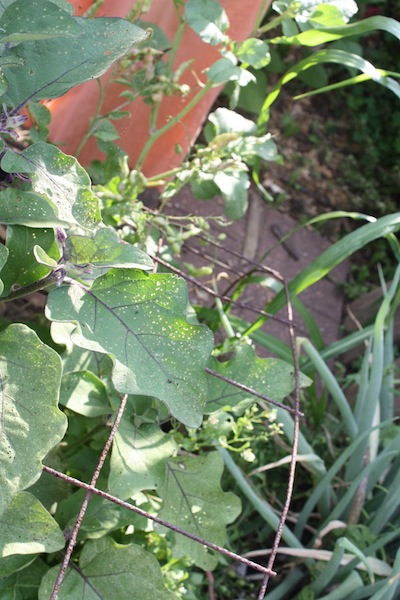
<p><span class="full-image-float-left ssNonEditable"><span><img style="width: 400px;" src="/storage/IMG_4342.jpg" alt="" /></span><span class="thumbnail-caption" style="width: 400px;">LEFT: Eggplant with one singular flea beetle.</span></span>We were thrilled to learn some tricks that have worked for Joan.&nbsp; Our Japanese eggplant suffered much this summer from the flea beetles.&nbsp; I'm usually on top of this with a little organic neem spray but alas Farmer Gabriel kept me inside most of the summer.&nbsp; Joan plants radishes at the end of the eggplant row as a trap crop and it will be a definite trial here next year.</p>
<p>Other discoveries included Joan's white clover groundcover.&nbsp; I knew about this from our permaculture studies as a nitrogen fixer but never knew it could be so beautiful and so steppable.&nbsp; She said the trick is to make sure you pull all other weeds out early on as it starts to grow in.<span class="full-image-block ssNonEditable"><span><img src="/storage/IMG_4348.jpg" alt="" /></span><span class="thumbnail-caption" style="width: 200px;">RIGHT: White Clover: Ground cover and nitrogen fixer</span></span></p>
<p>Two new varieties really caught our attention. One is a pepper called "Puerto Rican No Burn Pepper."&nbsp; It looks like a habe&ntilde;ero, has the smoky unique taste of one but there is NO burn.&nbsp; I was hesitant when Joan asked me to bite into one but it was truly a surprising taste.</p>
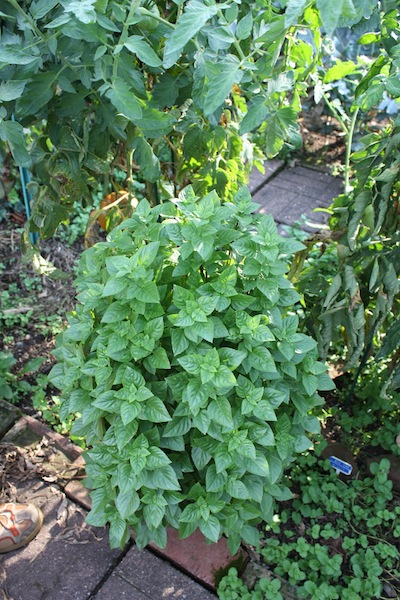
<p>The other variety that excited us was a basil that does not flower.&nbsp; As I was behind with the flea beetles this year, I was also behind trimming off the flowers on my Genovese basil.&nbsp; This variety not only does not flower, you can save it as a cutting over winter and then just replant the flower in the spring.&nbsp; It has a more sweet cinnamon taste and grows in a columnar fashion.</p>
<p><span class="full-image-block ssNonEditable"><span><img style="width: 300px;" src="/storage/IMG_4346.jpg" alt="" /></span><span class="thumbnail-caption" style="width: 300px;">Aussie Basil</span></span></p>
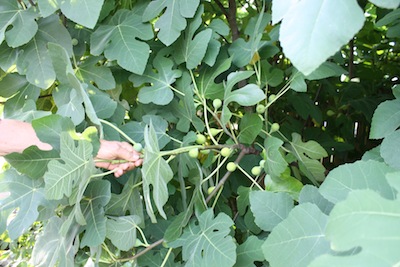
<p>And if you've read Joan's two books: <a href="http://www.amazon.com/This-Organic-Life-Confessions-Homesteader/dp/1931498245/ref=sr_1_1?s=books&amp;ie=UTF8&amp;qid=1344986256&amp;sr=1-1&amp;keywords=joan+gussow">This Organic Life: Confessions of a Suburban Homesteader</a> and <a href="http://www.amazon.com/Growing-Older-Chronicle-Death-Vegetables/dp/1603582924/ref=sr_1_2?s=books&amp;ie=UTF8&amp;qid=1344986256&amp;sr=1-2&amp;keywords=joan+gussow">Growing Older: A Chronicle of Death, Life and Vegetables</a>, you will know this famous fig tree that is thriving very well.</p>
<p><span class="full-image-block ssNonEditable"><span><img src="/storage/IMG_4355.JPG" alt="" /></span></span></p>
<p>&nbsp;</p>
<p>And here is a shot of seasoned farmer Joan and our new farmer Gabriel who attentively basked in all of Joan's stories as we sat there...</p>
<p><span class="full-image-block ssNonEditable"><span><img style="width: 500px;" src="/storage/IMG_4335.JPG" alt="" /></span></span></p>
<p>&nbsp;</p>
<p>&nbsp;</p>
<p><strong style="font-size: 130%;">Recipe: Burnt Okra with Potatoes, Garlic and Basil</strong></p>
<p>Our intern Pippa requested Okra to be grown this year.&nbsp; We had little  experience cooking/eating okra and heard it was slimy.&nbsp; The trick is to  harvest when young (less than 4" long).&nbsp; From a greenhouse bed measuring  4 x 6, we've been getting 1/2 lb every 2 days.&nbsp; Here is a delicious way  to serve them...</p>
<p>Peanut Oil</p>
<p>2 cups Okra tops discarded sliced 3/8"</p>
<p>2 cups small dice potato</p>
<p>1 Tbs minced garlic</p>
<p>2 Tbs minced basil</p>
<p>salt and pepper</p>
<p>&nbsp;</p>
<p>Using a cast iron skillet, coat the bottom with peanut oil and heat to medium.&nbsp; Add okra in one layer and cook until browned.&nbsp; Stir and then add potatoes, salt and pepper.</p>
<p>Stir and cook until potatoes have browned adjusting heat or adding more oil if necessary.&nbsp; Once they have browned, add garlic and stir.&nbsp; Then add basil and stir once more.</p>
<p>Serve immediately!</p>
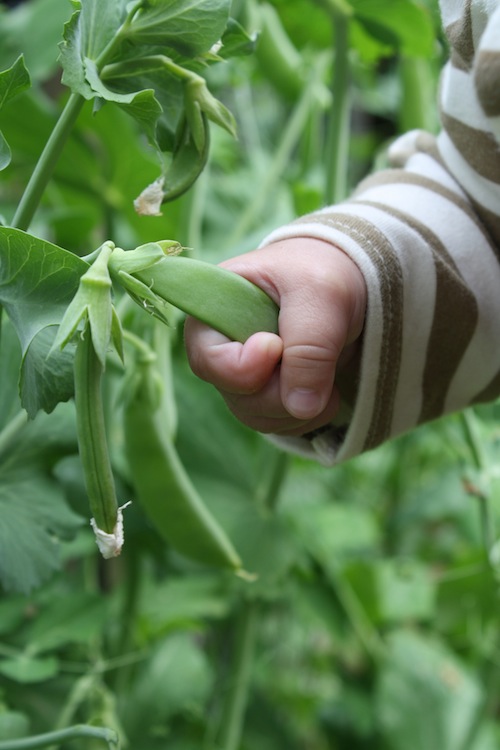
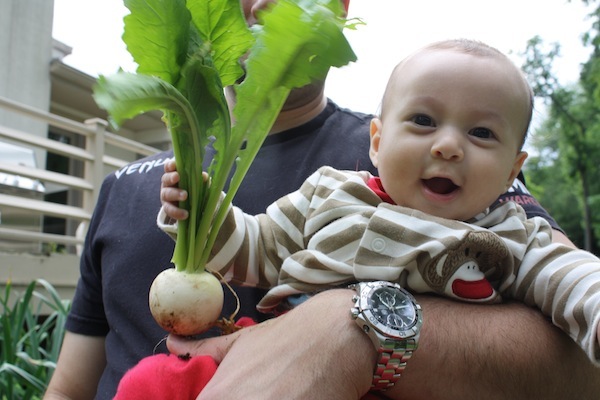
<p>Adapted from a <a href="http://www.food52.com/recipes/14313_burnt_okra_with_sauteed_potatoes_and_basil">recipe from Food52</a></p>]]></content:encoded></rss:item><rss:item rdf:about="/the-daily-broadfork/2012/6/1/growing-food-to-feed-your-baby.html"><rss:title>Growing Food to Feed Your Baby</rss:title><rss:link>/the-daily-broadfork/2012/6/1/growing-food-to-feed-your-baby.html</rss:link><dc:creator>Pam</dc:creator><dc:date>2012-06-01T12:46:02Z</dc:date><dc:subject>Organic gardening Preserving Food Recipes Self-Sufficiency baby turnips organic Baby food sugar snap peas</dc:subject><content:encoded><![CDATA[<p><span class="full-image-float-left ssNonEditable"><span><img style="width: 350px;" src="/storage/IMG_3842.jpg" alt="" /></span></span>Everything is really taking off here at Hook Mountain Growers and the new employee is beginning to demand a taste of the farm. Our new farmer Gabriel will soon be adding solid foods to his diet and we have begun to really focus on what we can grow to satisfy his needs both nutritionally and with attention to his newly developing senses.&nbsp; Though just shy of 5 months, the little guy has been heavily eyeing us whenever he sees us eat and this is all good timing because in the next month, he will be facing a bounty of food choices that we've carefully planned and planted in our farm.&nbsp; One thing is for certain, I am not going to start with boring rice cereal for this one.&nbsp;</p>
<p>He's already been introduced in utero to a wide variety of food and his breast milk has had a rotating flavor menu of various spices and eclectic foods.&nbsp; He's been exposed to harvesting, meal preparations and delicious aromas wafting in the kitchen.&nbsp; We hope this is all preparing him to understand the importance of food in our lives.&nbsp;</p>
<p>In his book, <a href="http://www.amazon.com/Feeding-Baby-Green-Nutrition-Pregnancy/dp/0470425245"><span style="text-decoration: underline;">Feeding Baby Green</span></a>, Dr Alan Greene encourages starting solids with vegetables because they are the toughest flavors to learn to enjoy. Grains and fruits, the most commonly introduced foods, take a back seat because they can be bland or too sweet.&nbsp; The idea is if you start with sugary flavors, the baby will seek out that sugary taste.&nbsp; If you give bland food like rice cereal, then addition of flavors and spices later on may be too foreign and not enjoyable.</p>
<p>So what do we have that's on the menu for Gabriel in 2012?</p>
<p>&nbsp;</p>
<p>&nbsp;</p>
<p>Purple, Yellow and Orange Carrots</p>
<p>Baby Japanese Turnips</p>
<p>Sugar Snap Peas and English Peas</p>
<p>Blue, red and white potatoes</p>
<p>Swiss Chard</p>
<p>Yellow Beets</p>
<p>Kale, Collards and Cabbage</p>
<p>Butternut and Rampicante Squash</p>
<p>Angled Luffa Gourd</p>
<p>Bush Beans, Long Beans, Fava Beans</p>
<p>Watermelon</p>
<p>Apples, pears and peaches</p>
<p>Blackberries, raspberries, and currants</p>
<p>HERBS!</p>
<p>&nbsp;</p>
<p>I want to highlight HERBS because I believe baby food shouldn't be bland.&nbsp; What better way to start introducing flavors than adding them either to the broth the vegetable will be steamed in, or directly pureed with the vegetable.</p>
<p>We're going to puree the Japanese baby turnips with tarragon and the Sugar snap peas as well for the baby, but for us...</p>
<p>&nbsp;</p>
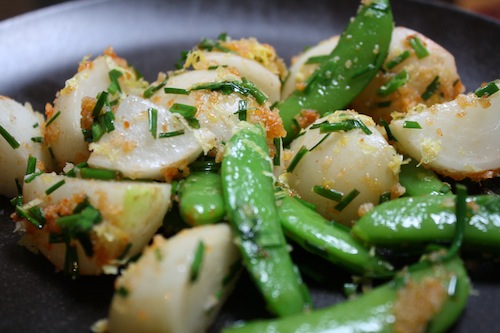
<p><strong style="font-size: 120%;">RECIPE: Baby Turnips with Sugar Snap Peas</strong></p>
<p>Serves 2 as an appetizer</p>
<p><span class="full-image-block ssNonEditable"><span><img style="width: 400px;" src="/storage/IMG_3869.JPG" alt="" /></span></span></p>
<p>1 cup sugar snap peas<br />1 bunch baby turnips, cut in half or quarters<br />1 Tbs butter or Earth Balance if dairy free<br />2 Tbs bread crumbs<br />2 Tbs chives<br />2 Tbs lemon zest<br />Siracha hot sauce<br />Salt</p>
<p>Blanch the the turnips for 3 minutes and the sugar snap peas for 2 minutes.&nbsp; Heat the butter in a non-stick skillet over medium-high heat and add the turnips and peas and cook for 2 minutes.&nbsp; Then add bread crumbs, chives, siracha and salt.&nbsp; Cook for an additional minute.&nbsp; Remove heat and add lemon zest and serve.</p>
<p><span class="full-image-block ssNonEditable"><span><img src="/storage/IMG_3849.JPG" alt="" /></span></span></p>
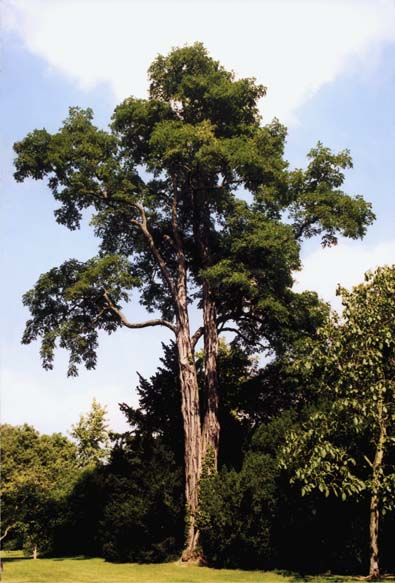
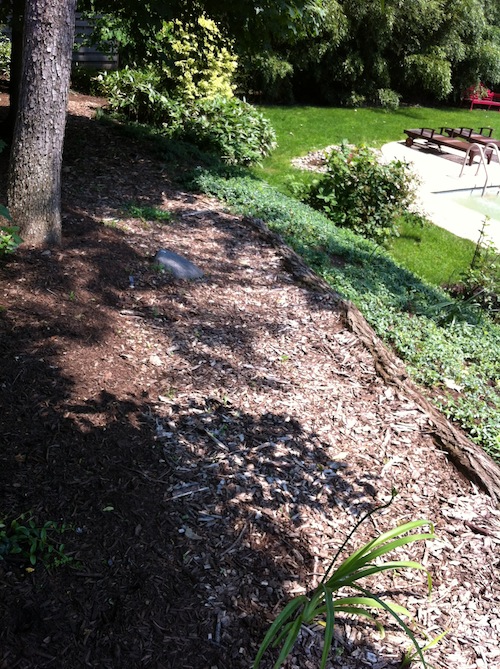
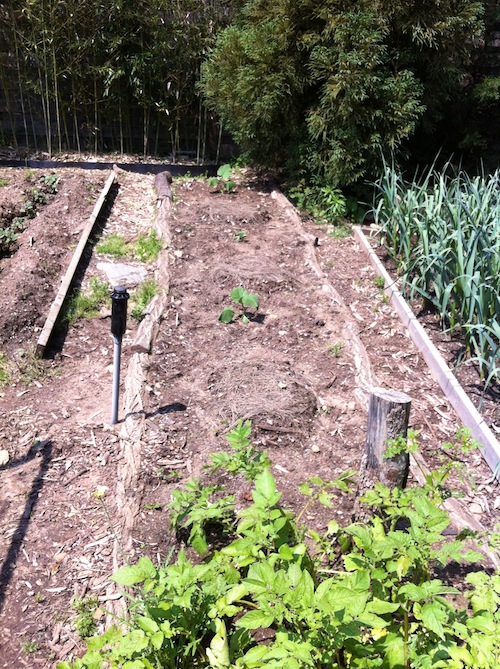
<p>&nbsp;</p>]]></content:encoded></rss:item><rss:item rdf:about="/the-daily-broadfork/2012/5/28/reclaiming-your-own-locust-trees-for-use.html"><rss:title>Reclaiming Your Own Locust Trees for Use</rss:title><rss:link>/the-daily-broadfork/2012/5/28/reclaiming-your-own-locust-trees-for-use.html</rss:link><dc:creator>Charlie</dc:creator><dc:date>2012-05-28T17:44:59Z</dc:date><dc:subject>Raised Beds Self-Sufficiency Sustainable Farming locust tree sustainability</dc:subject><content:encoded><![CDATA[<p><span class="full-image-float-left ssNonEditable"><span><img style="width: 300px;" src="/storage/black_locust_tree.jpg" alt="" /></span></span>The Locust tree has become a common tree weed that nobody wants. It grows really tall. It often has no other branches other than the ones 60 feet up at nearly the top. It drops debris everywhere. It propagates like no other tree. And oh yeah, it is the tree most likely to fall directly on your house right from the base as the entire flat root system rips up from the ground and tips the entire tree over with no break in the actual trunk. I have seen it. It sucks. <br /><br />When Hook Mountain Growers expanded the growing area it was necessary to remove 4 Locust trees from our property. The "green" part of me felt bad. Not that bad though as I realized I still had about 4 dozen other Locust on the property to prevent extinction of the species. <br /><br />For the task I consulted with John Wickes arborists. They have been doing this type of work for 3 generations and are the best at it. Before having the trees removed and all proper permits lined up, I did some research on the Locust tree to see what we could do with it. At the time, I figured even firewood seemed like a good idea. I was pretty surprised at what I found.<br /><br />Locust, especially black Locust, is some of the most structurally sound wood available and has been found to last 80 years. There are stories of farmers who use the stakes in their fields for 30 years and when they wear down they turn the stakes over and use the other side.</p>
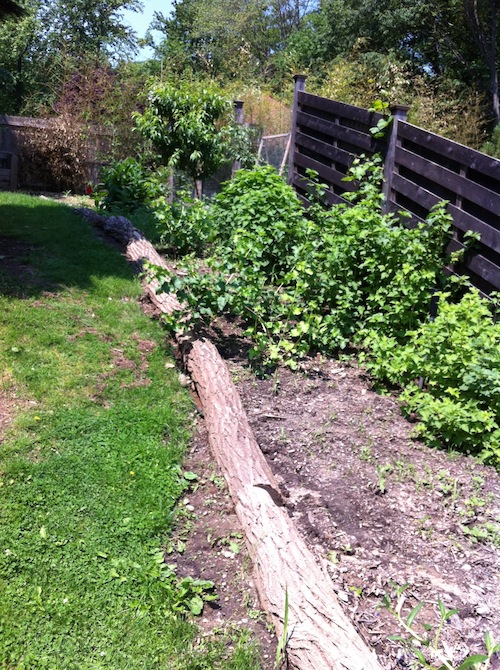
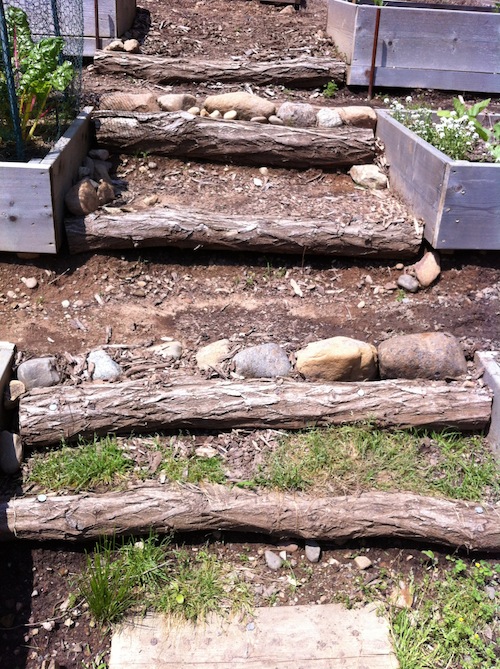
<p>The reason for the natural rot resistance of Locust is due to the presence of tyloses in the wood which makes the wood very water tight. There are also natural extracts present which impart an antifungal property to the logs. <br /><br />So the first step in utilizing the wood on your property would be to discuss with your tree removal team what size pieces you need and if you want them to save the chip for you. <br />I decided on 6 foot pieces as well as 3 inch thick pieces to use for stepping areas in beds. We also had them save us about 15 yards of mulch after the remaining tree pieces were passed through the chipper. <br /><br />Here is what you can do with you locust wood:<br /><span style="text-decoration: underline;"><strong><br />Large Bed Borders</strong></span></p>
<p><span class="full-image-block ssNonEditable"><span><img style="width: 300px;" src="/storage/locust1.JPG" alt="" /></span></span></p>
<p><span style="text-decoration: underline;"><strong>Steps for stairs down a slope:</strong></span></p>
<p><span class="full-image-block ssNonEditable"><span><img style="width: 300px;" src="/storage/locust2.JPG" alt="" /></span></span><br /><span style="text-decoration: underline;"><strong><br />Wood Chips for pathway:</strong></span></p>
<p><span class="full-image-block ssNonEditable"><span><img style="width: 300px;" src="/storage/locust3.JPG" alt="" /></span></span><br /><span style="text-decoration: underline;"><strong><br />Raised bed border:</strong></span></p>
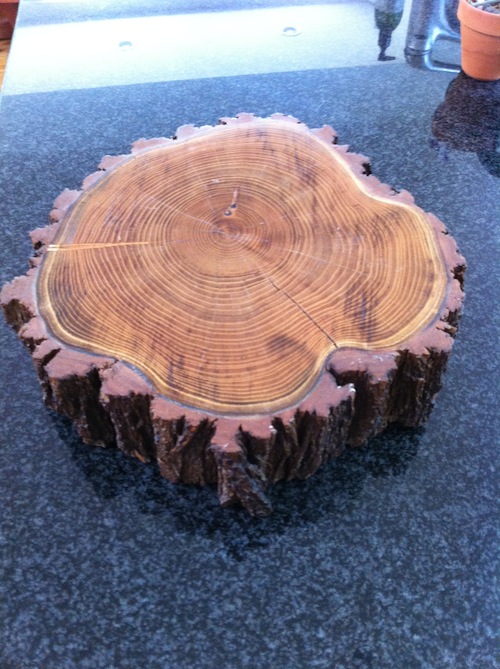
<p><span class="full-image-block ssNonEditable"><span><img style="width: 300px;" src="/storage/locust4.JPG" alt="" /></span></span><br /><br />and if you want to sand and stain the wood:</p>
<p><span class="full-image-block ssNonEditable"><span><img style="width: 300px;" src="/storage/locust5.JPG" alt="" /></span></span></p>
<p>Hope that inspires some ideas for all us Locust haters!<br /><br /></p>]]></content:encoded></rss:item><rss:item rdf:about="/the-daily-broadfork/2012/2/12/biochar-101.html"><rss:title>Biochar 101</rss:title><rss:link>/the-daily-broadfork/2012/2/12/biochar-101.html</rss:link><dc:creator>Pippa Purdy</dc:creator><dc:date>2012-02-12T16:44:57Z</dc:date><dc:subject>Biochar Compost Soil Management Sustainable Farming</dc:subject><content:encoded><![CDATA[<p><span class="full-image-float-left ssNonEditable"><span><img style="width: 400px;" src="/storage/IMG_0137.jpg" alt="" /></span><span class="thumbnail-caption" style="width: 400px;">The actual process of biochar making takes about 20 minutes</span></span>What does a farm intern do over the winter months to keep herself busy until the beginning of spring fun begins? Other than dream of crop rotation designs and new vegetables to try I also had the opportunity to attend an all day conference about biochar! Biochar is a very old concept that is only recently getting new attention for its carbon sequestering capabilities. The biochar story begins in Brazil when anthropologists discovered what they termed as &ldquo;terra preta&rdquo; or dark earth. When they tested the soil they found that it had very high levels of charcoal that had been buried thousands of years earlier. The impact of the charcoal made the soil more efficient in retaining water and nutrients and it can still be seen in the soil today. <br />&nbsp;&nbsp; &nbsp;One major question I had going into this conference was what is the difference between charcoal and biochar? Hugh McLaughlin, a scientist at <a href="http://alternabiocarbon.com/">Alterna Biocarbon</a>, answered that question for me. It was explained that charcoal is fuel that is used to cook and is made at around 300 degrees Celsius. Biochar on the other hand is a soil amendment and is made at 600 degrees Celsius. The key difference is the amount of mobile vs. resident matter. When you heat the biomass (woodchips, organic waste, manure, crop residues), to such a high temperature it becomes extremely stable and also creates a very porous structure. Good biochar should have high <a href="http://en.wikipedia.org/wiki/Cation-exchange_capacity">cation exchange capacity</a> and absorption capacity &ndash; these are what make the biochar so beneficial to the soil. The main benefits of biochar are (1) improved moisture dynamic, (2) improved nutrient retention (N, P, K for example), (3) improved microbe survival during drought, and (4) improved plant &ndash; microbe synergisms. So, the idea is that biochar will keep carbon in the soil, rather than in the atmosphere, whilst simultaneously leading to improved soil health and larger crop yields.</p>
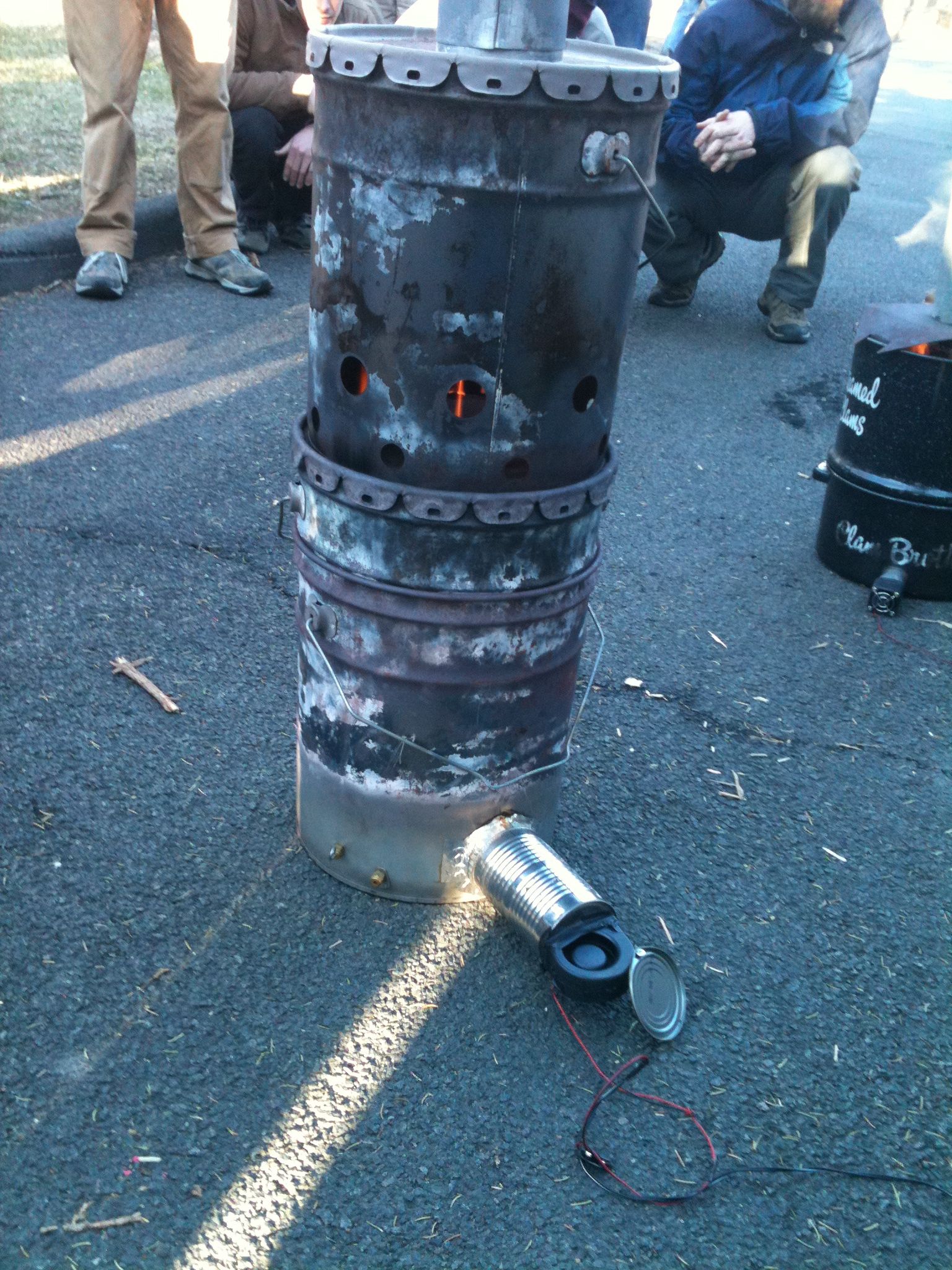
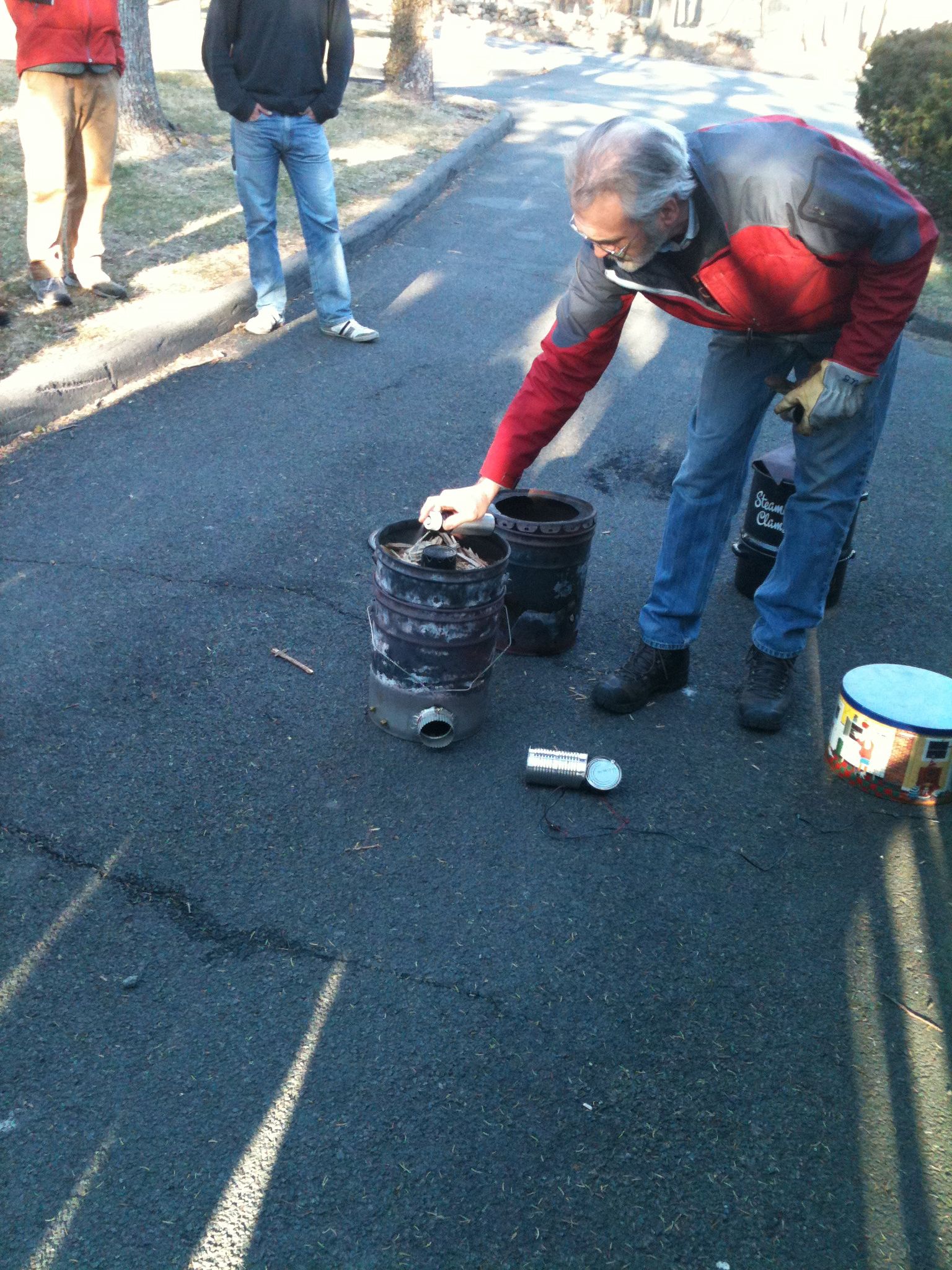
<p><span class="full-image-float-left ssNonEditable"><span><img style="width: 400px;" src="/storage/IMG_0129.jpg" alt="" /></span><span class="thumbnail-caption" style="width: 400px;">Lighting the feedstock using rubbing alcohol and woodchips</span></span><br />&nbsp;&nbsp; &nbsp;The process of making biochar involves collecting your biomass (referred to as feedstock) and lighting it on fire in a sealed container with very low oxygen conditions. Ideally the feedstock you use is coming from your farm or very near by, or else it kind of defeats the whole carbon saving notion. There are many different devices to make biochar &ndash; ranging from homemade &ldquo;TLUD&rdquo; (Top Lit Up Draft) Ovens, to much larger scale kilns and retorts. Click <a href="/storage/1G_Toucan_TLUD_for_Biochar_Jan_2010_-_final_03-2.pdf">HERE</a> for instructions on building yur own TLUD.&nbsp; They did a biochar making demonstration at the conference using homemade TLUDs. There are also more and more companies that are selling biochar on the web. The most reputable companies mentioned at the conference (in which the biochar has been tested and approved) were Soil Reef, Encendia and Colorado Biochar. It was also emphasized that testing your biochar is really important before using it. Now that there is a market for it, there are companies using left over wood scraps from construction sites as their feedstock. Bad biochar can actually do soil more harm than good &ndash; so it is important to know the contents of your char. <br />&nbsp;&nbsp; &nbsp;Once you have your biochar &ndash; you need to charge it. There are no nutrients inherent to the biochar, so the most common way to charge biochar is to combine the char with compost in a 50:50 ratio. You can add the char to the compost in the early stages of the compost and let it go through the process of composting. You can also mix it with finished compost and let it sit for about 2 weeks &ndash; this process is referred to as &ldquo;weathering the char&rdquo;. Compost is great but the benefits only last so long, the idea with biochar is that it absorbs the nutrients and makes them available to the plants for a much longer period of time. When you are ready to apply it to the soil, you can just add it by hand and mix it with the topsoil. Application rates range from between 1-10 tons per acre depending on your soil needs.&nbsp;&nbsp; &nbsp;</p>
<p><br />&nbsp;&nbsp; &nbsp;There is still a lot of research to be done in this field to determine the lasting benefits of biochar. But there are certainly a lot of exciting prospects and research projects being done. One farmer at the conference brought his own biochar to give out to fellow farmers as long as they promised to report back their experience with the char. The community of biochar users is still relatively small and there remains a need for more information on the use of biochar on small and large scales. I am happy to report that we have a bag of this precious biochar to experiment with this season at the farm. We will continue to report on our findings and hopefully will have some record yields!&nbsp;&nbsp;</p>
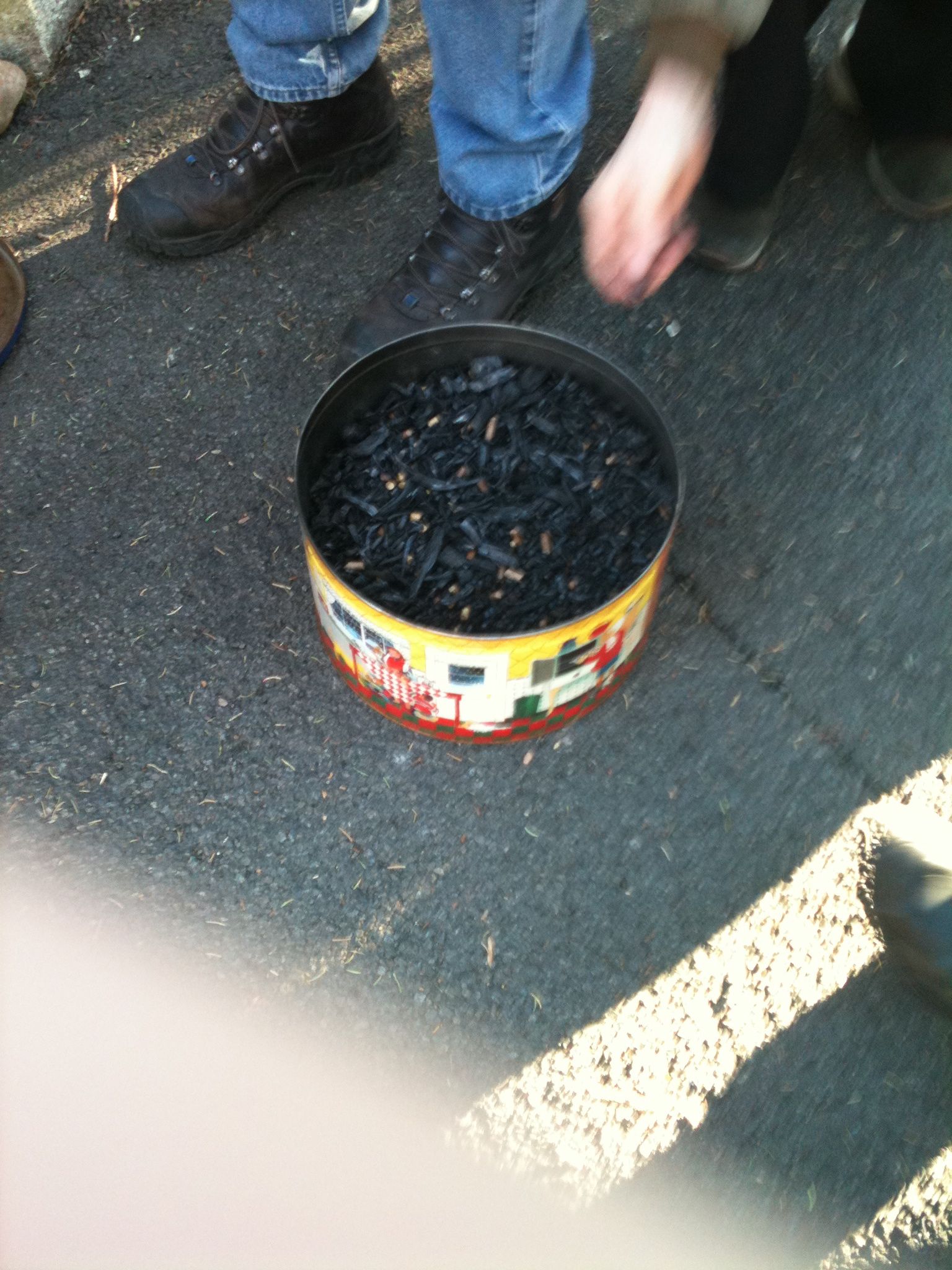
<p>&nbsp;<span class="full-image-block ssNonEditable"><span><img style="width: 300px;" src="/storage/IMG_0143.jpg" alt="" /></span><span class="thumbnail-caption" style="width: 300px;">Voila!  Biochar created!</span></span></p>
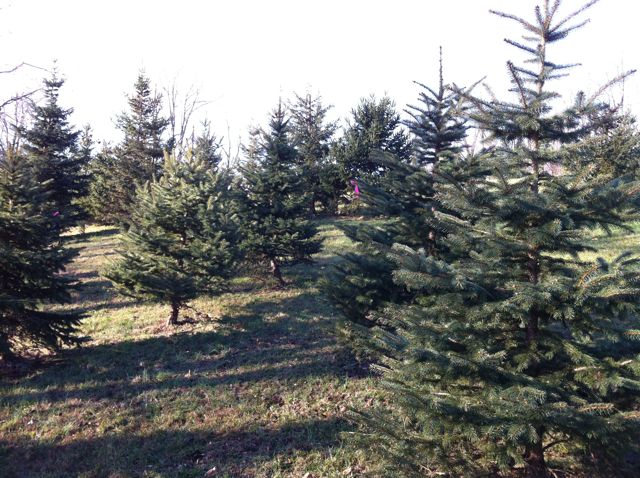
<p>&nbsp;</p>]]></content:encoded></rss:item><rss:item rdf:about="/the-daily-broadfork/2011/12/4/organic-yuletide-the-no-pesticide-tree.html"><rss:title>Organic Yuletide: The No Pesticide Tree</rss:title><rss:link>/the-daily-broadfork/2011/12/4/organic-yuletide-the-no-pesticide-tree.html</rss:link><dc:creator>Pam</dc:creator><dc:date>2011-12-04T20:56:15Z</dc:date><dc:subject>Hudson Valley Food and Farm benner tree farm organic christmas tree pesticides red hook</dc:subject><content:encoded><![CDATA[<p><span class="full-image-float-left ssNonEditable"><span><img style="width: 400px;" src="/storage/xmas1.jpg" alt="" /></span></span>In maintaining a pesticide-free body, a logical extension would be a chemical-free abode.&nbsp; While it has become quite easy to do that with cleaning products, fabrics and other materials, I have found it extremely difficult to find an organically grown Christmas tree each season.&nbsp; Even amidst the Hudson Valley where organic or certified naturally grown food from the small farm has become easier to find, Christmas trees grown without pesticides are a rare find.&nbsp; Most people don't realize that keeping a tree or other holiday greenery in the home can be potentially hazardous.&nbsp; Holiday greenery is commonly sprayed with over <a href="http://www.beyondpesticides.org/christmastrees/pesticides.htm">25 different pesticides</a> known to be dangerous to either the environment or human health.&nbsp;</p>
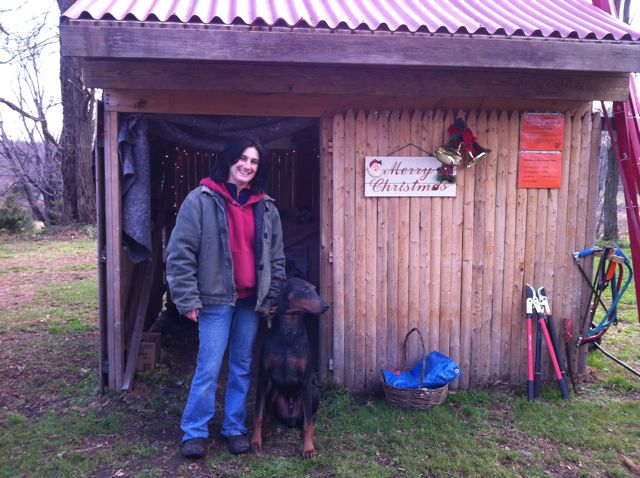
<p>This year's web search was successful.&nbsp; In Dutchess County in the town of Red Hook, New York we found Benner Tree Farm owned by Bernadette Knopfli which she maintains as a side business with the help of her 3 children and 1 year old blue Doberman Max.&nbsp; Though not organically certified, no pesticides whatsoever are used in killing weeds or in preventing various diseases or predators (deer and insect) from attacking the trees.&nbsp; Her six acre property grows Colorado blue spruce, White fir, Douglas fir and White spruce trees of different sizes and shapes.&nbsp; You pick the tree and cut it down yourself ensuring that you have the freshest, longest lasting tree. Bernadette tells us that she plants anywhere from 500-1000 saplings each spring.&nbsp;</p>
<p><span class="full-image-block ssNonEditable"><span><img style="width: 400px;" src="/storage/Xmas4.jpg" alt="" /></span></span></p>
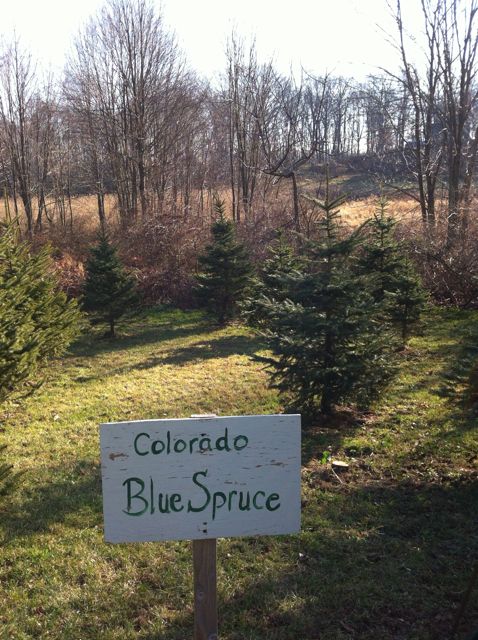
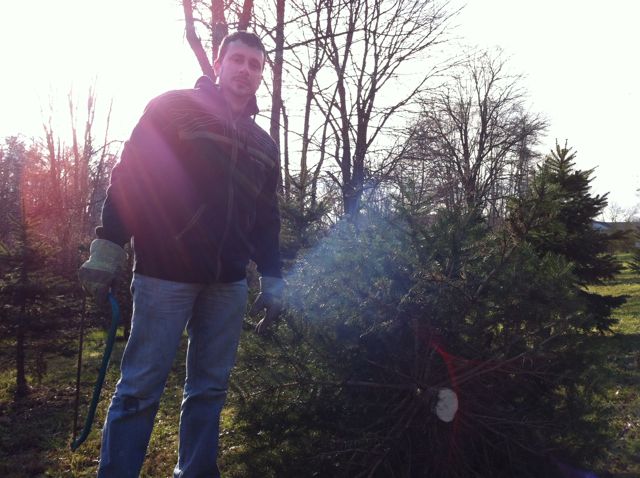
<p>We chose a 7 foot Colorado blue spruce which took six years to grow.&nbsp; This year's rains were actually beneficial to the growth of these trees even though neighboring food farms suffered, spruce trees instead suffer from droughts. &nbsp;</p>
<p>&nbsp;</p>
<p><span class="full-image-block ssNonEditable"><span><img style="width: 400px;" src="/storage/Xmas2.jpg" alt="" /></span></span></p>
<p>Much of the work during the year is cutting the grass around the trees constantly and Bernadette is entertaining the idea of keep a resident goat to do the work while fertilizing the trees but the big question is, do goats eat the trees?</p>
<p><span class="full-image-block ssNonEditable"><span><img style="width: 400px;" src="/storage/Xmas3.jpg" alt="" /></span><span class="thumbnail-caption" style="width: 400px;">Our chosen Colorado Blue Spruce Charlie cut himself finds a home at Hook Mountain Growers</span></span> Wherever you live, we hope you do a little investigating on your own and support any number of farms that may grow either organically or without the use of pesticides.&nbsp; Not only will it benefit you and your family's health, but a local organic tree is beneficial to the environment and the local economy.</p>
<p>&nbsp;</p>
<p>Visit Benner Tree Farm and enjoy some hot apple cider from Mignorelli Farm with Bernadette and Max at 179 Benner Road, Red Hook, NY 12571.</p>
<p>Phone: 845-835-8220.  		Alternate Phone: 914-466-5722. Open: Saturday and  		Sundays from 9am to 5pm</p>
<p>&nbsp;</p>
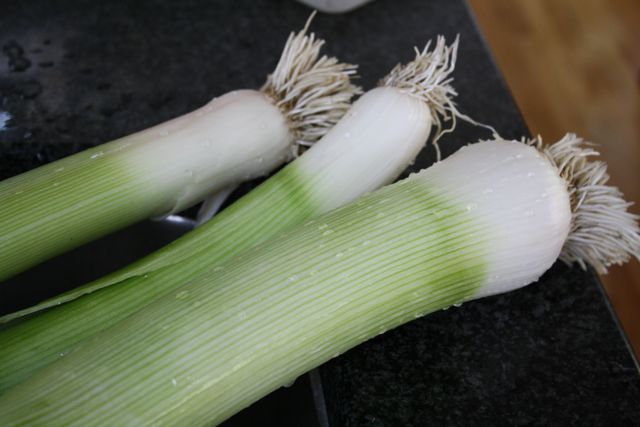
<p><span class="full-image-block ssNonEditable"><span><img style="width: 500px;" src="/storage/Xmas5.jpg" alt="" /></span></span></p>]]></content:encoded></rss:item><rss:item rdf:about="/the-daily-broadfork/2011/11/3/what-survives-after-a-freak-snow-storm-in-october.html"><rss:title>What Survives After a Freak Snow Storm in October?</rss:title><rss:link>/the-daily-broadfork/2011/11/3/what-survives-after-a-freak-snow-storm-in-october.html</rss:link><dc:creator>Pam</dc:creator><dc:date>2011-11-03T18:24:20Z</dc:date><dc:subject>Four Season Growing Organic gardening Recipes alliums cancer celeriac leeks winter harvest</dc:subject><content:encoded><![CDATA[<p><span class="full-image-float-left ssNonEditable"><img style="width: 400px;" src="/storage/leeks1.jpg" alt="" /></span>The lamenting continues about how this season was one of the worst growing seasons in Northeast coast memory.&nbsp; Yes, the incessant flooding rains, then hurricane Irene in September and last weekend, we had 10-12" of snow before Halloween.&nbsp; What's next?&nbsp; Doesn't quite matter since the damage is done.&nbsp; We've typically harvested until the end of November.&nbsp; Thanks to our buddies at Nazunya Designs we were able to have our high tunnel up and operational 16 hours before the storm hit. The high tunnel protects our 4 main beds that will enable us to grow our lettuces, mustard greens and kale though the fall and early winter. However,&nbsp; looking outside of that tunnel, not a lot has survived...except: our gorgeous leeks, parsley, cilantro, fennel and some bok choy that happened to be under a fabric cover and rebounded once the snow melted.&nbsp; Other things that are salvagable are some root veggies.&nbsp; Though the green tops of our turnips, beets and celeriac have been hit, the roots are stable enough to harvest.&nbsp; My saddest loss was the rainbow swiss chard.&nbsp; A true trooper of a vegetable that has fed us and our neighbors from late spring to just before the snow storm.&nbsp; Thankfully, I blanched and froze 15 lbs of it this summer.</p>
<p>&nbsp;</p>
<p><strong style="font-size: 130%;">LEEKS:</strong></p>
<p>A few years ago we left some leeks outside to overwinter without mulching or protection and surprisingly once the ground thawed, we were able to enjoy them well into mid spring.&nbsp; Anytime storage can happen without jars and outside of the freezer is a nice plus.&nbsp; Less work.&nbsp; Once a staple vegetable in Europe, leeks are enjoying a "comeback" in the culinary world.&nbsp; They can be used in place of onions although they are more pungent.&nbsp; As part of the allium family (garlic, onions, chives, scallions), leeks have not been as rigorously studied as garlic in the medical studies.&nbsp; However, because of the similarity of compounds, one can extrapolate the health benefits found in its relatives nutritional profile.&nbsp; Leeks are high in manganese, folic acid, vitamins C and B6.&nbsp; This year in a <a href="http://en.wikipedia.org/wiki/Meta-analysis">meta-analysis</a> published in the journal <a href="http://www.ncbi.nlm.nih.gov/pubmed/21473867">Gastroenterolgy</a>, it was found that large consumption of allium vegetables reduced the risk for gastric cancer.&nbsp; To reduce the risk, one would need to consume 20 grams per day or the equivalent of a head of garlic.&nbsp; That's really not much at all.&nbsp; That study looked at prevention of disease but there are many non-clinical studies that support the organosulfur constituents in garlic have activity against certain cancerous cells.&nbsp; That means treatment not just prevention.</p>
<p>&nbsp;</p>
<p><strong>LEEK TIPS</strong>:</p>
<p>When I was a cooking novice, I used to follow recipe instructions like a chemistry textbook.&nbsp; I would literally use just the white parts of the leeks and discard the rest.&nbsp; Now I know better!</p>
<p>1. Use leeks from the white to the pale green portion.&nbsp; The dark green tops can be used to flavor stocks but tend to be more cabbage-like rather than onion-like in flavor.</p>
<p>2. Buy leeks with some of their tops on, if you can.&nbsp; The tops will indicate how fresh your leeks are.</p>
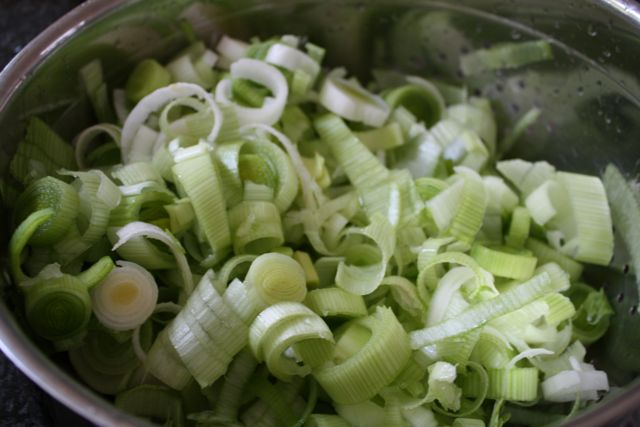
<p>3. Don't stress about washing leeks.&nbsp; The way they are grown cause grit and dirt to accumulate between some of the leaf layers.&nbsp; Instead of some suggestions that tell you to soak the vegetable in water to loose the dirt, I just chop up what I need, place it in a colander and rinse.</p>
<p>&nbsp;<span class="full-image-block ssNonEditable"><span><img style="width: 400px;" src="/storage/leeks2.jpg" alt="" /></span><span class="thumbnail-caption" style="width: 400px;">Just chop and rinse</span></span></p>
<p>&nbsp;</p>
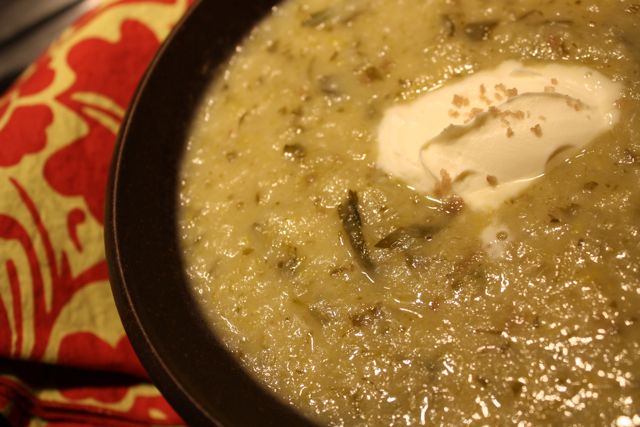
<p><strong style="font-size: 120%;">RECIPE: Creamy Leek Soup</strong></p>
<p>This soup is best made 1-3 days ahead so that the flavors can develop.&nbsp; It can be also frozen (just don't add the cream) and reheated on a lazy winter's night.&nbsp; Serve with some crusty bread and a head of roasted garlic to increase your allium intake!</p>
<ul class="ingredientsList">
<li class="ingredient">Leeks 3 pounds, trimmed and chopped, using white and pale green parts only</li>
<li class="ingredient">1 medium onion, chopped</li>
<li class="ingredient">1 large carrot, chopped</li>
<li class="ingredient">1 small celeriac root plus tops OR 2 celery ribs</li>
<li class="ingredient">1 teaspoon salt</li>
<li class="ingredient">1/2 teaspoon black pepper</li>
<li class="ingredient">1 stick (1/2 cup) unsalted butter</li>
<li class="ingredient">1 small boiling potato (6 ounces)</li>
<li class="ingredient">1/2 cup dry white wine</li>
<li class="ingredient">3 cups chicken stock or vegetable stock</li>
<li class="ingredient">3 cups water</li>
<li class="ingredient">1 bay leaf</li>
<li class="ingredient">1 1/2 cups fresh flat-leaf parsley leaves</li>
<li class="ingredient">1/4 cup all-purpose flour**</li>
<li class="ingredient">1/2 cup creme fraiche</li>
</ul>
<p>To make gluten free, omit the instructions for roux (butter and flour) and add an additional large potato instead.</p>
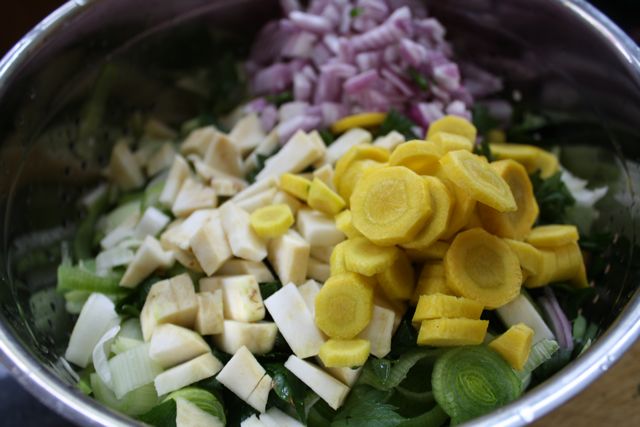
<p><span class="full-image-block ssNonEditable"><img style="width: 400px;" src="/storage/leeks4.jpg" alt="" /><span class="thumbnail-caption" style="width: 400px;">The beautiful thing when you grow food is to realize how much of what you've grown is going into the pot of food you're cooking.  Either from the ground or from storage everything in this colander including the yellow carrots, celeriac and celeriac tops, to the leeks are all grown here.  The rest of the recipe we provided the potatoes, parsley and even a fresh bay leaf!  Rewards indeed.</span></span></p>
<p><span style="font-size: 120%;">Instructions:</span></p>
<p class="instruction">Wash sliced leeks in a large bowl of cold water, agitating them, then lift out and drain well in a colander.</p>
<p class="instruction">Cook leeks, onion, carrot, celery, salt, and pepper in 4  tablespoons butter in a 5- to 6-quart heavy pot over moderate heat,  stirring occasionally, until softened, about 8 minutes. Peel potato and  cut into 1/2-inch cubes, then add to onion mixture along with wine,  stock, water, and bay leaf. Bring to a boil, then reduce heat and  simmer, partially covered, until vegetables are tender, about  15 minutes.</p>
<p class="instruction">Stir in parsley and simmer soup, uncovered, 5 minutes. Discard bay leaf and keep soup at a bare simmer.</p>
<p class="instruction">Melt remaining 4 tablespoons butter in a 1-quart heavy  saucepan over moderate heat, then add flour and cook roux, whisking,  until golden, about 3 minutes. Remove from heat and add 2 cups simmering  stock (from soup), whisking vigorously (mixture will be thick), then  whisk mixture into remaining soup and return to a simmer, whisking.</p>
<p class="instruction">If you have time, let the soup cool then blend it depending on the consistency you like.&nbsp; I find a immersion hand blender works beautifully without all the mess.&nbsp; Reheat soup, then  season with salt and pepper.</p>
<p class="instruction">Serve soup topped with a large dollop of cream fraiche.</p>
<p class="instruction"><span style="font-size: 50%;">Adapted from Gourmet Magazine May 2007</span></p>
<div style="overflow: hidden; color: #000000; background-color: transparent; text-align: left; text-decoration: none; border: medium none;"><a style="color: #003399;" href="http://www.epicurious.com/recipes/food/views/Creamy-Leek-Soup-238442#ixzz1cfpZjc1S"><span class="full-image-block ssNonEditable"><span><img style="width: 500px;" src="/storage/soup.jpg" alt="" /></span></span><br /></a></div>
<p>&nbsp;</p>]]></content:encoded></rss:item></rdf:RDF>