alliums ameraucana Anthony Bourdain aphids Appleseed Permaculture aquaponics arthritis artichokes Asian Vegetables aussie basil baby chicks baby turnips bearss lime bee keeping beet greens beneficial insects benner tree farm Biochar Bitter Melon blight blooming hill farm boothby blonde cucumber brix broccoli brussels sprouts cabbage cabbage hill farm camp hill farm cancer caraflex celeriac chicken coop chickens children chinese tamale chives cilantro cilantro root coconut cold frames collard greens Compost coriander corn crop rotation cruciferous crucifers cucumber Dan Barber dan kittredge Dave Llewellyn detox dirty dozen dragon fruit Dutch white clover dwarf citrus eggplant Elderberries factory farms farm to table farmer's market farmers markets Fava beans ffarm to table fish oil flea beetle flowers food allergies food combining food miles founding farmers four wind growers Fred Kirschenmann french bulldog G6pd deficiency garlic garlic festival garlic scapes geese Glynwood grass-fed beef Great Outdoors Listening Tour green tomatoes greenhouse growing indoors Hanalei Hemlock Hill Farm heritage turkey heritage USA hudson valley farms hurricane Irene hyssop iced tea infections influenza Insect control isothiocyanates joan gussow jolie lampkin joong kaffir lime kale Kauai kohlrabi korean licorice mint Ladybugs late blight leeks lettuces local food locust tree maine avenue fish market menhaden meyer lemon mycelia mycorrhizal natural fertilizers nectary nightshades No Reservations Nurse cropping nutrient density okra organic Baby food organic christmas tree Organic Pest Control Parsley Paul tappenden peas Permaculture pesticides pesto petite watermelon plant sap pH plymouth barred rock pole beans potatoes preserving food purple basil qunice Radish Greens rainbeau ridge farm raised beds rampicante raw food real food campaign red hook Rockland Farm Alliance ronnybrook farm row covers salt-preserved duck eggs sambucus nigra seed saving seedlings Sheet mulching small space soil analysis soil blocks soil conductivity sorrel Squash Vine Borer star fruit sugar snap peas sustainability sustainable fishing Swiss Chard tabbouleh TEDx Manhattan terracing three sisters tomato sauce tomatoes trellis trovita orange turkana farms Tuttle Farm urban zen volt white clover winter harvest Winter Squash Young Farmers Conference
Indispensable Books and Resources
  • Edible Forest Gardens (2 volume set)
    Edible Forest Gardens (2 volume set)
    by Dave Jacke, Eric Toensmeier
  • The Winter Harvest Handbook: Year Round Vegetable Production Using Deep Organic Techniques and Unheated Greenhouses
    The Winter Harvest Handbook: Year Round Vegetable Production Using Deep Organic Techniques and Unheated Greenhouses
    by Eliot Coleman
  • The Biological Farmer: A Complete Guide to the Sustainable & Profitable Biological System of Farming
    The Biological Farmer: A Complete Guide to the Sustainable & Profitable Biological System of Farming
    by Gary F. Zimmer
  • The Garden Primer: Second Edition
    The Garden Primer: Second Edition
    by Barbara Damrosch
  • 1500 Live LadyBugs - A GOOD BUG! - Lady Bug
    1500 Live LadyBugs - A GOOD BUG! - Lady Bug
    Organic Insect Control
  • Acres U.S.A.
    Acres U.S.A.
    Acres U.S.A.

    The best farming and growing magazine money can buy!

  • Seed Starter Soil Block Maker Makes 4 Medium Blocks
    Seed Starter Soil Block Maker Makes 4 Medium Blocks

    2" Soil Blocker

  • Mini Soil Blocker
    Mini Soil Blocker
  • New York City Farmer & Feast: Harvesting Local Bounty
    New York City Farmer & Feast: Harvesting Local Bounty
    by Emily Brooks
  • What Doctors Eat: Tips, Recipes, and the Ultimate Eating Plan for Lasting Weight Loss and Perfect Health
    What Doctors Eat: Tips, Recipes, and the Ultimate Eating Plan for Lasting Weight Loss and Perfect Health
    by Tasneem Bhatia, Editors of Prevention


THE DAILY BROADFORK

Short journal entries detailing the nuts and bolts of our ventures in growing food at our micro-farm

Entries in Local Food Systems (7)

Saturday
Sep262009

The Celebrity Carnivore "Meats" Hook Mountain Growers in the Hudson Valley

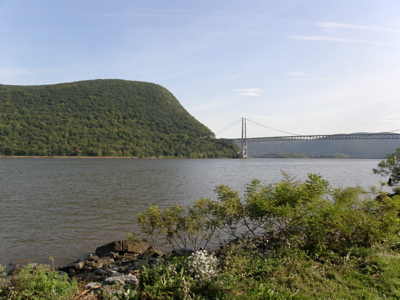
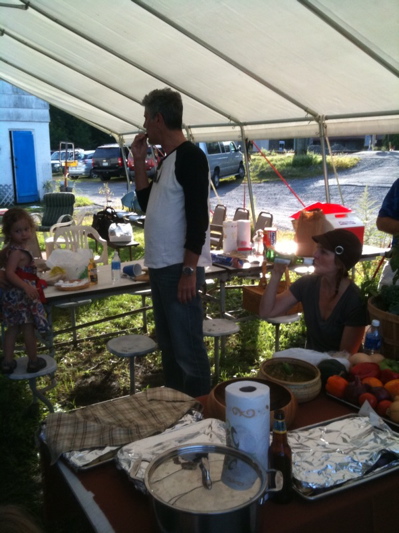
Scenic Hudson River and the Bear Mountain BridgeWhat a whirlwind of events this past weekend.  Because of a meeting arranged by best HMG friend Anne H. with her nephew Michael from South Dakota, we were asked to partake in a lower Hudson Valley local food gathering with Anthony Bourdain, host of the reality food show No Reservations.  And because of an interesting set of connections, Michael and his brother-in-law Cody, visiting from Alaska, both gifted in skinning and grilling wild game and other animal meats, were asked to prepare local goat and venison for Anthony Bourdain as he made his way up the Hudson Valley on a boat.  We were asked to join the festivities and bring along some local Hudson Valley vegetables along with Camp Hill Farm.  Hook Mountain Growers not only brought a beautiful bounty of vegetables to show, but prepared the night's side-dishes from our homestead to feed 20 people including Anthony and the show's staff, the boat's crew, and the few others involved in assembling this laid-back but momentous night.  The two of us had less than 48 hours to prepare, squeeze fours hours of seeing patients in our medical offices that morning, and fly home to harvest and prep the vegetables and cook the meal and transport it 30 minutes north of our kitchen.  Somewhere in between, we had to water and care for the farm which is not an inconsequential chore.  May seem like a lot of time considering cooks on Top Chef are able to produce a first course meal from 3 ingredients in 40 minutes.  Remember, we're medical doctors by day, farmers by night and food fanatics during all hours.

I first became aquainted with Anthony Bourdain after reading his first tell-all book, Kitchen Confidential (2000) followed by A Cook's Tour (2001).  Bourdain's sarcastic humor and cocky insouciance made me a fan from the start.  The rare times we do watch television, we usually like to view programs about food, culture and cooking (OK, and Heroes too) and Bourdain's show No Reservations tops our list.  As Bourdain explores almost every corner of the world he quickly becomes part of the local scene whether it be in Laos or in the home of a Hindu family in Queens, New York.  His ability to listen to and easily bond with people enables them to open up to him and his devil's advocate questioning always bring intelligent conversation to the table.  When we met Bourdain, he was the man you see on screen; there was no offCody and Charlie with local goat-screen persona or ego.  You get what you see, which is a New Yorker's charm.
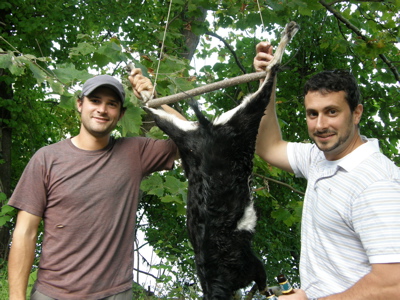
On the food end, Cody and Michael procured the goat the night before, slaughtered and disemboweled the goat that afternoon and hung it on a tree in preparation for the skinning.  A large grill pit was started with washed up pieces of oak from the shores of the Hudson River. The Bear Mountain Bridge was in the background and combined with the crisp sunny weather set the stage for an incredible evening.  It's hard to imagine that such a well put together show, one that won an emmy for cinematography, was so quickly and almost haphazardly put together. Whatever my concerns, the evening turned out to be a laid-back scenic event that made you feel like you were at a friend's BBQ on the beach.  Pam and Michael at the grill with film crew
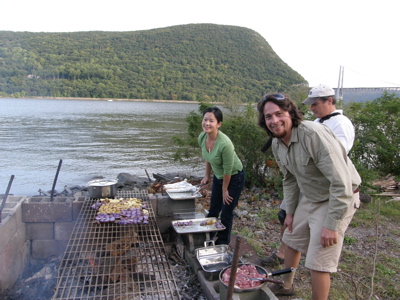
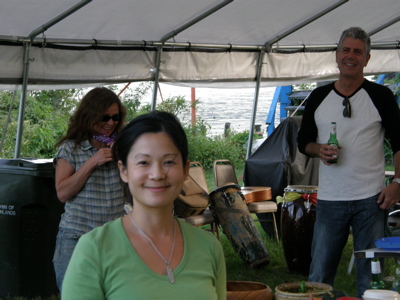
Pam, Anthony and JoanieWhile the goat was being prepped, the only thing to munch on was the green and purple roasted tomatillo salsa I made and watching Bourdain go back again and again to sample more made me feel like an Italian grandmother watching her family heartily eat and enjoy her cooking.  At one point, after repeating dippings into the salsa, Bourdain called it "irresitible." 

As serving time came along, I was ready to start grilling the Adirondack blue and Nicola white Potatoes I pre-roasted at home.  The idea is to make the potatoes crispy as I had done in the past with the recipe.  This grill pit was a bit challenging.  It was a rectangular area of cinderblocks with what looked like a subway grate on top and wood slowly burning and smoking underneath.  The result wasn't crispy as I had hoped but instead, it became deliciously smoky.  Once done, I added it to a pan with red currant and sungold cherry tomatoes,  blanched green beans and tossed with a basil-garlic vinaigrette. Is there anything more beautiful? Yes, my new French Bulldog pup, Henry Hudson
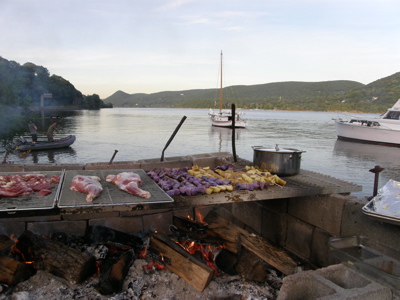
 

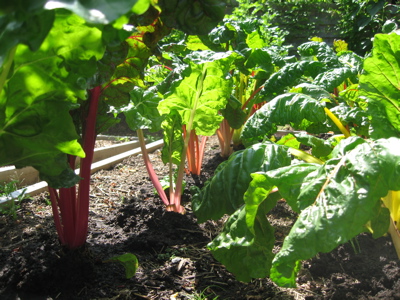
The other dish we served was a braised rainbow swiss chard with garlic, anchovies and parmesean all made by my sous chef farmer Charlie before leaving home.  It was simply heated on top of the grill and served right out of the pot.  Bourdain was seen tearing off bread we brought from Amy's Bread in Chelsea Market, dipping in the chard and throwing his head back in delight.


When we finally sat down, as Bourdain often does with a local family at the end of each episode, we were asked to join his table.  While everyone was getting settled and the goat meat gathered, one of the boat crew members injured his eye when a top flew off unexpectly from some locally-brewed beer lacerating his conjunctiva and causing some mild blood loss.  Luckily they had us, 2 docs on the scene for a medical evaluation.  Thankfully, there was nothing serious. 
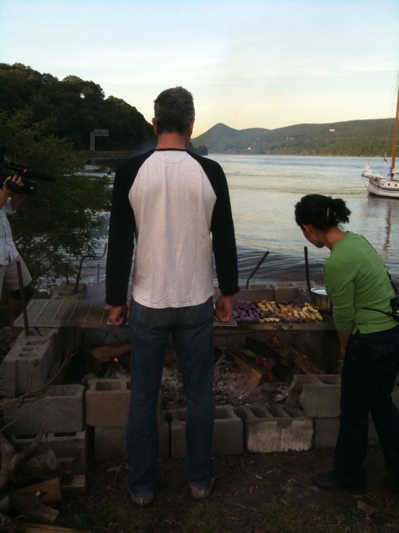
Closest I could get to professional culinary instructiSo in addition to providing the only non-meat items on the menu, we were pretty handy medically as well!  As the cameras tried to remain as inconspicuous as possible while filming our conversations, Bourdain made the comment down the table to me that usually he doesn't really get excited about vegetables but he was sure digging ours.  Ahh, maybe this is the start of my culinary second career...
Anthony Bourdain unable to resist the salsa verde; Anne sitting
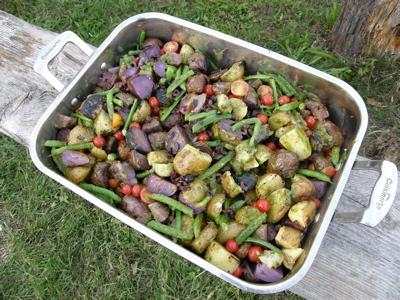
 Grilled New Potatoes with Summer Beans and Tomatoes

As the conversation got underway, Bourdain played his usual devil's advocate stance, teasing out the issues at hand and making the topics much more complex and interesting.  The talk that night was about Hudson Valley food and eating locally and what it all means.  Alexandra Spadea of Camp Hill Farm and one of the founders of the Rockland Farm Alliance spoke of the importance of preserving farmland -- RFA's mission.  Bourdain asked, what is local Hudson Valley food?  I think the term "local" no longer implies the particular area's known crop like Idaho is potatoes and Ohio is corn nor is it a set of specific foods that make up a particular cuisine, like Mediteranean fare which is fish, olive oil, tomatoes etc.  I think it's whatever it is that you can grow in the particular climate or zone.  For example, the lower Hudson Valley of New York is at the same latitude as southern Italy, so in terms of sunlight strength, we have similar growing conditions.  At HMG, we grow whatever we like to eat (except sub/tropical veggies and fruits).  To me, growing Hudson Valley food means the usual varietals of tomatoes, bell peppers, beans etc and their unusual heirloom varieties but the more esoteric vegetables as well: Chinese bitter melon (see earlier blog entry), Vietnamese fava beans, puntarelle, and lemongrass.  Bourdain also broached the topic of accessibility and palatability of local fresh fare to people who were raised on cheap meat and include iceberg lettuce as their entire day's vegetables intake.  I think it's a really valid point.  In my last journal entry on eating local pasture-raised beef and the evils of the factory farm, I advocated a few things like paying more for quality meat from small farms and eating less of it to compensate the expense of doing so.  Sounds like good advice especially if it creates less disease and illness saving untold millions in health care costs.  Bourdain brought up a legitimate point: How do you convince the person who has eaten cheap meat all their life to suddenly change their eating routine.  Or, how do you asking the working mother or father to come home after a long day of work and a possible long commute and cook up a meal when fast food options are so quick, cheap and easy.  I agree that this is a hard sell but it starts with education and creating an awareness of actions and consequences.  This is something that we see time and time again in our medical practices.  How do you help someone who is obese, comes from a long family history of diabetes and heart disease, to finally make choices that are not easy.  To lose weight.  To stop drinking soda.  The family unit has changed so dramatically over the last few decades.  Where we used to rely on our extended family for help, we are more and more isolated thus making tasks like cooking a low priority.  I grew up with a grandmother who lived at home with us while both of my parents worked full time jobs.  She cared for my brother and I and shopped, grew and prepared all of the food for our family.  But my brother and I were crucial in the household as well; there were chores.  I helped peel vegetables.  My brother fertilized the garden (See blog entry "Origins").  The household today doesn't have a grandma typically so closely involved in the daily cooking and children's activities consist of internet browsing and computer games, 5 different afterschool activities and TV.  Families may have to look to the past to be able to make the necessary changes we desperately need.  I'm glad Bourdain brought these points up because these are the questions that will need to be answered before we are able to become a healthier, more responsible nation.
 

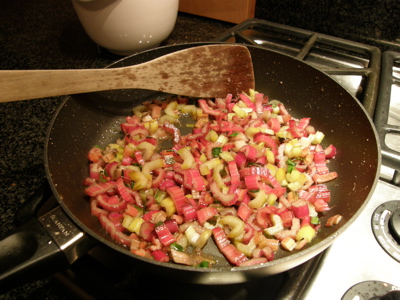
RECIPE: SWISS CHARD with ANCHOVIES, GARLIC and PARMESEAN
Serves 2-3

1 bunch Swiss Chard
2 garlic cloves, sliced
3-4 anchovy fillets
1-2 tsp lemon juice
1/4 cup parmesan cheese, grated
olive oil
salt and pepper to taste.

Prepare chard by removing the stems or ribs from the leaves and cutting them into 2” ribbons.  Chop stems to 1/2-3/4” size and reserve.  
Heat olive oil in pan and saute garlic in oil for 30-45 seconds, do not brown.  Remove garlic with a slotted spoon and set aside.
Add anchovies to hot oil and stir until they break down.  Add chard stems and cook for about 5 minutes, then add leaves and cook until tender (about 5-8 minutes).
Remove from heat and add in garlic, lemon juice and parmesan.  Stir to combine and serve warm.
Adapted from Gourmet July 2009
Wednesday
Sep162009

Meat in a Petri Dish: The Next Logical Step to the Factory Farm?

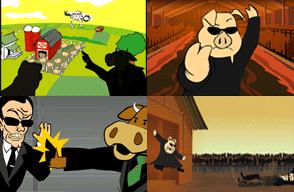
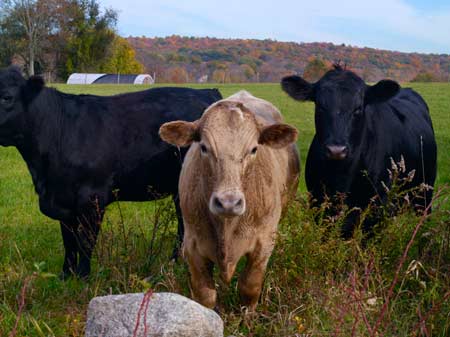
Grazing Cattle in Field. Photo from Hemlock Hill FarmSince the 1960’s, our penchant for consuming animal meats has risen 50%.  With this demand, factory farms have become the standard for producing large quantities of cheap meat, but at what cost?  There is a human health cost, an unsustainable environmental burden, and an ethical cost to the animal itself.  For humans, there are clear associations between diets heavily laden with animal meats and fat and the presence of chronic disease.  Additionally, with farm animals consuming over 70% of the antibiotics used in this country, antibiotic resistance has been developing rapidly and is a major concern for the treatment of infections in humans. Furthermore, the tremendous amounts of waste products from factory farms affects ecosystems downstream, creates contaminated bacteria-laden drinking water, destroys aquatic life and affects nearby air quality.  As an environmental burden, factory farms are an outright disaster generating enormous amounts of greenhouse gases to the tune of 18% of total emissions.  Paul Hawken, environmentalist and social activist, estimates that we need to decrease the population of the 3.5 billion farm animals we eat and milk for the health of our planet.  And as for the issue of animal cruelty, if we care to look at the journey that a piece of animal meat has made from factory farm to table, I’d bet most of us would drop our meat consumption dramatically.  (Easier to read Eric Schlosser’s Fast Food Nation: The Dark Side of the All-American Meal (2001), than to gain access to a factory farm).  One of my favorite animated commentaries on factory farms, now certainly a classic, is The Meatrix (2003) .  Moopheus, a trench coat-wearing cow, instructs Leo, a factory pig, on the true realities and illusions of the seemingly picture-perfect farm.   Though small family farms are beginning to gain consciousness in the public, thanks to the local food movement and the slew of food contamination stories and food recalls that continue to persist in the news, factory farms have held on.  What’s an ethical omnivore to do?  Most recently, New Scientist (Sept 5-11, 2009) reported on the very real possibility that animals can be genetically engineered not to feel pain, making it a guilt-free experience for us; the factory farm can then become morally acceptable for some.   “If factory farming must exist, then surely we have a moral duty to limit the distress it inflicts.” And this makes moral sense, the author argues,  “only in a world that has already devalued animal lives to the point where factory farming is acceptable.”  What’s even more disturbing is that research is being done on producing meat in a petri dish (gasp!).  Animal muscle cells are grown in vitro and live off chemical nutrients, growth factors, proteins and hormones.  There is even an organization called the "In Vitro Meat Consortium" to promote this new science!  Hopefully, as awareness takes hold of all of us, will we find factory farming no longer acceptable.  Perhaps it’s a pipe dream especially since the world population is increasing at the rate of 74 million people per year.  Feeding new arrivals will become more and more difficult.  I suppose this is the modern day equivalent to Soylent Green, Charleton Heston’s futurist sci-fi cult flick about over-population and the problem of how to feed them.   

Personally, I am not a vegetarian though I do eat meat sparingly and try to comprise most of my diet from vegetables, grains and fish and I do advocate this diet for others as well.  However, our country’s attachment to low cost meat will only continue to sustain the factory farm.  Only when we treat meat as a condiment and luxury, will we become free, not only from these unsustainable and inhumane practices, but from the chronic diseases like cancer and heart disease that are so often linked to diets largely comprised of meat.   I first became aware of this situation when I read Michael Pollan’s pivotal piece in the NYT “Power Steer” (2002) about the meat industry.  It made me start thinking about how food, any type of food, gets on my plate.  It will take a similar consciousness, I think, for others to start making global, ethical and health-related decisions with what they decide to eat.

What am I advocating exactly?

1. Reduced consumption of meat and an increase in vegetables, fruits and whole grains.  This is a no brainer reinforced by observations made in other cultures who consume less meat and who not only live longer but have less cancer and heart disease  -- the 2 biggest killers in our country.


2. When eating meat, buy meat from a family farm where cows are pasture-raised (grassfed).  This changes the actual quality of the meat: there’s more omega 3 fatty acids and conjugated linoleic acid compared to their conventional grain-fed animals (see documentary film King Corn) and there is an ethical satisfaction knowing that these animals led a life with much less suffering.

3. Eating meat this way is expensive.  Eat less of it and increase your vegetable intake.


Hemlock Hill Farm

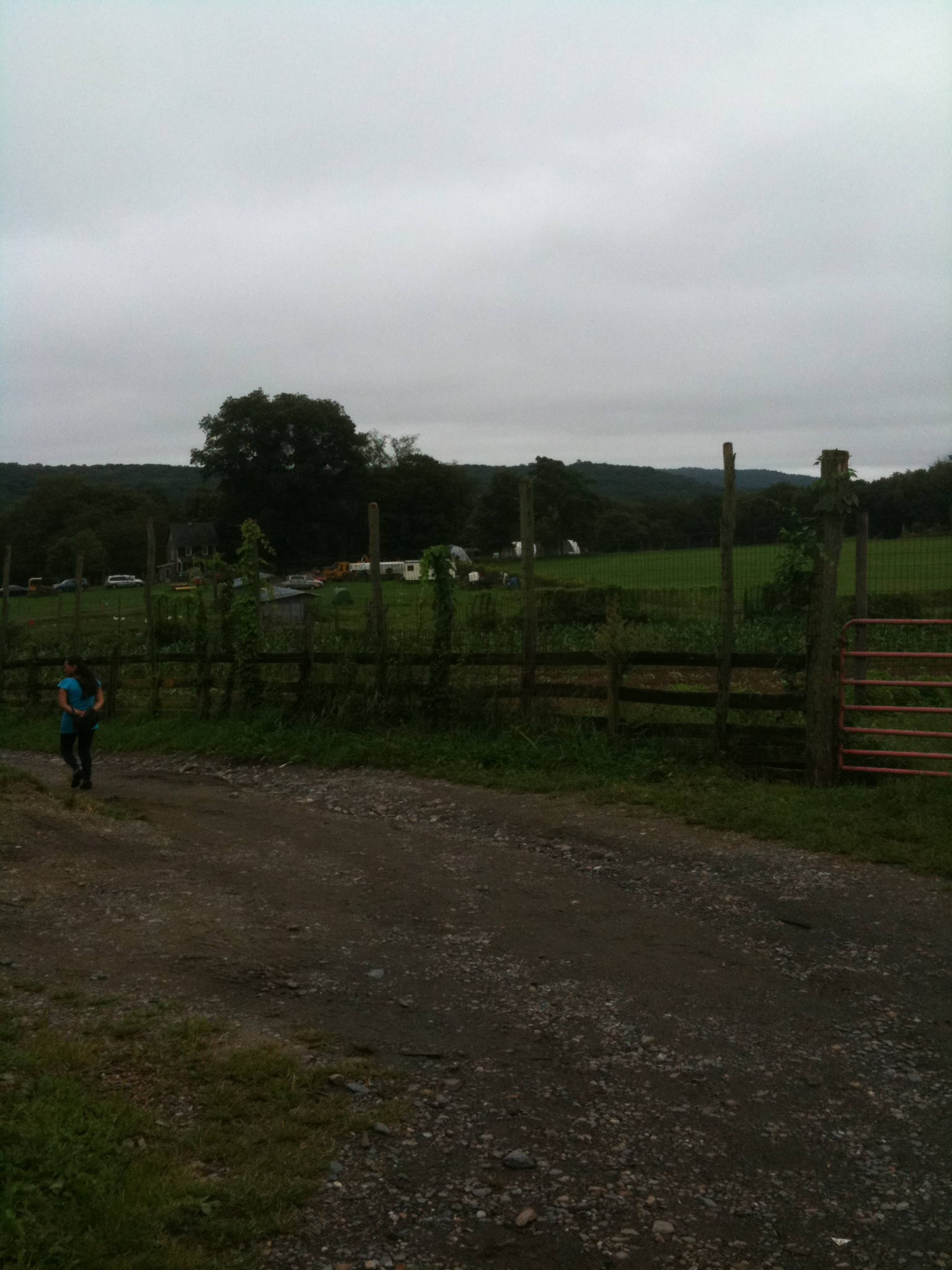
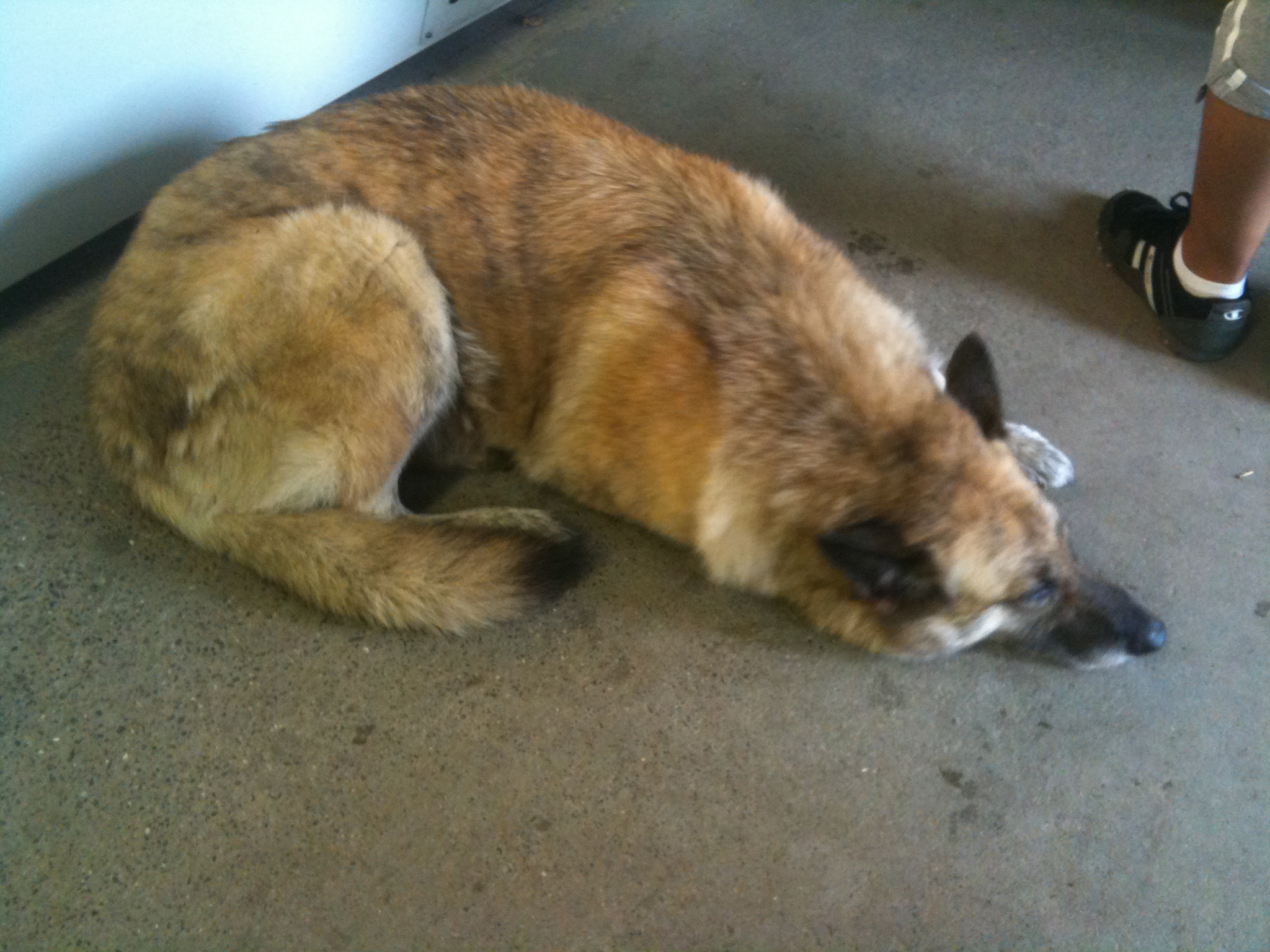
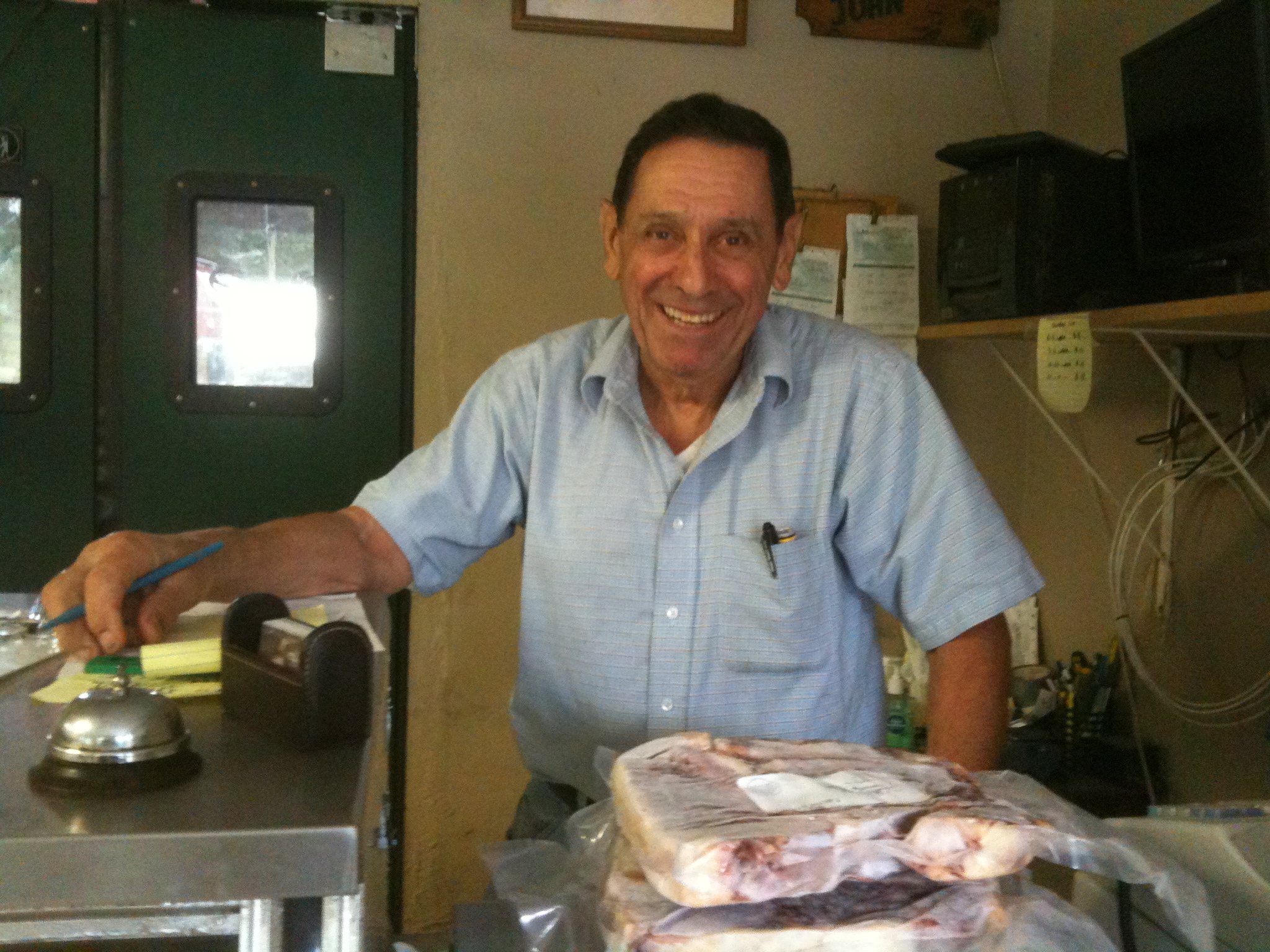
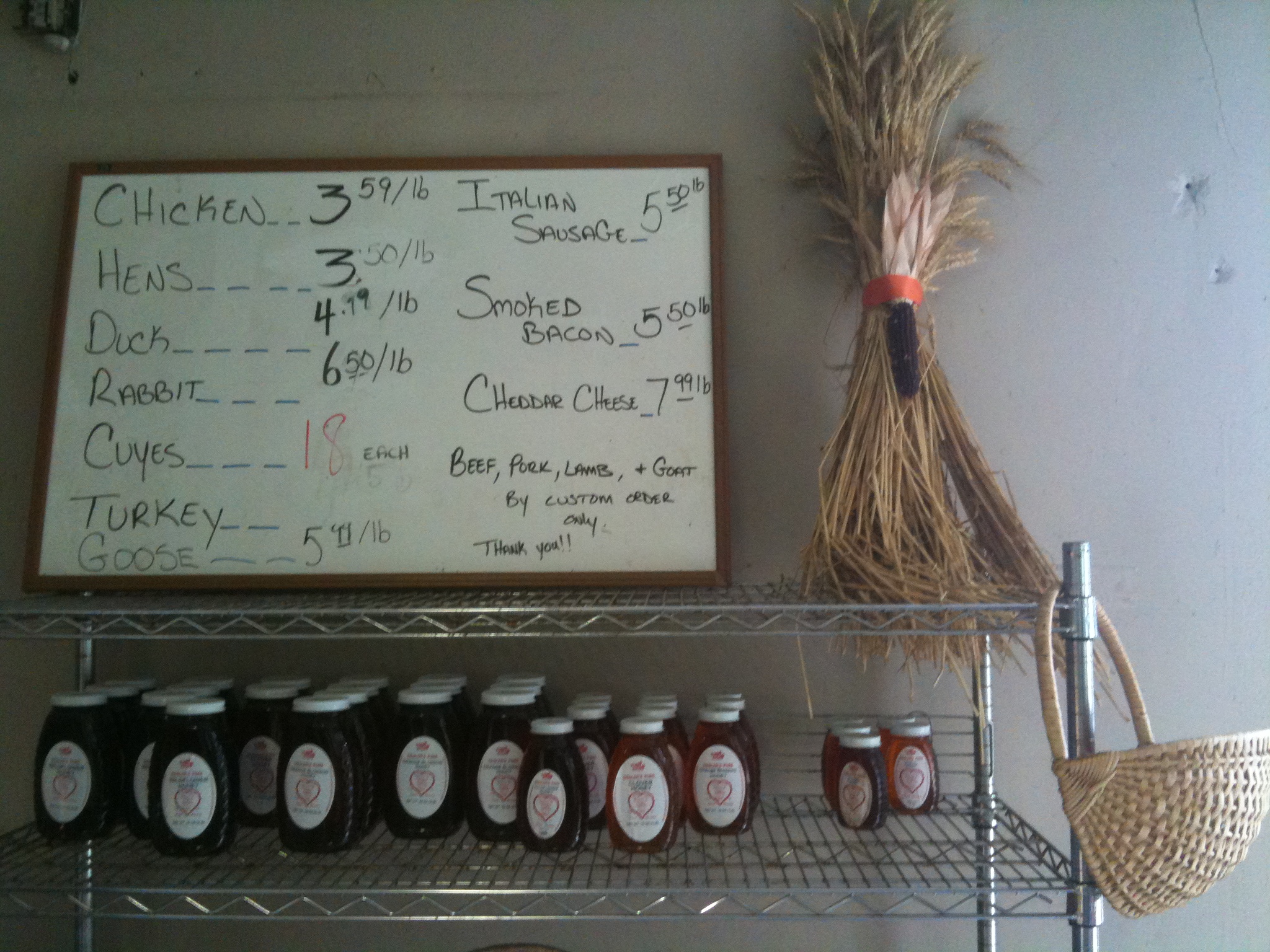
Finding local grassfed meat was difficult, until recently.  My local butcher store in Rockland County, NY raised their eyebrows when I asked for it, Whole Foods only had it periodically and it was rarely local leaving me to buy it on occasion in Manhattan usually at the Union Square Green Market.  Then I found Hemlock Hill Farm in Westchester county less than an hour from Manhattan.  This family farm has 120 acres and has been in the De Maria family for 70 years.  In addition to Black Angus cattle, which they raise grass-fed but grain-finished, they also offer lamb, pig, goat, chicken, rabbit, geese, duck, and turkey.  German Shepard, Honey, fierce hunter of woodchucksWhat is most astonishing about this place is that you can just walk around and visit the grounds freely.  There is nothing to hide.  Animals are treated well and it’s all there for you to inspect yourself.  More importantly, Hemlock Hill Farm slaughters its own animals.  This is a crucial difference from other small farms which often lack the capability and space to slaughter their own animals. John De Maria Oftentimes when small farms bring their animals to large scale slaughterhouses, they can’t always be sure that they are getting back the same animal that they so lovingly raised and cared for.  When we attended the Young Farmers’ Conference at Stone Barns Center for Agriculture in December 2008,  we heard stories from some farmers who would bring a cattle to a slaughter facility and got back a cattle slaughtered and containing five legs!   Hemlock Hill Farms has always slaughtered their own meat. John De Maria, a soft-spoken affable farmer and military veteran, brought us into the slaughter area where a large pig was being processed and a showed us a freshly skinned venison in the freezer. I buy much of my meat and poultry here and stock it in a large freezer at home.  It is some of the best tasting meat I’ve ever bought. Also important is that since there is not multiple "middle men" between the farmer and the consumer, the price of the meat is reasonable and the farmer is able to make more of a profit.


Want to find meat, poultry, dairy and eggs raised sustainably on small, family farms? Visit the Eat Well Guide for a listing of farms, stores, and restaurants in your area. (US and Canada).


Page 1 2