alliums ameraucana Anthony Bourdain aphids Appleseed Permaculture aquaponics arthritis artichokes Asian Vegetables aussie basil baby chicks baby turnips bearss lime bee keeping beet greens beneficial insects benner tree farm Biochar Bitter Melon blight blooming hill farm boothby blonde cucumber brix broccoli brussels sprouts cabbage cabbage hill farm camp hill farm cancer caraflex celeriac chicken coop chickens children chinese tamale chives cilantro cilantro root coconut cold frames collard greens Compost coriander corn crop rotation cruciferous crucifers cucumber Dan Barber dan kittredge Dave Llewellyn detox dirty dozen dragon fruit Dutch white clover dwarf citrus eggplant Elderberries factory farms farm to table farmer's market farmers markets Fava beans ffarm to table fish oil flea beetle flowers food allergies food combining food miles founding farmers four wind growers Fred Kirschenmann french bulldog G6pd deficiency garlic garlic festival garlic scapes geese Glynwood grass-fed beef Great Outdoors Listening Tour green tomatoes greenhouse growing indoors Hanalei Hemlock Hill Farm heritage turkey heritage USA hudson valley farms hurricane Irene hyssop iced tea infections influenza Insect control isothiocyanates joan gussow jolie lampkin joong kaffir lime kale Kauai kohlrabi korean licorice mint Ladybugs late blight leeks lettuces local food locust tree maine avenue fish market menhaden meyer lemon mycelia mycorrhizal natural fertilizers nectary nightshades No Reservations Nurse cropping nutrient density okra organic Baby food organic christmas tree Organic Pest Control Parsley Paul tappenden peas Permaculture pesticides pesto petite watermelon plant sap pH plymouth barred rock pole beans potatoes preserving food purple basil qunice Radish Greens rainbeau ridge farm raised beds rampicante raw food real food campaign red hook Rockland Farm Alliance ronnybrook farm row covers salt-preserved duck eggs sambucus nigra seed saving seedlings Sheet mulching small space soil analysis soil blocks soil conductivity sorrel Squash Vine Borer star fruit sugar snap peas sustainability sustainable fishing Swiss Chard tabbouleh TEDx Manhattan terracing three sisters tomato sauce tomatoes trellis trovita orange turkana farms Tuttle Farm urban zen volt white clover winter harvest Winter Squash Young Farmers Conference
Indispensable Books and Resources
  • Edible Forest Gardens (2 volume set)
    Edible Forest Gardens (2 volume set)
    by Dave Jacke, Eric Toensmeier
  • The Winter Harvest Handbook: Year Round Vegetable Production Using Deep Organic Techniques and Unheated Greenhouses
    The Winter Harvest Handbook: Year Round Vegetable Production Using Deep Organic Techniques and Unheated Greenhouses
    by Eliot Coleman
  • The Biological Farmer: A Complete Guide to the Sustainable & Profitable Biological System of Farming
    The Biological Farmer: A Complete Guide to the Sustainable & Profitable Biological System of Farming
    by Gary F. Zimmer
  • The Garden Primer: Second Edition
    The Garden Primer: Second Edition
    by Barbara Damrosch
  • 1500 Live LadyBugs - A GOOD BUG! - Lady Bug
    1500 Live LadyBugs - A GOOD BUG! - Lady Bug
    Organic Insect Control
  • Acres U.S.A.
    Acres U.S.A.
    Acres U.S.A.

    The best farming and growing magazine money can buy!

  • Seed Starter Soil Block Maker Makes 4 Medium Blocks
    Seed Starter Soil Block Maker Makes 4 Medium Blocks

    2" Soil Blocker

  • Mini Soil Blocker
    Mini Soil Blocker
  • New York City Farmer & Feast: Harvesting Local Bounty
    New York City Farmer & Feast: Harvesting Local Bounty
    by Emily Brooks
  • What Doctors Eat: Tips, Recipes, and the Ultimate Eating Plan for Lasting Weight Loss and Perfect Health
    What Doctors Eat: Tips, Recipes, and the Ultimate Eating Plan for Lasting Weight Loss and Perfect Health
    by Tasneem Bhatia, Editors of Prevention


THE DAILY BROADFORK

Short journal entries detailing the nuts and bolts of our ventures in growing food at our micro-farm

Entries in Hudson Valley Food and Farm (9)

Saturday
Aug112012

An Afternoon with Food Legend Joan Gussow

Every growing season brings its successes and failures.  What was easy to grow last year for us was much more difficult this year but on the upside what we've struggled with last year grew beautifully this year.  When the New York Times wrote about the "bumper crop" of tomatoes this season a few days ago, I became angsty since that hasn't been our experience.  Our tomato "trees" filled with large gorgeous fruit early in the season became a big hit with seemingly all the squirrels and chipmunks in Rockland county.  Some furry creature must have spread the word.  We were all but stripped of our fruit until we took action with 1) Predator netting 2) Fox urine (Shake Away: A product Eliot Coleman uses) and 3) a solar powered owl perched on one of the raised beds.  Our eggplant were also under attack by flea beetles but on a very positive note, we somehow dropped off the radar for the squash vine borers and all of our brassica veggies grew strong, healthy and abundant.  We are always keeping an ear open to hear about how our neighbors and other farmers compete with the pests and bugs and this past weekend we had a special visit with local and global food legend Joan Gussow to hear about her experiences.

Sitting on the second floor balcony of her home overlooking her garden and the Hudson River, we began comparing notes for this growing season.  Even with decades of growing experience, gardeners like Joan are always surprised at new discoveries.  And the best gardeners are the ones that assume very little.  What Joan found was that when she planted her tomatoes in a bed that still had last season's brussels sprouts stalks intact, they grew vigorously and prolifically!  I wonder if the deep undisturbed root structures allowed beneficial microbes and mycorrhizal fungi to stay intact in the soil ready for spring's tomato seedlings...
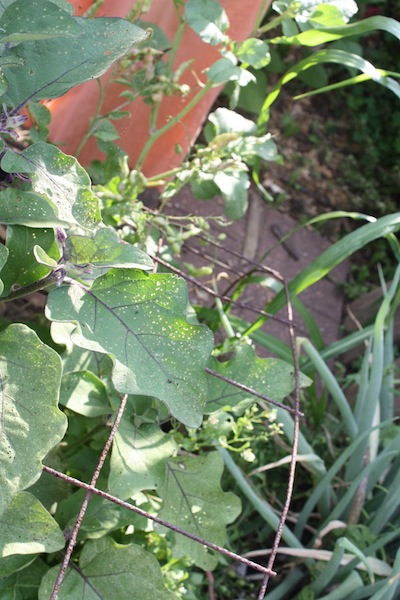
LEFT: Eggplant with one singular flea beetle.We were thrilled to learn some tricks that have worked for Joan.  Our Japanese eggplant suffered much this summer from the flea beetles.  I'm usually on top of this with a little organic neem spray but alas Farmer Gabriel kept me inside most of the summer.  Joan plants radishes at the end of the eggplant row as a trap crop and it will be a definite trial here next year.

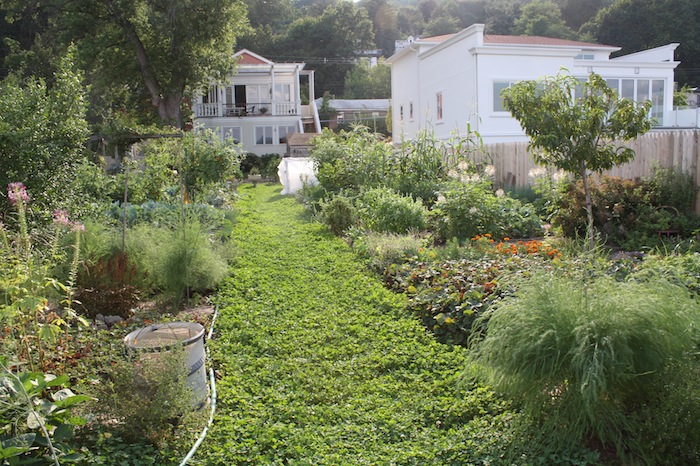
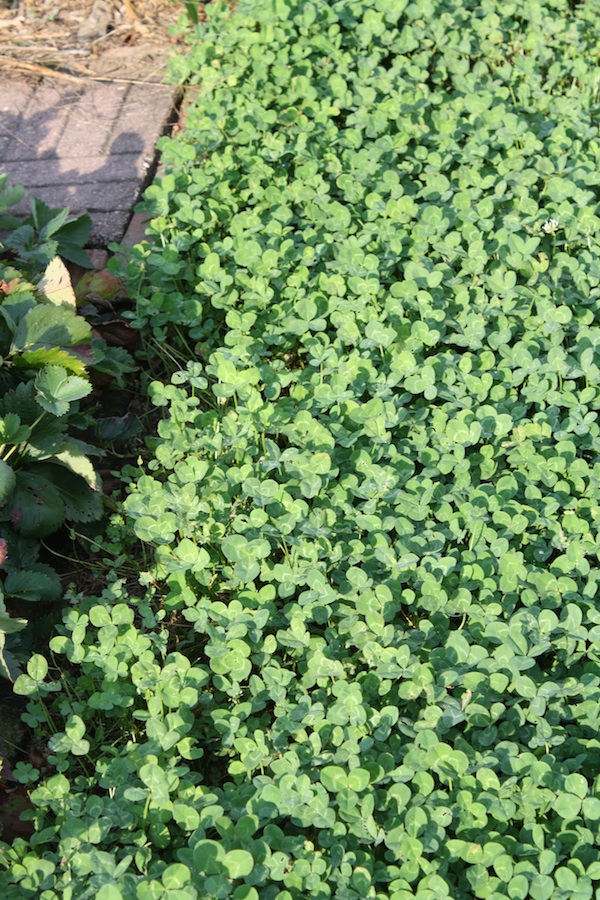
Other discoveries included Joan's white clover groundcover.  I knew about this from our permaculture studies as a nitrogen fixer but never knew it could be so beautiful and so steppable.  She said the trick is to make sure you pull all other weeds out early on as it starts to grow in.RIGHT: White Clover: Ground cover and nitrogen fixer
Two new varieties really caught our attention. One is a pepper called "Puerto Rican No Burn Pepper."  It looks like a habeñero, has the smoky unique taste of one but there is NO burn.  I was hesitant when Joan asked me to bite into one but it was truly a surprising taste.

The other variety that excited us was a basil that does not flower.  As I was behind with the flea beetles this year, I was also behind trimming off the flowers on my Genovese basil.  This variety not only does not flower, you can save it as a cutting over winter and then just replant the flower in the spring.  It has a more sweet cinnamon taste and grows in a columnar fashion.
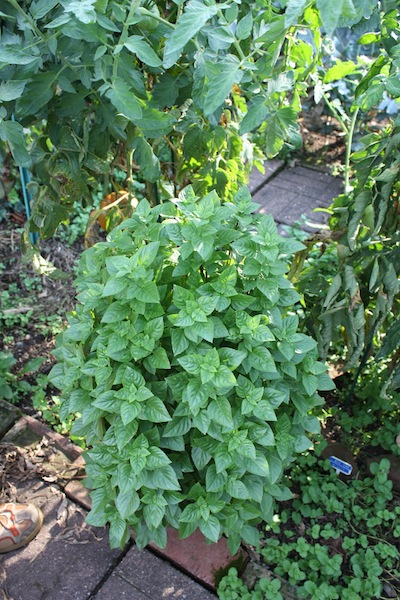
Aussie Basil

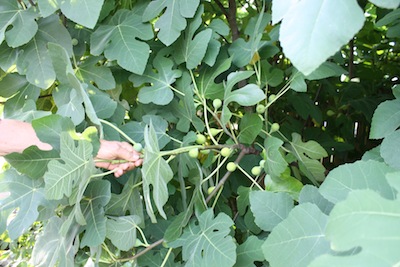
And if you've read Joan's two books: This Organic Life: Confessions of a Suburban Homesteader and Growing Older: A Chronicle of Death, Life and Vegetables, you will know this famous fig tree that is thriving very well.
 

And here is a shot of seasoned farmer Joan and our new farmer Gabriel who attentively basked in all of Joan's stories as we sat there...


Recipe: Burnt Okra with Potatoes, Garlic and Basil

Our intern Pippa requested Okra to be grown this year.  We had little experience cooking/eating okra and heard it was slimy.  The trick is to harvest when young (less than 4" long).  From a greenhouse bed measuring 4 x 6, we've been getting 1/2 lb every 2 days.  Here is a delicious way to serve them...

Peanut Oil

2 cups Okra tops discarded sliced 3/8"

2 cups small dice potato

1 Tbs minced garlic

2 Tbs minced basil

salt and pepper


Using a cast iron skillet, coat the bottom with peanut oil and heat to medium.  Add okra in one layer and cook until browned.  Stir and then add potatoes, salt and pepper.

Stir and cook until potatoes have browned adjusting heat or adding more oil if necessary.  Once they have browned, add garlic and stir.  Then add basil and stir once more.

Serve immediately!

Adapted from a recipe from Food52
Sunday
Dec042011

Organic Yuletide: The No Pesticide Tree

In maintaining a pesticide-free body, a logical extension would be a chemical-free abode.  While it has become quite easy to do that with cleaning products, fabrics and other materials, I have found it extremely difficult to find an organically grown Christmas tree each season.  Even amidst the Hudson Valley where organic or certified naturally grown food from the small farm has become easier to find, Christmas trees grown without pesticides are a rare find.  Most people don't realize that keeping a tree or other holiday greenery in the home can be potentially hazardous.  Holiday greenery is commonly sprayed with over 25 different pesticides known to be dangerous to either the environment or human health. 

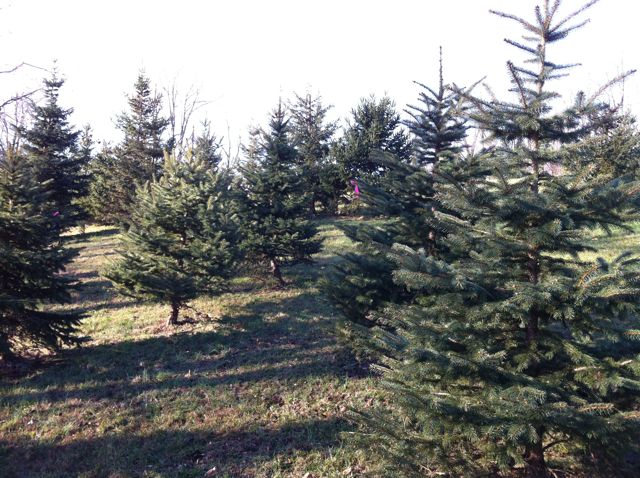
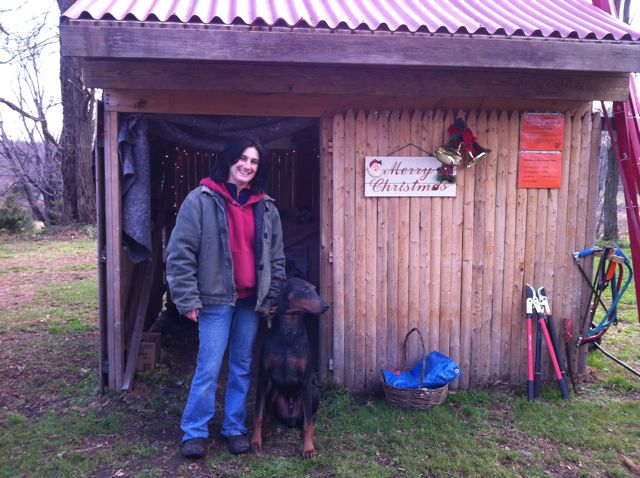
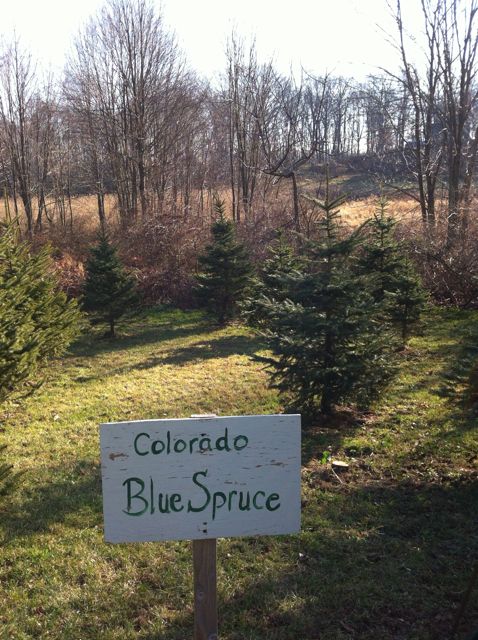
This year's web search was successful.  In Dutchess County in the town of Red Hook, New York we found Benner Tree Farm owned by Bernadette Knopfli which she maintains as a side business with the help of her 3 children and 1 year old blue Doberman Max.  Though not organically certified, no pesticides whatsoever are used in killing weeds or in preventing various diseases or predators (deer and insect) from attacking the trees.  Her six acre property grows Colorado blue spruce, White fir, Douglas fir and White spruce trees of different sizes and shapes.  You pick the tree and cut it down yourself ensuring that you have the freshest, longest lasting tree. Bernadette tells us that she plants anywhere from 500-1000 saplings each spring. 

We chose a 7 foot Colorado blue spruce which took six years to grow.  This year's rains were actually beneficial to the growth of these trees even though neighboring food farms suffered, spruce trees instead suffer from droughts.  


Much of the work during the year is cutting the grass around the trees constantly and Bernadette is entertaining the idea of keep a resident goat to do the work while fertilizing the trees but the big question is, do goats eat the trees?

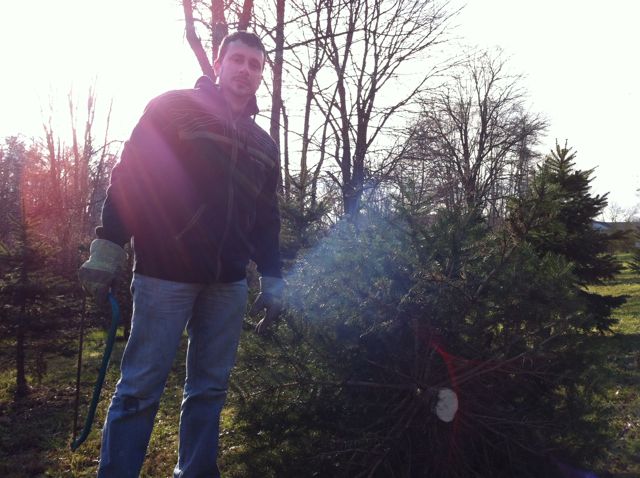
Our chosen Colorado Blue Spruce Charlie cut himself finds a home at Hook Mountain Growers Wherever you live, we hope you do a little investigating on your own and support any number of farms that may grow either organically or without the use of pesticides.  Not only will it benefit you and your family's health, but a local organic tree is beneficial to the environment and the local economy.


Visit Benner Tree Farm and enjoy some hot apple cider from Mignorelli Farm with Bernadette and Max at 179 Benner Road, Red Hook, NY 12571.

Phone: 845-835-8220. Alternate Phone: 914-466-5722. Open: Saturday and Sundays from 9am to 5pm


Friday
Sep302011

Considering Heritage Turkeys for the Thanksgiving Table

Each Thanksgiving, 45 million turkeys are cooked and eaten.  Chances are, the turkey that you will be enjoying on Thanksgiving is a typical white broad-breasted turkey bred to develop as large a percentage of white meat in as little time as possible.  Large scale agriculture is all about profit: raising animals having the largest volume of meat in the shortest amount of time. Usually there is little to no consideration on the quality and taste of the product.  Only recently have sustainable agriculture advocates and preservationists been able to bring awareness of heritage breeds to the table...literally.  Heritage breeds are what we ate before the push to raise animals quickly and cheaply became mainstream.  According to Patrick Martins, founder of Heritage Breeds USA in Brooklyn New York, “the heritage breed reflects man’s best attempt at a good tasting turkey.  The white broad-breasted represents man’s attempt to produce a turkey that lives indoors and grows quickly.”  

Many people may be disturbed to know that their broad breasted turkeys cannot reproduce on their own without the help of artificial insemination.  Their body shape prevents this from occurring naturally and because they gain so much weight so quickly, oftentimes, these birds, if left to grow older, would not be able to walk or stand as their legs would be unable to support their own body weight.  With many more people questioning where their food comes from and how it was raised, the door has been opened for heritage breed turkeys to make a comeback.  With names like Bourbon Red, Narragansett, Jersey Buff, Slate, Black Spanish and White Holland, these old-time turkeys have a distinctive rich taste, more dark meat and certainly more flavor.


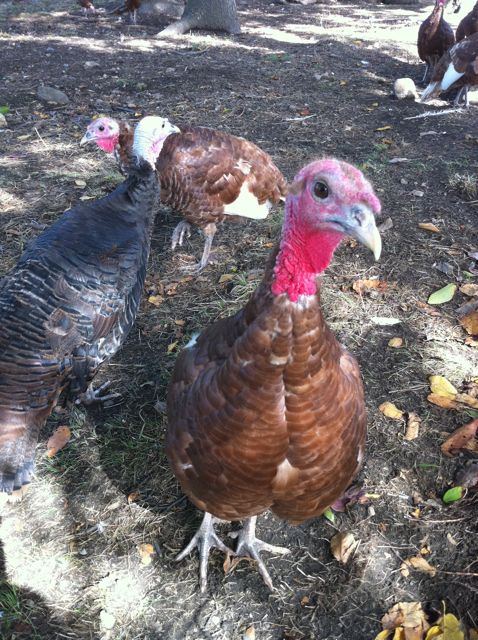
Purchasing these breeds sometimes costs twice that of a pasture-raised broad breasted turkey and there is a good reason for that.  While the standard turkey takes 18 weeks to reach market size, heritage turkeys take 24-30 weeks.  Not only is it more costly to raise them but they are more time-consuming as well.  Because they have more of the instincts of the wild turkey, they want to fly unlike their sedentary and weighted cousins.  Still, even with the high costs to the consumer, farmers barely profit from selling these birds.  Burgeoning consumer demand for these breeds are being met by some small farms.  Heritage Breeds USA sold approximately 800 heritage turkeys in 2002 and are expecting to sell about 8000-10000 by mail order this season.  If you are looking for local resources, places where you can actually visit and see your heritage turkeys develop, grow and lead a happy existence (for at least a few months), you have only three choices.  Stone Barns in Pocantico Hills raises Bourban Red turkeys that sell out quickly, usually to membership holders.  Upstate in Germantown, New York, Peter Davies at Turkana Farms raise Bourbon Reds, Spanish Blacks, Royal Palms and Narragansetts, slaughtered three days before Thanksgiving and delivered to NYC or to be picked up at the farm. “There’s a difference in taste with heritage turkeys because it takes longer to reach market size and they get lots of exercise” states Mr Davies who also obtains organic grains to feed his birds from the nearby Lighting Tree Farm in Millbrook.  Heritage turkeys are so succulent that there is no need for brining and you cook them like any other turkey.  This rare commodity in the Hudson Valley usually sells out locally by October, however, you can purchase them from Heritage Breeds USA which obtains their turkeys from two farms in the midwest.

Heritage meats can still be enjoyed beyond the Thanksgiving table.  Peter Davies states that the Christmas goose, an Old World tradition, is also becoming a popular choice. It has the texture and consistency of beef rather than poultry and cooks just like a turkey.  Turkana farms offers a Toulouse Geese available for Christmas and offers wonderful recipes on cooking your bird.  We plan on making a Christmas goose again this season.  Don't forget to collect the "liquid gold" or goose fat to use in the coming months.  Sublime when eggs or potatoes are cooked with it!

Monday
Sep272010

Another Day in Foodie Paradise: Hudson Valley Garlic Festival 2010


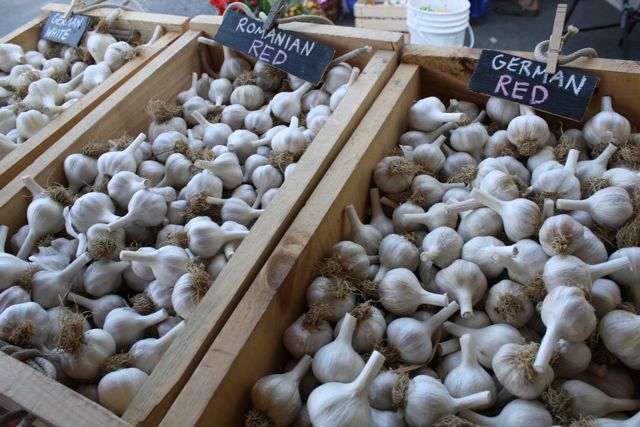
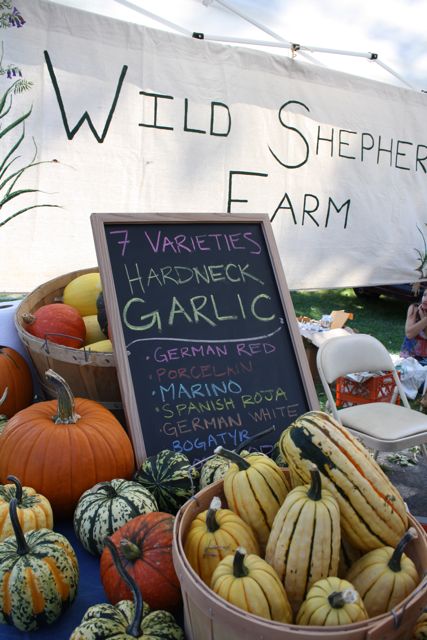
Fog and Thistle Farm in Germantown, New YorkWhen pondering what you should grow in the fall, there is one clear answer: Garlic.  Easy to grow and rewarding, this allium is a powerful player in achieving optimum health.  There are many websites with great instructions on growing, maintaining, harvesting and storing garlic.  Take 1 clove of garlic and place in the ground in October (in Zone 6 New York), pointy side up, 2” deep and 6” apart.  Cover with seed free mulch and wait patiently until the spring.  You’ll first enjoy eating the garlic scapes in June and then finally the bulbs in mid-summer and on.    You do NOT want to use garlic for planting from your regular grocery since it is likely sprayed with a substance to prevent sprouting, according to Witchcat Farms in Vermont.  Buy directly from the farmer.  We met the nice people at Witchcat Farm at the Hudson Valley Garlic Festival in Saugerties, New York.  This was the 22nd year of the festival and runs at the end of the month every September.  We loaded up on 2 organic varieties from Witchcat Farm: German Porcelain Music, 4-5 large cloves per head and mild in taste and the more unusual Hungarian Purple, with 6-8 cloves and more spicy and pungent in flavor.


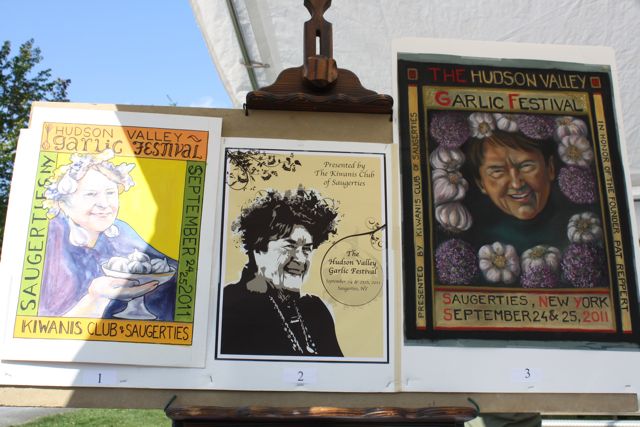
Possible posters for the next garlic festival in 2011
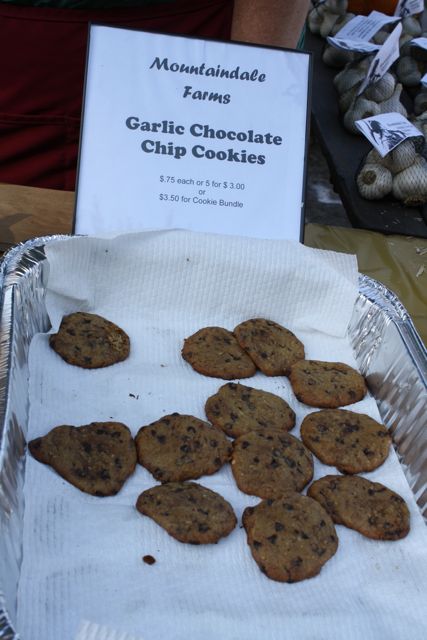
The Hudson Valley Garlic Festival is one of over 50 garlic festivals in the country.  There is everything garlic you can imagine.  Garlic Hamburgers, Garlic Ice Cream, and Garlic Chocolate Chip cookies that we snatched up from Mountaindale Farm.

Soft, gooey and so right after a garlic heavy meal

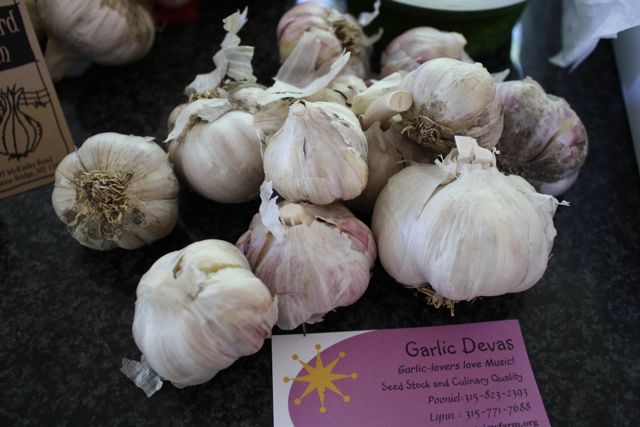
Over 45 garlic farms, mostly from New York State, set up gorgeous booths selling their incredible bounty.  The other varieties we purchased were Spanish Rojas from Free Bird Farm, German Reds from Six Circles Farm, and Riesig from Cedarville Farm.  We were especially excited about a rare variety called MarJean from The Garlic Devas in Lewis County New York.  This garlic, with no official name, has been grown for generations in New York by Marty and Jean, neighbors of The Garlic Devas, thus the name, MarJean garlic.  Marty and Jean are now in their mid 80’s and happy to see their garlic live on with The Garlic Devas.  We are definitely planting lots of this variety and will continue Marty and Jean’s work.


We already harvested 200 garlic heads this July on our farm but we have to find the balance between how much we personally consume and how much we sell to become sustainable i.e. not having to buy more garlic to seed every season.  This season we plan on upping the ante and planting at least 400 cloves.


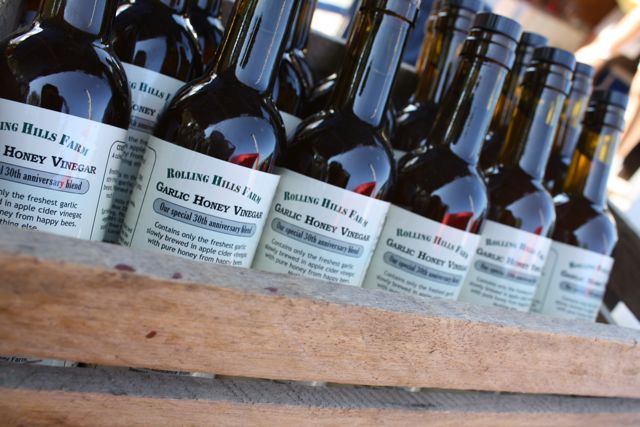
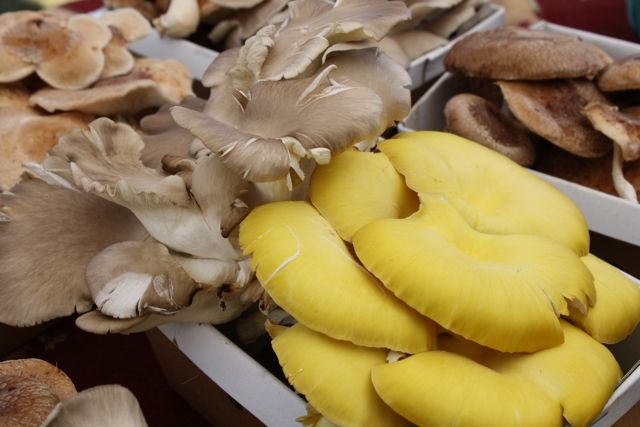
In addition to garlic, there was honey which  we bought from Swarmbustin Honey, Maple Syrup from Mapleland Farms, Garlic Vinegar from Rolling Hills.  This garlic vinegar is indispensible in our salad dressingsGorgeous yellow oyster mushrooms from Wiltbank Farm in the Catskills, venison and buffalo products from Highland Deer Farm (the Buffalo steak was divine!).  Why deer need to be farmed in this area is an enigma!


Yellow and brown oyster and shiitake mushrooms are Wiltbank Farm's specialty
We stopped and spoke with David Stern current Director, writer, lecturer, horticulturist and cofounder of the Garlic Seed Foundation, an educational not-for-profit organization that promotes ecological production and hearty consumption of garlic.  I asked him why, in New York State when we have a plethora of garlic farms, does grocery Visit the Garlic Seed Foundation store garlic come from China or Argentina (even Whole Foods).  His simple answer, as a farmer himself was, “Why would I sell my garlic cheap when I can make a better wage selling garlic locally at farmers markets and at garlic festivals like this one?”  Good answer.  Whole Foods and other grocers want to pay the lowest price for a product so as to maximize profits.  Garlic farmers are smart and know where their markets are.  We should all consider this when purchasing garlic for ourselves and our families. By paying a bit more for local garlic we support the farmers who work hard to grow the garlic, we ensure a local source of organic garlic and most importantly we keep the farms of our local garlic growers economically viable and able to stay in business.  For more information on garlic, visit the Garlic Seed Foundation website and become a member.  Once you do you have access to the garlic hotline - someone will answer all your questions on garlic!  We joined and are looking forward to our first issue of The Garlic Press.


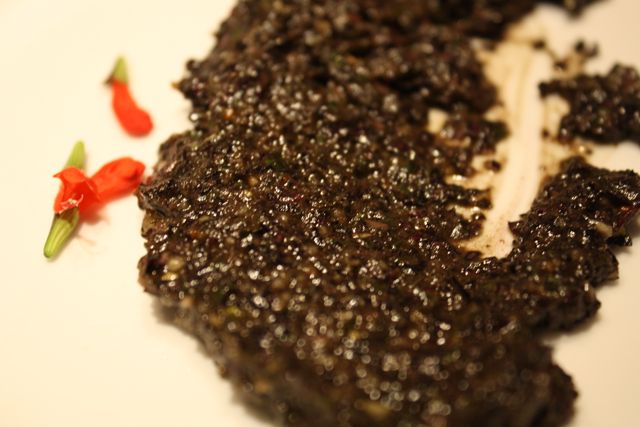
In honoring garlic in a recipe, something I love to do in so many ways, I decided to feature a Purple Basil Pesto.  I grow a basil that tastes like a Genovese Italian Basil but with deep hues of purple.  The resulting pesto turns out to be more black than purple but can be a gorgeous counterpoint in pasta or bread if topped with a chiffonade of green basil.  Out of the various pesto recipes I've tried, this is the one I go back to everytime.  It's so good, you could even leave out the cheese making this dairy-free and won't feel deprived.

RECIPE: BASIL PESTO

2 garlic cloves
Salt
3 Tbs toasted pine nuts
3 cups basil leaves, stems removed
1/4 cup grated parmesan
1/2 cup extra virgin olive oil

In a food processor, process garlic, salt and pine nuts first.  Then add basil and olive oil.  When smooth add parmesan just to combine.  If freezing, do not add parmesan until you defrost and use it in the future.

Adapted from Deborah Madison


Saturday
Aug072010

Preserving Farmland: America's Top Priority

The Glynwood CenterLast week, the New York Times ran a short editorial entitled "Death of a Farm," on the closing of America’s oldest continually operating farm in New Hampshire - Tuttle’s Red Barn farm.  John Tuttle first started the 240 acre farm in 1632 when he arrived to the New World from England.  Since then, it’s been passed down 11 generations.  To drive home the point of how long ago that was, in 1632, Gallileo was still publishing and was forced, by the Pope, to recant the idea that the earth orbits the sun the following year.  On Tuttle’s Red Barn Farm website, the current Tuttle family cites that the decision to close was borne from an exhaustion of resources including their bodies, minds, hearts, imagination, equipment, machinery, and finances.  Dwindling sales from customers that used to use shopping carts are now spending thrifty using only their hands for what they can afford to carry out.  Implicit in their explanation is the fact that it’s just cheaper to buy your food from the A&P than from a family run farm.  This sad story brought tears to my eyes that quickly dried when I toured the Glynwood Center in Cold Spring, NY this week.


Providing me with more Kleenex (or Seventh Generation facial tissue), though this time for tears of joy, the Hudson Valley is now an area that Obama has recognized as one of the 25 places in the country being considered by the government as a top prioroity area for land protection and the revitalization of rural communities.  US Agriculture Secretary Tom Vilsack, as part of the Great Outdoors Listening Tour, was there to learn from people directly involved in finding grassroots solutions to conserving our lands and waters and reconnecting Americans to the outdoors.  The Rockland Farm Alliance, for which Hook Mountain Growers is now an active member of the Board of Directors for the Cropsey Farm, was represented at the meeting on August 6th, 2010.

GLYNWOOD

The mission of the center is simple: to help communities in the Northeast save farming.  This non-profit center’s values are summed up here:

    “Glynwood believes that the rural working landscape is one of civilization’s highest achievements—that a countryside featuring healthy pastures, productive crops, fruitful orchards, well-managed woodlots, and sturdy barns is aesthetically beautiful and emblematic of thriving communities...Glynwood maintains that farming done in harmony with the natural environment can be both economically viable and environmentally sustainable...Glynwood regards food produced, distributed, and consumed locally as beneficial to human health and community, and to the natural environment.”


THE FARM


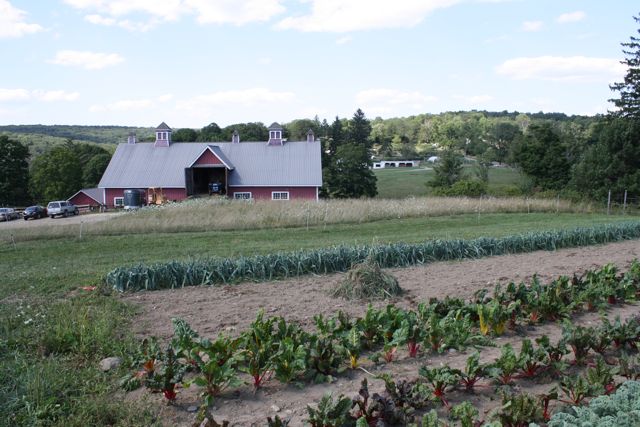
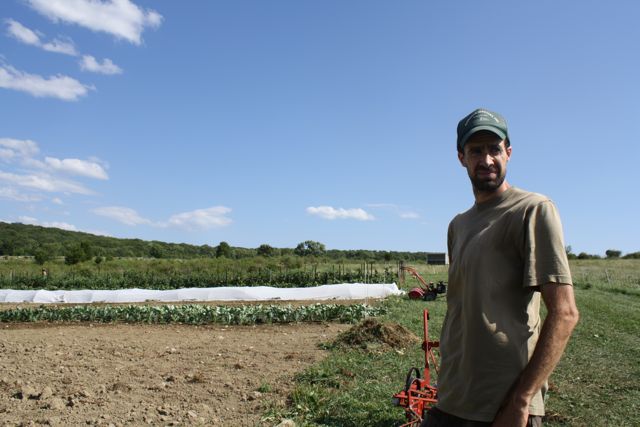
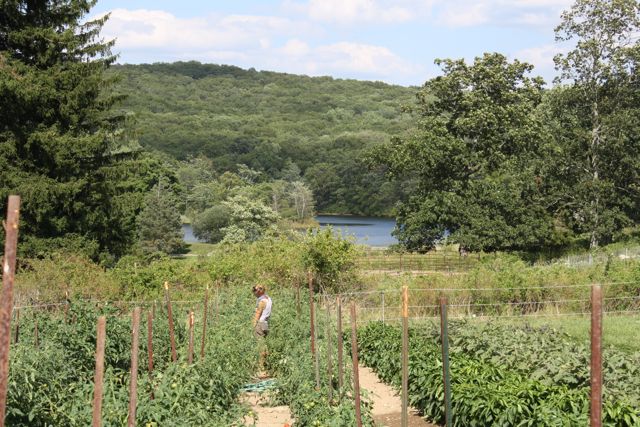
Glynwood’s unassuming entrance led us on a road to the main farm.  One must drive slowly and mindfully, traversing a bucolic narrow dirt road within the woods that follows a gentle brook.  Immediately you feel a transformation into a miraculous woodland reminiscent of Thoreaus’s Walden Pond.  We passed by one of the many cottages on the property with one being used as the backdrop to a Christmas photo shoot for the clothing company Aeropostale.  It ‘s August and holiday wreaths and mistletoe were strewn at every doorway.  Not so unusual if Christmas is in...Santa Barbara.  Ironically and sadly, it makes financially more sense to rent out your farm for a photo shoot because it sure brings in more money than selling vegetables.  Past the hoopla we met the venerable Dave Llewellyn, the head farmer at the center for a special insiders tour.  We first met Dave at a lecture he gave at the Young Farmer’s Conference at Stone Barns in December 2009.  His lecture sparked our interest in Nutrient Density farming and changed the way we view the soil and food quality.

Dave grows vegetables in two separate areas: one is 3/4 of an acre and the other is 1/2 acre.  Of course, this doesn’t tell you much about the rest of the farm.  It’s 225 rolling pastoral acres are home to the grazing fields for cows, sheep, goats, chickens and horses.  One horse, named Maggie is even being used as a draught horse!  Beautiful young smiling lady farmers in electric tractors whiz by mowing down paths, man (or woman) the CSA distribution center, and make sure irrigation is working.  Ahh, I think I’ve found paradise.  I find out that their grass-fed cattle and poultry are sold to their CSA members and I wish I lived in the area to take part of this bounty. 


As Dave brings us to the growing areas, he mentions that the Glynwood center is in the process of leasing 15 acres in nearby Garrison, NY, for more growing.  We were a little shocked that they couldn’t find that acreage in their 225 acre center, but Dave pointed out that most of the land is rolling land perfect for grazing (and probably grape growing) but not for vegetables.  We found out that Dave has only been doing this for 10 years, prior to that, he was a law clerk.  He then  founded and managed a now defunct CSA in Mahwah, New Jersey with his wife before coming to Glynwood.  His plans for the 15 acres is groundbreaking.  It’s not just 15 acres for growing, but it’s going to be a model for how one can economically start-up and run a farming operation in the Northeast.  A very important mission since, according to the Bureau of Labor Statistics, 40% of our current farmers are now over 55 years old and the new generation of farmers need to be innovative especially faced with energy, climate and water challenges.  Kudos for Dave and the Glynwood Center for promoting sustainable agriculture in this area on a whole new level.

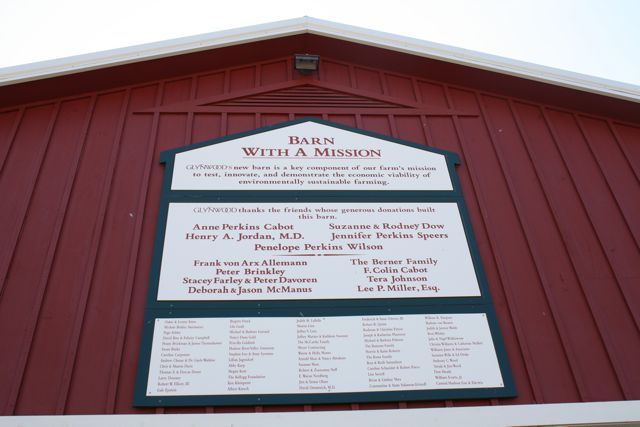
The recent addition to the center: "A Barn with a Mission"

This recent barn addition will house their first boot stomping Barn-Dance gala on Saturday September 11, 2010 which includes a 3 course dinner with the bounty of the Hudson Valley and, of course, dancing.  This is the chance to “revel in supporting Glynwood’s mission to saving farming.”  So if you were moved by the closing of the Tuttle’s Red Barn Farm in NH, don’t wallow in despair, there are still so many things you can do to promote the movement like spend your dollars at the farmers market or at your local family farm or just even coming to the Gala and better yet, if you can, donate to the cause.  And if you're a local Rockland resident, donating to the Rockland Farm Alliance will help two new community farms come to fruition.