alliums ameraucana Anthony Bourdain aphids Appleseed Permaculture aquaponics arthritis artichokes Asian Vegetables aussie basil baby chicks baby turnips bearss lime bee keeping beet greens beneficial insects benner tree farm Biochar Bitter Melon blight blooming hill farm boothby blonde cucumber brix broccoli brussels sprouts cabbage cabbage hill farm camp hill farm cancer caraflex celeriac chicken coop chickens children chinese tamale chives cilantro cilantro root coconut cold frames collard greens Compost coriander corn crop rotation cruciferous crucifers cucumber Dan Barber dan kittredge Dave Llewellyn detox dirty dozen dragon fruit Dutch white clover dwarf citrus eggplant Elderberries factory farms farm to table farmer's market farmers markets Fava beans ffarm to table fish oil flea beetle flowers food allergies food combining food miles founding farmers four wind growers Fred Kirschenmann french bulldog G6pd deficiency garlic garlic festival garlic scapes geese Glynwood grass-fed beef Great Outdoors Listening Tour green tomatoes greenhouse growing indoors Hanalei Hemlock Hill Farm heritage turkey heritage USA hudson valley farms hurricane Irene hyssop iced tea infections influenza Insect control isothiocyanates joan gussow jolie lampkin joong kaffir lime kale Kauai kohlrabi korean licorice mint Ladybugs late blight leeks lettuces local food locust tree maine avenue fish market menhaden meyer lemon mycelia mycorrhizal natural fertilizers nectary nightshades No Reservations Nurse cropping nutrient density okra organic Baby food organic christmas tree Organic Pest Control Parsley Paul tappenden peas Permaculture pesticides pesto petite watermelon plant sap pH plymouth barred rock pole beans potatoes preserving food purple basil qunice Radish Greens rainbeau ridge farm raised beds rampicante raw food real food campaign red hook Rockland Farm Alliance ronnybrook farm row covers salt-preserved duck eggs sambucus nigra seed saving seedlings Sheet mulching small space soil analysis soil blocks soil conductivity sorrel Squash Vine Borer star fruit sugar snap peas sustainability sustainable fishing Swiss Chard tabbouleh TEDx Manhattan terracing three sisters tomato sauce tomatoes trellis trovita orange turkana farms Tuttle Farm urban zen volt white clover winter harvest Winter Squash Young Farmers Conference
Indispensable Books and Resources
  • Edible Forest Gardens (2 volume set)
    Edible Forest Gardens (2 volume set)
    by Dave Jacke, Eric Toensmeier
  • The Winter Harvest Handbook: Year Round Vegetable Production Using Deep Organic Techniques and Unheated Greenhouses
    The Winter Harvest Handbook: Year Round Vegetable Production Using Deep Organic Techniques and Unheated Greenhouses
    by Eliot Coleman
  • The Biological Farmer: A Complete Guide to the Sustainable & Profitable Biological System of Farming
    The Biological Farmer: A Complete Guide to the Sustainable & Profitable Biological System of Farming
    by Gary F. Zimmer
  • The Garden Primer: Second Edition
    The Garden Primer: Second Edition
    by Barbara Damrosch
  • 1500 Live LadyBugs - A GOOD BUG! - Lady Bug
    1500 Live LadyBugs - A GOOD BUG! - Lady Bug
    Organic Insect Control
  • Acres U.S.A.
    Acres U.S.A.
    Acres U.S.A.

    The best farming and growing magazine money can buy!

  • Seed Starter Soil Block Maker Makes 4 Medium Blocks
    Seed Starter Soil Block Maker Makes 4 Medium Blocks

    2" Soil Blocker

  • Mini Soil Blocker
    Mini Soil Blocker
  • New York City Farmer & Feast: Harvesting Local Bounty
    New York City Farmer & Feast: Harvesting Local Bounty
    by Emily Brooks
  • What Doctors Eat: Tips, Recipes, and the Ultimate Eating Plan for Lasting Weight Loss and Perfect Health
    What Doctors Eat: Tips, Recipes, and the Ultimate Eating Plan for Lasting Weight Loss and Perfect Health
    by Tasneem Bhatia, Editors of Prevention


THE DAILY BROADFORK

Short journal entries detailing the nuts and bolts of our ventures in growing food at our micro-farm

Entries in Livestock (4)

Wednesday
Mar202013

Spring Has Sprung: The Year Ahead

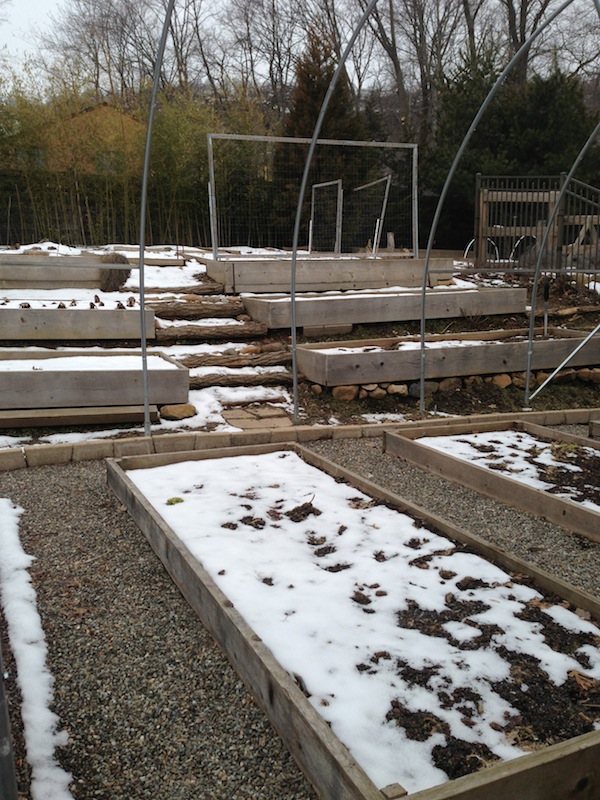
Well, this isn't what you would expect for the second day of spring.  Forecast calls for even more snow today and tomorrow.  Though St. Patrick's day is the usual signal for us to get the peas into the ground, snow on the very last day of winter has deferred our plans giving us a little more time to plan.

This year we have decided to forego our seedling sales at the farmers markets and local plant sales and concentrate efforts on really perfecting things on our micro-farm.  It's a bittersweet decision.  We are relieved that the hard work that starts from February and ends around Memorial Day will come to an end but we are sad at losing that seasonal connection we have with our community.  We've already gotten so many emails from people who have grown our plants in the previous seasons, wondering if we'll be doing them again.  Marie from Nyack told us that she was only able to grow a certain Italian eggplant with our seedlings because of their strength and vitality; prior to that she had tried many times and failed.  This makes me a bit sad, but with a toddler, I have the pull the reigns in and prioritize!

So the key words for this season are "simplicty and abundance".  With that in mind, we're opting for less maintenance and more permenance. For example, we made our greenhouse just a place for dwarf citruses: Sweet navel orange called "Trovita", "Golden Nugget" mandarin orange, Bearss Lime, Keffir Lime and Meyer Lemon trees.  We found a great source for them at Four Winds Growers in California.  They were really exceptional at helping us choose what would work in the ground in a permanent greenhouse and we look forward to citrus fruits winter through summer.

Where we were growing things for large yields, we realized that you can actually have too much garlic.  We are trimming back on the amount of garlic grown and using beds to plant low yield veggies that we're interested in like artichokes.  We already started to seed them.  They are tricky to germinate because they need to spend 8 hours in temps of 85 degrees and the rest of the time in temps of 70 degrees.  A heatmat in the greenhouse will serve as a place for those alternating temperatures naturally.
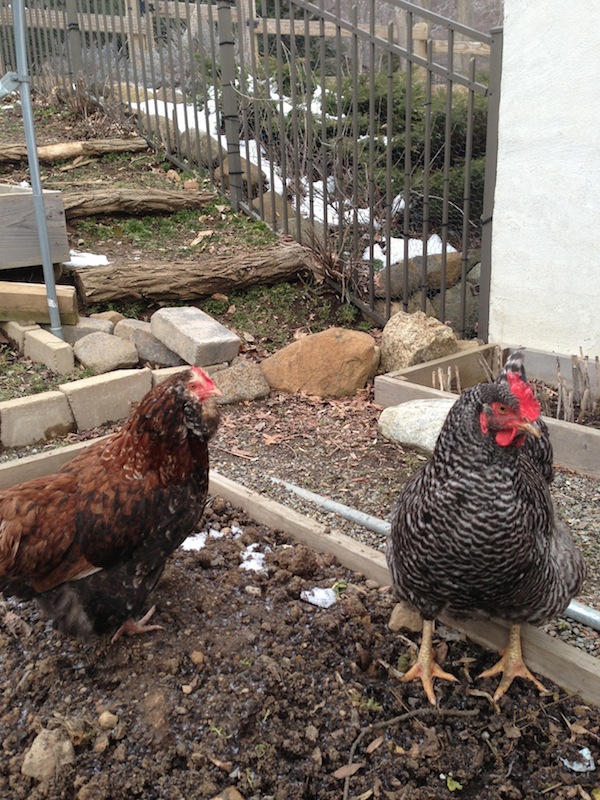
Our Plymouth Barred Rock and Ameraucana. The Ameraucana just went through a period of broodiness which we were able to break.New chickens will be integrated to our current flock that has been whittled down to 5 chickens after some illnesses and predator attacks (one that included our own dog).  There's an art to integrating them so hopefully that will go smoothly.  Two years ago we ordered day old chicks from Ideal Poultry in Texas and they were sexed properly - we didn't get one rooster!  Look for updates in late spring... Speaking of animals, we are also toying with the idea of getting a cat to help keep the chipmunks and squirrels at bay this year but the thought of one more life to care for at this moment is definitely making me hesitate.

And finally, we want to better manage what we have already planted for the best yields.  That means really paying attention to pruning and training especially after a year of grape vines gone wild.  And we'll also continue more with the nutrient density soil management we were on top of before the baby came into our lives.  Hopefully this mama will get back on track continuing the blogs about what we do here after a short hiatus due to sleep deprivation.
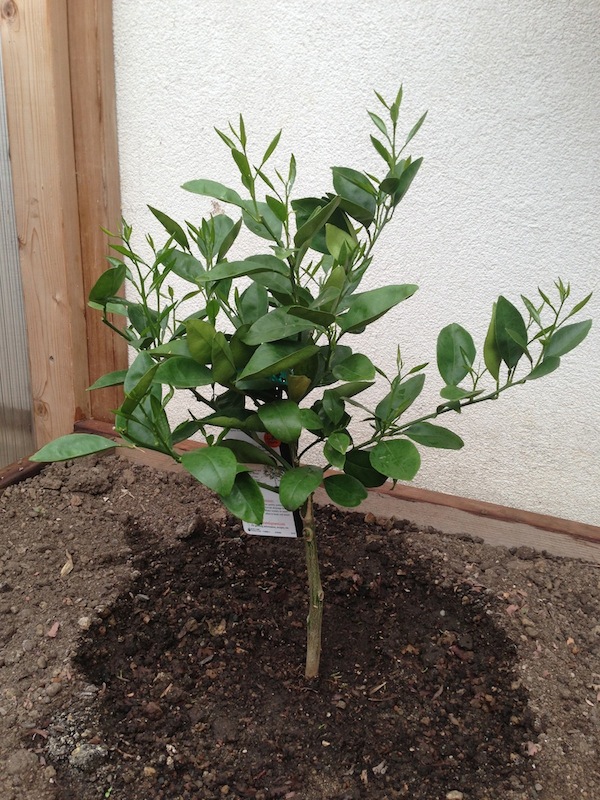
Even "dwarf" citruses can grow up to 12 feet. Ideally they should be planted 4-5 feet from each other at the very least.

Happy Spring and may this season bring you simplicity and abundance!


Friday
Sep302011

Considering Heritage Turkeys for the Thanksgiving Table

Each Thanksgiving, 45 million turkeys are cooked and eaten.  Chances are, the turkey that you will be enjoying on Thanksgiving is a typical white broad-breasted turkey bred to develop as large a percentage of white meat in as little time as possible.  Large scale agriculture is all about profit: raising animals having the largest volume of meat in the shortest amount of time. Usually there is little to no consideration on the quality and taste of the product.  Only recently have sustainable agriculture advocates and preservationists been able to bring awareness of heritage breeds to the table...literally.  Heritage breeds are what we ate before the push to raise animals quickly and cheaply became mainstream.  According to Patrick Martins, founder of Heritage Breeds USA in Brooklyn New York, “the heritage breed reflects man’s best attempt at a good tasting turkey.  The white broad-breasted represents man’s attempt to produce a turkey that lives indoors and grows quickly.”  

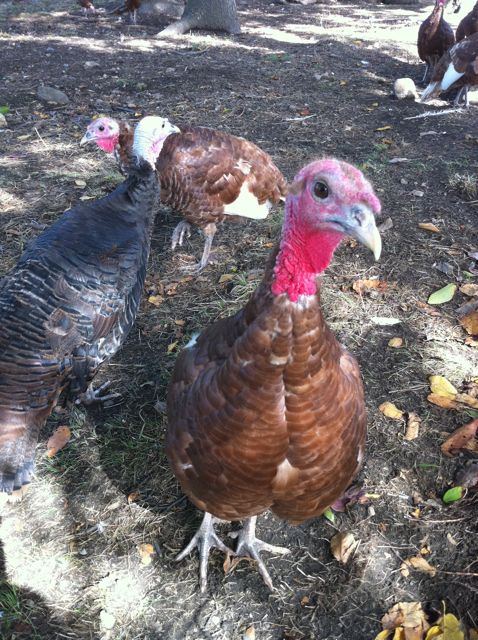
Many people may be disturbed to know that their broad breasted turkeys cannot reproduce on their own without the help of artificial insemination.  Their body shape prevents this from occurring naturally and because they gain so much weight so quickly, oftentimes, these birds, if left to grow older, would not be able to walk or stand as their legs would be unable to support their own body weight.  With many more people questioning where their food comes from and how it was raised, the door has been opened for heritage breed turkeys to make a comeback.  With names like Bourbon Red, Narragansett, Jersey Buff, Slate, Black Spanish and White Holland, these old-time turkeys have a distinctive rich taste, more dark meat and certainly more flavor.


Purchasing these breeds sometimes costs twice that of a pasture-raised broad breasted turkey and there is a good reason for that.  While the standard turkey takes 18 weeks to reach market size, heritage turkeys take 24-30 weeks.  Not only is it more costly to raise them but they are more time-consuming as well.  Because they have more of the instincts of the wild turkey, they want to fly unlike their sedentary and weighted cousins.  Still, even with the high costs to the consumer, farmers barely profit from selling these birds.  Burgeoning consumer demand for these breeds are being met by some small farms.  Heritage Breeds USA sold approximately 800 heritage turkeys in 2002 and are expecting to sell about 8000-10000 by mail order this season.  If you are looking for local resources, places where you can actually visit and see your heritage turkeys develop, grow and lead a happy existence (for at least a few months), you have only three choices.  Stone Barns in Pocantico Hills raises Bourban Red turkeys that sell out quickly, usually to membership holders.  Upstate in Germantown, New York, Peter Davies at Turkana Farms raise Bourbon Reds, Spanish Blacks, Royal Palms and Narragansetts, slaughtered three days before Thanksgiving and delivered to NYC or to be picked up at the farm. “There’s a difference in taste with heritage turkeys because it takes longer to reach market size and they get lots of exercise” states Mr Davies who also obtains organic grains to feed his birds from the nearby Lighting Tree Farm in Millbrook.  Heritage turkeys are so succulent that there is no need for brining and you cook them like any other turkey.  This rare commodity in the Hudson Valley usually sells out locally by October, however, you can purchase them from Heritage Breeds USA which obtains their turkeys from two farms in the midwest.

Heritage meats can still be enjoyed beyond the Thanksgiving table.  Peter Davies states that the Christmas goose, an Old World tradition, is also becoming a popular choice. It has the texture and consistency of beef rather than poultry and cooks just like a turkey.  Turkana farms offers a Toulouse Geese available for Christmas and offers wonderful recipes on cooking your bird.  We plan on making a Christmas goose again this season.  Don't forget to collect the "liquid gold" or goose fat to use in the coming months.  Sublime when eggs or potatoes are cooked with it!

Saturday
Jul302011

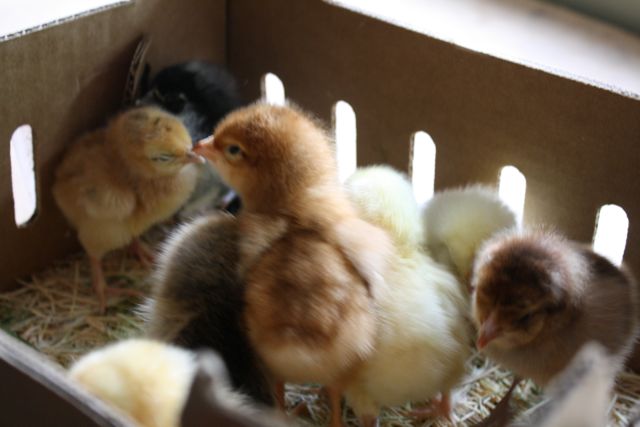
Baby Chicks Have Arrived!

Yesterday we picked up our 2 day old baby chicks from the post office we ordered from Ideal Poultry in Texas.  They had a great assortment of different chicks this late in the season and the ordering and shipping process was cake.  The harder part was finding an appropriate chicken coop for our brood and settled on one from Green Chicken Coops.  The great thing about this company is they are in line with our values: wood is certified ecologically sustainable, there are no harmful toxic glues or chemicals and a low VOC paints and colors are used.  We haven't gotten that yet but the chicks won't be outside for a good 4-5 weeks from now anyway.


In choosing the varieties of chicks we went with breeds that were more docile and quiet.  Egg color was also a factor and seeing blue/green eggs is still a novelty for us I don't think we'll outgrow.  These are the varieties we have:

Red Sex Link, Barred Rock, Black Australorp, Buff Orpington, Ameraucana, and Salmon Faverolle.  So far the most docile seem to be the Buff and the Salmons.

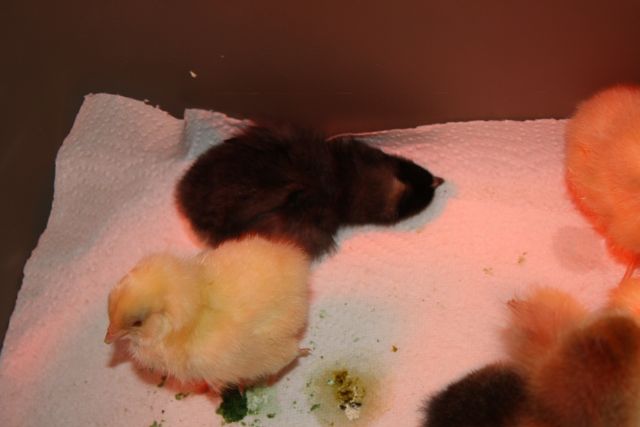
 We initially though this chick wasn't doing well but realized that babies just sleep a lot!

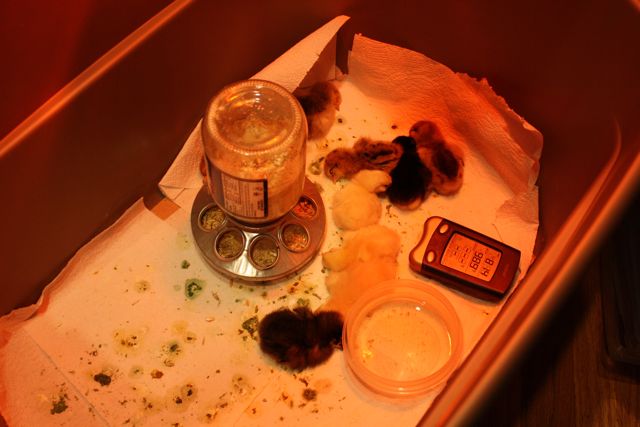
The set up was simple: An old large container we found in the garage (you can use a cardboard box as well), a heat lamp with an infrared bulb, a $3 chick feeder that you can conveniently attach a quart jar to and a water bowl (we plan on making a DIY waterer with an old plastic bottle).  There are many great resources on the web for specific instructions and we also relied on the book Storey's Guide to Raising Chickens: 3rd Edition (Storey's Guide to Raising Series).


The other important consideration is the starter feed and we choose Hiland Natural Feed which doesn't contain GMO products and soy and is of course, organic.  We are many weeks, 20 to be exact to harvesting any eggs and by the time we reach Christmas the light won't be enough to support the production of eggs.  So looking forward to spring time egg abundance.  In the meantime, we'll continue to indulge in the best local eggs we've ever had from our friends at Bluefield Farm in Blauvelt.

 Our simple brooding box and sleepy chicks

We haven't been able to identify which chick is what breed but I can only assume that we'll be able to better do that once they've grown a little.  Then comes the naming process - fun!  Stay tuned for more chicken updates...

Sunday
Apr032011

Prep Work for Chickens at the Micro-Farm

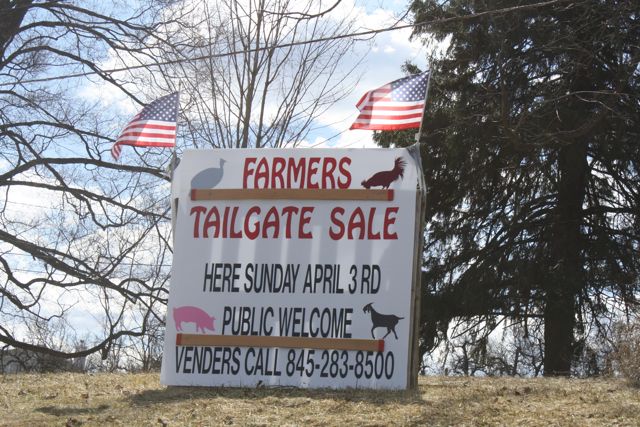
This weekend, our friend Jen who writes the Nyack Backyard blog, told us about a tailgate chicken and goat sale in the Hudson Valley.  This was truly a tailgate sale, meaning there were pick-up trucks lined up selling their wares.  The wares were chicks, chickens, goats, peacocks, doves and pigeons.  We showed up to scout out what was available since we first have to plan out a chicken coop.

We have a large area that could theoretically accomodate at least 20 chickens.  The area needs to be fenced, permits need to be gotten and all sorts of things need to be learned about chicken raising.  We're relying on a few sources: our friends Joy and Rebecca at Bluefield farm whom we currently buy our eggs from and the old reliable: books.  We've chosen the highly rated and recommended Storey's Guide to Raising Chickens, 3rd Edition.

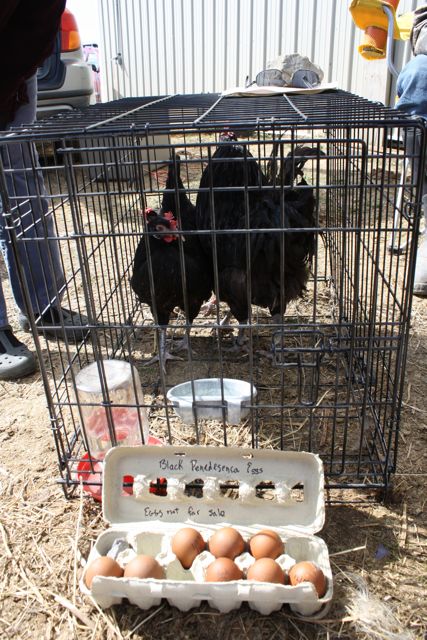
We want to find chickens that lay a variety of eggs: blue, green, white, brown and these interesting "black" penedescenca eggs.


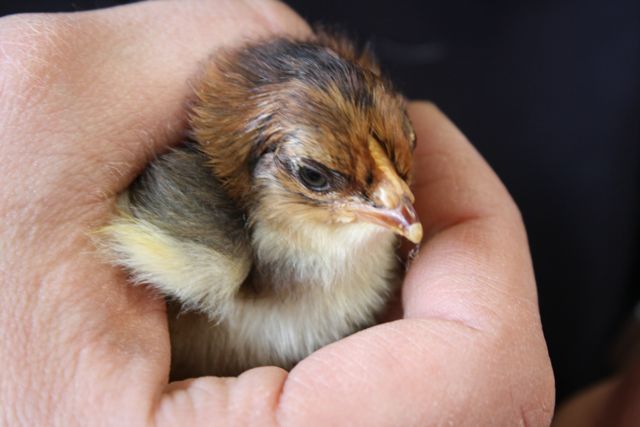
 There were little chicks under heat lamps all around.  I wanted this little gal, an Araucana that lays blue eggs.

Now, we're off to explore chicken coops.  We'll start at 6 this summer but will add on another 6 next spring.  I mean, I assume taking care of 12 is no harder than taking care of 6, right?

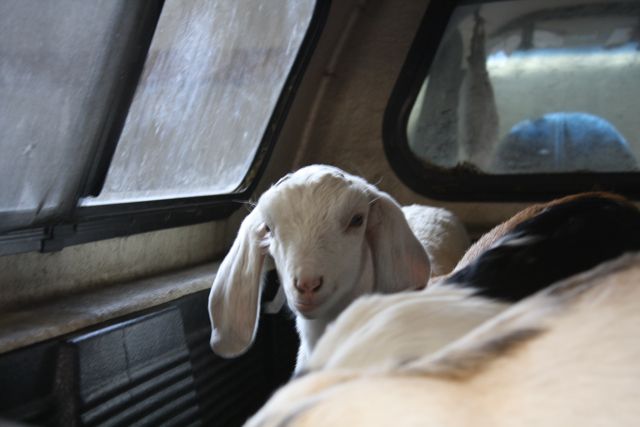
And then there are the goats we want....


What will our crazy Frenchie Archie do with this guy around?