alliums ameraucana Anthony Bourdain aphids Appleseed Permaculture aquaponics arthritis artichokes Asian Vegetables aussie basil baby chicks baby turnips bearss lime bee keeping beet greens beneficial insects benner tree farm Biochar Bitter Melon blight blooming hill farm boothby blonde cucumber brix broccoli brussels sprouts cabbage cabbage hill farm camp hill farm cancer caraflex celeriac chicken coop chickens children chinese tamale chives cilantro cilantro root coconut cold frames collard greens Compost coriander corn crop rotation cruciferous crucifers cucumber Dan Barber dan kittredge Dave Llewellyn detox dirty dozen dragon fruit Dutch white clover dwarf citrus eggplant Elderberries factory farms farm to table farmer's market farmers markets Fava beans ffarm to table fish oil flea beetle flowers food allergies food combining food miles founding farmers four wind growers Fred Kirschenmann french bulldog G6pd deficiency garlic garlic festival garlic scapes geese Glynwood grass-fed beef Great Outdoors Listening Tour green tomatoes greenhouse growing indoors Hanalei Hemlock Hill Farm heritage turkey heritage USA hudson valley farms hurricane Irene hyssop iced tea infections influenza Insect control isothiocyanates joan gussow jolie lampkin joong kaffir lime kale Kauai kohlrabi korean licorice mint Ladybugs late blight leeks lettuces local food locust tree maine avenue fish market menhaden meyer lemon mycelia mycorrhizal natural fertilizers nectary nightshades No Reservations Nurse cropping nutrient density okra organic Baby food organic christmas tree Organic Pest Control Parsley Paul tappenden peas Permaculture pesticides pesto petite watermelon plant sap pH plymouth barred rock pole beans potatoes preserving food purple basil qunice Radish Greens rainbeau ridge farm raised beds rampicante raw food real food campaign red hook Rockland Farm Alliance ronnybrook farm row covers salt-preserved duck eggs sambucus nigra seed saving seedlings Sheet mulching small space soil analysis soil blocks soil conductivity sorrel Squash Vine Borer star fruit sugar snap peas sustainability sustainable fishing Swiss Chard tabbouleh TEDx Manhattan terracing three sisters tomato sauce tomatoes trellis trovita orange turkana farms Tuttle Farm urban zen volt white clover winter harvest Winter Squash Young Farmers Conference
Indispensable Books and Resources
  • Edible Forest Gardens (2 volume set)
    Edible Forest Gardens (2 volume set)
    by Dave Jacke, Eric Toensmeier
  • The Winter Harvest Handbook: Year Round Vegetable Production Using Deep Organic Techniques and Unheated Greenhouses
    The Winter Harvest Handbook: Year Round Vegetable Production Using Deep Organic Techniques and Unheated Greenhouses
    by Eliot Coleman
  • The Biological Farmer: A Complete Guide to the Sustainable & Profitable Biological System of Farming
    The Biological Farmer: A Complete Guide to the Sustainable & Profitable Biological System of Farming
    by Gary F. Zimmer
  • The Garden Primer: Second Edition
    The Garden Primer: Second Edition
    by Barbara Damrosch
  • 1500 Live LadyBugs - A GOOD BUG! - Lady Bug
    1500 Live LadyBugs - A GOOD BUG! - Lady Bug
    Organic Insect Control
  • Acres U.S.A.
    Acres U.S.A.
    Acres U.S.A.

    The best farming and growing magazine money can buy!

  • Seed Starter Soil Block Maker Makes 4 Medium Blocks
    Seed Starter Soil Block Maker Makes 4 Medium Blocks

    2" Soil Blocker

  • Mini Soil Blocker
    Mini Soil Blocker
  • New York City Farmer & Feast: Harvesting Local Bounty
    New York City Farmer & Feast: Harvesting Local Bounty
    by Emily Brooks
  • What Doctors Eat: Tips, Recipes, and the Ultimate Eating Plan for Lasting Weight Loss and Perfect Health
    What Doctors Eat: Tips, Recipes, and the Ultimate Eating Plan for Lasting Weight Loss and Perfect Health
    by Tasneem Bhatia, Editors of Prevention


THE DAILY BROADFORK

Short journal entries detailing the nuts and bolts of our ventures in growing food at our micro-farm

Entries in Carnivore Issues (3)

Friday
Sep302011

Considering Heritage Turkeys for the Thanksgiving Table

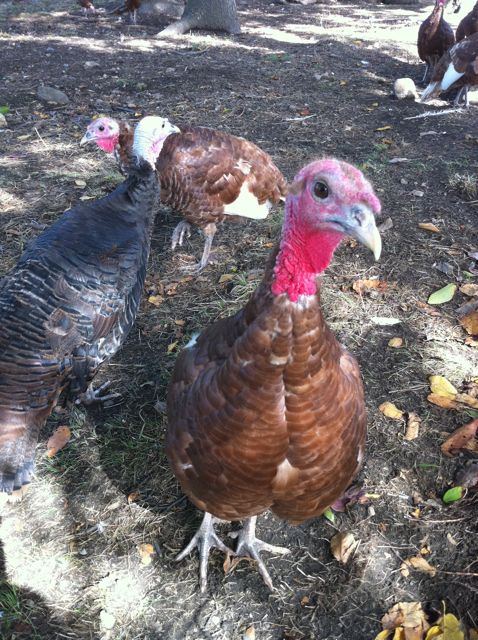
Each Thanksgiving, 45 million turkeys are cooked and eaten.  Chances are, the turkey that you will be enjoying on Thanksgiving is a typical white broad-breasted turkey bred to develop as large a percentage of white meat in as little time as possible.  Large scale agriculture is all about profit: raising animals having the largest volume of meat in the shortest amount of time. Usually there is little to no consideration on the quality and taste of the product.  Only recently have sustainable agriculture advocates and preservationists been able to bring awareness of heritage breeds to the table...literally.  Heritage breeds are what we ate before the push to raise animals quickly and cheaply became mainstream.  According to Patrick Martins, founder of Heritage Breeds USA in Brooklyn New York, “the heritage breed reflects man’s best attempt at a good tasting turkey.  The white broad-breasted represents man’s attempt to produce a turkey that lives indoors and grows quickly.”  

Many people may be disturbed to know that their broad breasted turkeys cannot reproduce on their own without the help of artificial insemination.  Their body shape prevents this from occurring naturally and because they gain so much weight so quickly, oftentimes, these birds, if left to grow older, would not be able to walk or stand as their legs would be unable to support their own body weight.  With many more people questioning where their food comes from and how it was raised, the door has been opened for heritage breed turkeys to make a comeback.  With names like Bourbon Red, Narragansett, Jersey Buff, Slate, Black Spanish and White Holland, these old-time turkeys have a distinctive rich taste, more dark meat and certainly more flavor.


Purchasing these breeds sometimes costs twice that of a pasture-raised broad breasted turkey and there is a good reason for that.  While the standard turkey takes 18 weeks to reach market size, heritage turkeys take 24-30 weeks.  Not only is it more costly to raise them but they are more time-consuming as well.  Because they have more of the instincts of the wild turkey, they want to fly unlike their sedentary and weighted cousins.  Still, even with the high costs to the consumer, farmers barely profit from selling these birds.  Burgeoning consumer demand for these breeds are being met by some small farms.  Heritage Breeds USA sold approximately 800 heritage turkeys in 2002 and are expecting to sell about 8000-10000 by mail order this season.  If you are looking for local resources, places where you can actually visit and see your heritage turkeys develop, grow and lead a happy existence (for at least a few months), you have only three choices.  Stone Barns in Pocantico Hills raises Bourban Red turkeys that sell out quickly, usually to membership holders.  Upstate in Germantown, New York, Peter Davies at Turkana Farms raise Bourbon Reds, Spanish Blacks, Royal Palms and Narragansetts, slaughtered three days before Thanksgiving and delivered to NYC or to be picked up at the farm. “There’s a difference in taste with heritage turkeys because it takes longer to reach market size and they get lots of exercise” states Mr Davies who also obtains organic grains to feed his birds from the nearby Lighting Tree Farm in Millbrook.  Heritage turkeys are so succulent that there is no need for brining and you cook them like any other turkey.  This rare commodity in the Hudson Valley usually sells out locally by October, however, you can purchase them from Heritage Breeds USA which obtains their turkeys from two farms in the midwest.

Heritage meats can still be enjoyed beyond the Thanksgiving table.  Peter Davies states that the Christmas goose, an Old World tradition, is also becoming a popular choice. It has the texture and consistency of beef rather than poultry and cooks just like a turkey.  Turkana farms offers a Toulouse Geese available for Christmas and offers wonderful recipes on cooking your bird.  We plan on making a Christmas goose again this season.  Don't forget to collect the "liquid gold" or goose fat to use in the coming months.  Sublime when eggs or potatoes are cooked with it!

Wednesday
Feb102010

Fish For Fodder: Can Eating Fish or Fish Oil Supplements be Sustainable?

Kevin Ferry pulls some striped bass from the tanks at Cabbage Hill FarmIn the gray winter months, I clamor for some signs of the lush green vegetative growth I was privy to from April to November.  Farm life here, for the most part, is about sitting down and dreaming of more ways in which we can grow more food on our micro-farm, or trying to wrestle with crop rotation when you have such a small space and grow bio-intensively.  Fortunately, some nearby farms were still open to the public for tours during these bleak months so we visited Cabbage Hill Farm in Mt Kisco, New York.  All of their outside beds were resting for the winter months however upon walking into the main greenhouse, life was in full gear.  Cabbage Hill farm is known for their work in Aquaponics - which is the system whereby fish and plants live in a symbiotic recirculating relationship.  Vegetation on the left, fish on the rightThe fish provide nutritious waste which is then funneled out to the roots of plants and vegetables which happily grow from this nitrogen source, and in turn, clean the water that gets funneled back again to the fish tanks.  There is little to fear with PCB, dioxin and mercury fish contamination and in theory it is a sustainable system with the only input being the feed for the fish [though there was lots of electrical needs that could eventually be offset by solar panels].  This system imitates the ancient practice of allowing carp, herbivorous fish, to swim in rice paddies.  The rice benefit from the carp excrement and the roots filter the water for the fish.    At Cabbage Hill Farm 6000-8000 lbs of tilapia, trout and striped bass are sold to markets and local restaurants every year.
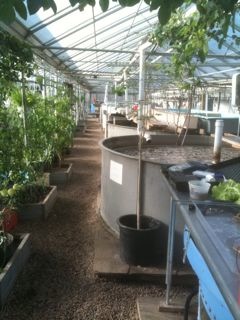
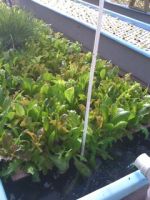

It is estimated that for every pound of vegetarian fish food used at Cabbage Hill 1/4 lb of fish and 8-10 lbs of vegetables (bok choy, chard, lettuces, mustard greens and herbs) are produced.


Sustainability

 
More and more, people are becoming aware that they can make sustainable choices in the types of fish they eat and there are several well-known chefs, like Rick Moonen of Vegas’s RM Seafood restaurant, who are trying to spread the word within the culinary industry.  What about fish oil supplements?  Can they be sustainable and what type of information does one need to eat fish sustainably?  This is a difficult question that I’ve been wrestling with especially since eating fish has so many obvious health benefits.  There are countless studies on the health benefits of omega -3 fatty acids which are found in high concentrations in oily fish.  I first began recommending fish oil to patients with cardiovascular disease at least a decade ago but with the plethora of studies continuing to show benefit for a wide range of conditions from cancer cachexia to depression, it has become the supplement du jour.   Since 2006, the US market for omega-3 neutraceuticals has doubled to an estimated $1 billion (and that doesn’t include the fortified foods like infant formulas for example).

Though the word sustainable is thrown around a lot, it’s helpful to really dissect the definition of what it truly means before coming to a reasonable conclusion of whether or not eating fish or consuming fish oil supplements can be sustainable.

According to Wikipedia, that bastion of knowledge that most people turn to on the web, sustainability means “the capacity to endure” which “can be applied to every facet of life on Earth.”  To me, it is most obviously applies to our limited resources but less obvious, it also pertains to the health and well-being of humans.  Pertaining to our discussion here, fish are the limited resource.  There are simple things one can do: refuse to buy and eat any fish that is being overfished i.e. Chilean Seabass, Beluga Sturgeon, Bluefish Tuna. These actions would be for the sustainability of the planet.  Then there are other fish you should avoid which is for the sustainability (health) of humans because of high pollutant and contamination levels (farmed salmon, orange roughy, swordfish and tuna (longline)).

This is relatively easy to grasp and there are numerous resource, pocket and mobile phone guides you can download and keep with you for when you shop or dine out.  I like the Monterey Bay Aquarium Seafood Watch which will break down the guides according to which area you live in the US.
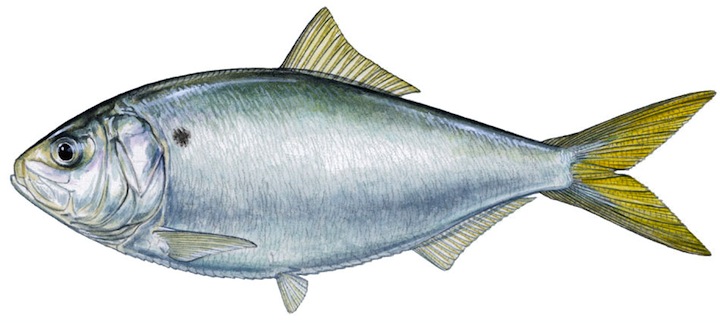
Now the hard part. Is the use of fish oil an environmentally unsustainable practice?  This recently was discussed in an Op-Ed piece in the New York Times, and brought to my attention, the plight of the Menhaden fish, a fish that I had never heard of before this piece.  Menhaden provides one of the largest sources of omega-3 fish oils in the supplement industry.  Other sources include sardines, anchovies and cod which are fished mostly in Peru.

First a lesson in Omega-3 fatty acids which I will make as simple as possible:

Omega-3 fatty acids are an essential fatty acid, which means our bodies do not produce them.  They must be consumed.  The reason why certain fish have high levels of omega 3-fatty acids is that they either consume algae or they eat other fish that have in turn consumed algae.  So predatory fish like tuna or shark aren’t just born with high levels of omega 3 fatty acids, they consume fish that in turn eat smaller fish like Menhaden which, by the way, are a “colossal eater” of algae.  The larger the fish, the large the accumulation of omega3- fatty acids which is the good news, but the bad news is that these same fish are also larger accumulators of toxic pollutants like mercury, PCB’s and dioxins.  The same applies when you buy eggs high in omega-3 fatty acids: they are simply fed omega-3 fatty acids usually in the form of flaxseed but they may also have been fed Menhaden as well.  Be sure to look for the label “vegetarian fed” on your egg cartons.  So what’s Menhaden and why is it important in the ecological scheme of things?

Menhaden, an oily inedible fish, that used to swim in schools as large as 40 miles long on the eastern seaboard, have been fished so drastically over the last 200 years that the impact is being felt in the entire ecologically systems of both the Atlantic ocean and the Gulf of Mexico.  To understand this, one needs to know what Menhaden do:

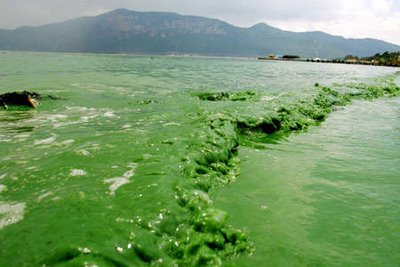
1. Menhaden are filter feeders.  One Menhaden fish can filter 4-8 gallons of water per minute.  Because they only eat phytoplankton, which are algae, or cellulose from rotting vegetation, (one of the few fish that do this) they essentially clean the water.  What happens if the water is not cleaned?  Though there are other causes of algal blooms which lead to “dead zones,” areas in the water that cannot support any life, Menhaden can dramatically reduce these areas, but only if they are around.  Massive Algal Bloom in a Freshwater Chinese LakeThink of a swamp ecology - thick algae blocks sunlight which decreases oxygen and thus create a inhospitable environment for fish and shellfish.

2. They are the main food source for other marine animals like bluefish, striped bass and fluke.  The Menhaden are the preferred meal for these predators which is substantiated by the fact that it’s the best bait you can use when fishing.  When this is eliminated, populations of these fish are greatly reduced.  These predators then hunt other fish like herring and those populations eventually will decrease.

This Book Rocks! A great read.As you can see, when you take this particularly unknown fish out of the water, the ecosystem begins to fall apart.  A must-read for all those who consume fish and care about the environment is H. Bruce Franklin’s The Most Important Fish In The Sea.  During his extensive research several biologists to environmental advocates emphasized the critical role of Menhaden; “[One] can’t overemphasize the importance of this fish to the ecology of the entire East Coast” or that the Menhaden are “the absolute keystone species for the health of the entire Atlantic ecosystem.”  His book provided me with the inspiration to look into this matter further as it pertains to my patients and my use of prescribing fish oils.


What to do with this information?

Eat Vegetable Sources of Omega 3’s

There are many plant sources of omega-3 fatty acids in the form of alpha-linolenic acid.  These include flaxseed and oil, walnuts, purslane and canola oil, hemp seed and hemp milk, chia, and soybean.  The issue here is that the beneficial omega-3’s known as DHA and EPA, which are readily available from fish, are not in these vegetarian sources.  The body must convert them slowly to these forms and a small percentage of the population has the genetic polymorphism that doesn’t enable the critical enzyme delta-6-desaturase to convert alpha-linolenic acid to the long chain DHA and EPA.


Eat fish and not supplements

This is becoming more and more difficult to do give the effects of toxic contaminants that have filled our oceans and rivers.  However, there are choices one can make when eating out or purchasing fish.  The most important being knowing exactly where your fish comes from.  The Monterey Bay Aquarium and the Environmental Defense Fund both provide interactive guides online about good, bad and worse choices. As a frequent consumer of sushi, I especially like their pocket sushi guide where you can download HERE.

Educate yourself on the companies that produce your fish oil.

One of the things you can do to make an impact on the Atlantic ocean’s ecosystem is to vote with your dollar.  Do not support companies that use Menhaden either as their source for fish oil, pet food, food products or fertilizer.  In fact, according to the Environmental Defense Fund, one of the worst choices (purity standards) you can make in purchasing fish oil supplements is from the company that continues to be responsible for the destruction of the Menhaden population: Omega Protein which makes Omega Pure fish oil.  They had contaminant levels well beyond the standards for their survey.  Finally, consider algae-based omega-3 supplementation.  The caveat here is that it provides primarily DHA and not EPA fatty acids.

Read what your dog food is made of: brands like VeRUS, Wellness Core Ocean formula, Earthborn Holistic Ocean or Solid Gold Holistique Blend Fish all use Menhaden fish in their formulas.  There are PLENTY of other safe choices.Butters says: "Boycott Menhaden in your food!  Better yet, become acquainted with Omega Pure’s website and their products.  Menhaden oil is the source of omega 3’s in Smart Balance Buttery Spread and Cindy’s Kitchen “All Natural” salad dressings.  Don’t buy!



Become a Seafood Watch Advocate

By joining, you can increase awareness to the restaurants and markets you shop as well as being able to educate your friends and families about their choices and the effect those choices have on our delicate and fragile ocean ecology.  Join HERE.

Farmer Pam, MD

Wednesday
Sep162009

Meat in a Petri Dish: The Next Logical Step to the Factory Farm?

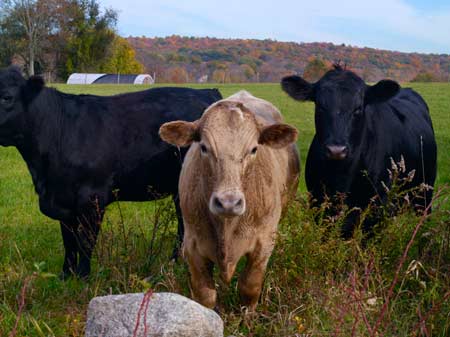
Grazing Cattle in Field. Photo from Hemlock Hill FarmSince the 1960’s, our penchant for consuming animal meats has risen 50%.  With this demand, factory farms have become the standard for producing large quantities of cheap meat, but at what cost?  There is a human health cost, an unsustainable environmental burden, and an ethical cost to the animal itself.  For humans, there are clear associations between diets heavily laden with animal meats and fat and the presence of chronic disease.  Additionally, with farm animals consuming over 70% of the antibiotics used in this country, antibiotic resistance has been developing rapidly and is a major concern for the treatment of infections in humans. Furthermore, the tremendous amounts of waste products from factory farms affects ecosystems downstream, creates contaminated bacteria-laden drinking water, destroys aquatic life and affects nearby air quality.  As an environmental burden, factory farms are an outright disaster generating enormous amounts of greenhouse gases to the tune of 18% of total emissions.  Paul Hawken, environmentalist and social activist, estimates that we need to decrease the population of the 3.5 billion farm animals we eat and milk for the health of our planet.  And as for the issue of animal cruelty, if we care to look at the journey that a piece of animal meat has made from factory farm to table, I’d bet most of us would drop our meat consumption dramatically.  (Easier to read Eric Schlosser’s Fast Food Nation: The Dark Side of the All-American Meal (2001), than to gain access to a factory farm).  One of my favorite animated commentaries on factory farms, now certainly a classic, is The Meatrix (2003) .  Moopheus, a trench coat-wearing cow, instructs Leo, a factory pig, on the true realities and illusions of the seemingly picture-perfect farm.   Though small family farms are beginning to gain consciousness in the public, thanks to the local food movement and the slew of food contamination stories and food recalls that continue to persist in the news, factory farms have held on.  What’s an ethical omnivore to do?  Most recently, New Scientist (Sept 5-11, 2009) reported on the very real possibility that animals can be genetically engineered not to feel pain, making it a guilt-free experience for us; the factory farm can then become morally acceptable for some.   “If factory farming must exist, then surely we have a moral duty to limit the distress it inflicts.” And this makes moral sense, the author argues,  “only in a world that has already devalued animal lives to the point where factory farming is acceptable.”  What’s even more disturbing is that research is being done on producing meat in a petri dish (gasp!).  Animal muscle cells are grown in vitro and live off chemical nutrients, growth factors, proteins and hormones.  There is even an organization called the "In Vitro Meat Consortium" to promote this new science!  Hopefully, as awareness takes hold of all of us, will we find factory farming no longer acceptable.  Perhaps it’s a pipe dream especially since the world population is increasing at the rate of 74 million people per year.  Feeding new arrivals will become more and more difficult.  I suppose this is the modern day equivalent to Soylent Green, Charleton Heston’s futurist sci-fi cult flick about over-population and the problem of how to feed them.   

Personally, I am not a vegetarian though I do eat meat sparingly and try to comprise most of my diet from vegetables, grains and fish and I do advocate this diet for others as well.  However, our country’s attachment to low cost meat will only continue to sustain the factory farm.  Only when we treat meat as a condiment and luxury, will we become free, not only from these unsustainable and inhumane practices, but from the chronic diseases like cancer and heart disease that are so often linked to diets largely comprised of meat.   I first became aware of this situation when I read Michael Pollan’s pivotal piece in the NYT “Power Steer” (2002) about the meat industry.  It made me start thinking about how food, any type of food, gets on my plate.  It will take a similar consciousness, I think, for others to start making global, ethical and health-related decisions with what they decide to eat.

What am I advocating exactly?

1. Reduced consumption of meat and an increase in vegetables, fruits and whole grains.  This is a no brainer reinforced by observations made in other cultures who consume less meat and who not only live longer but have less cancer and heart disease  -- the 2 biggest killers in our country.


2. When eating meat, buy meat from a family farm where cows are pasture-raised (grassfed).  This changes the actual quality of the meat: there’s more omega 3 fatty acids and conjugated linoleic acid compared to their conventional grain-fed animals (see documentary film King Corn) and there is an ethical satisfaction knowing that these animals led a life with much less suffering.

3. Eating meat this way is expensive.  Eat less of it and increase your vegetable intake.


Hemlock Hill Farm

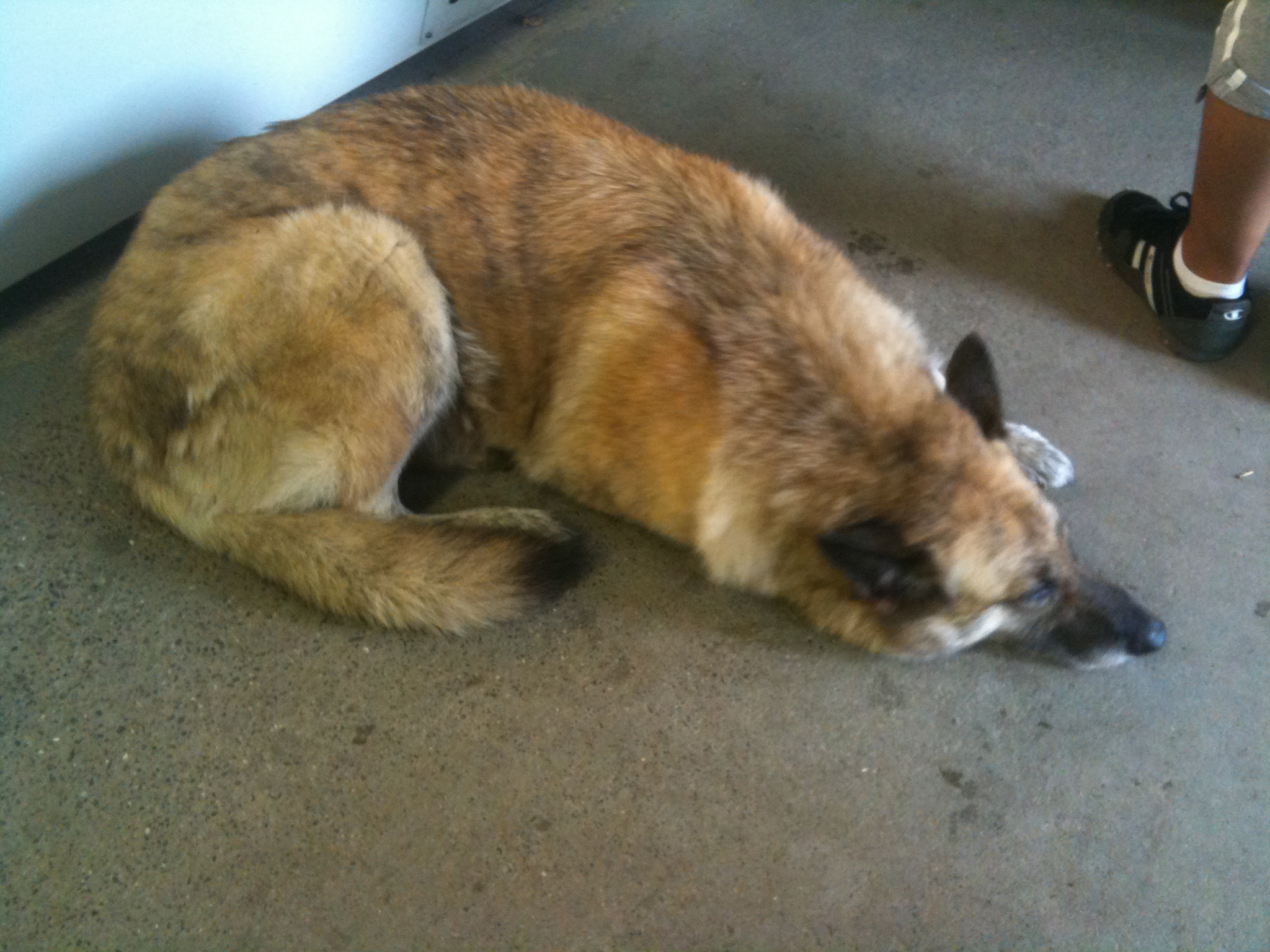
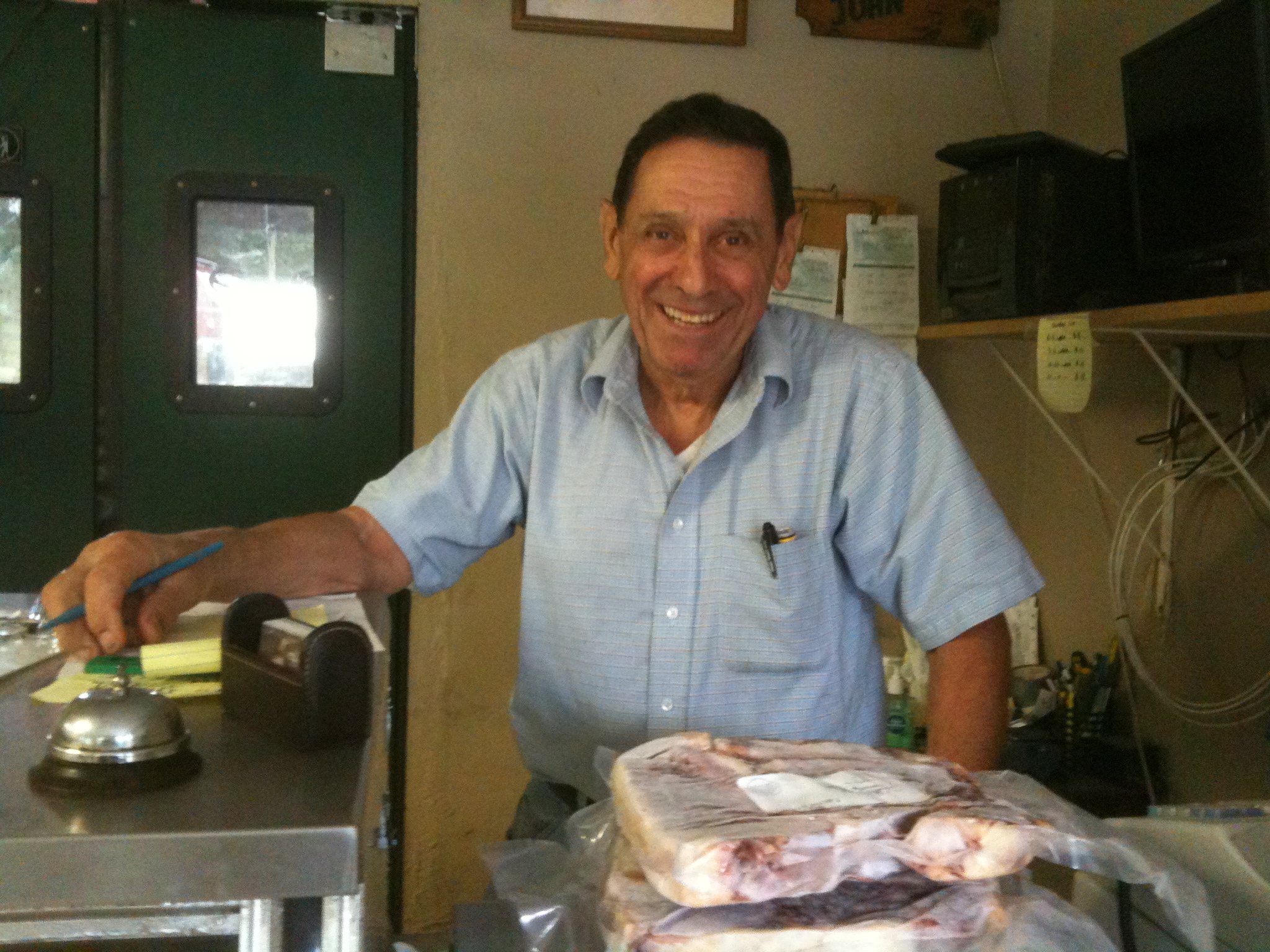
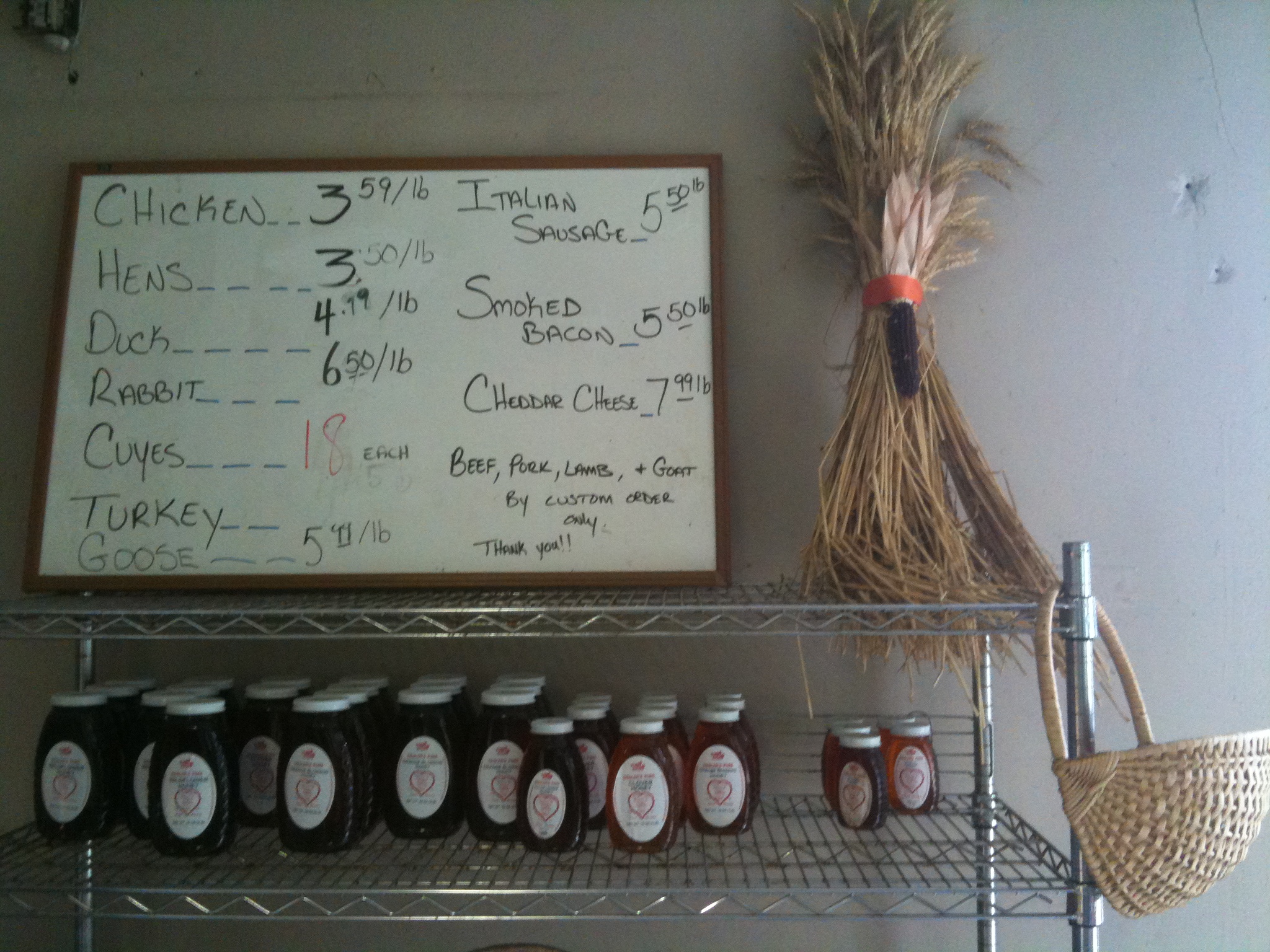
Finding local grassfed meat was difficult, until recently.  My local butcher store in Rockland County, NY raised their eyebrows when I asked for it, Whole Foods only had it periodically and it was rarely local leaving me to buy it on occasion in Manhattan usually at the Union Square Green Market.  Then I found Hemlock Hill Farm in Westchester county less than an hour from Manhattan.  This family farm has 120 acres and has been in the De Maria family for 70 years.  In addition to Black Angus cattle, which they raise grass-fed but grain-finished, they also offer lamb, pig, goat, chicken, rabbit, geese, duck, and turkey.  German Shepard, Honey, fierce hunter of woodchucksWhat is most astonishing about this place is that you can just walk around and visit the grounds freely.  There is nothing to hide.  Animals are treated well and it’s all there for you to inspect yourself.  More importantly, Hemlock Hill Farm slaughters its own animals.  This is a crucial difference from other small farms which often lack the capability and space to slaughter their own animals. John De Maria Oftentimes when small farms bring their animals to large scale slaughterhouses, they can’t always be sure that they are getting back the same animal that they so lovingly raised and cared for.  When we attended the Young Farmers’ Conference at Stone Barns Center for Agriculture in December 2008,  we heard stories from some farmers who would bring a cattle to a slaughter facility and got back a cattle slaughtered and containing five legs!   Hemlock Hill Farms has always slaughtered their own meat. John De Maria, a soft-spoken affable farmer and military veteran, brought us into the slaughter area where a large pig was being processed and a showed us a freshly skinned venison in the freezer. I buy much of my meat and poultry here and stock it in a large freezer at home.  It is some of the best tasting meat I’ve ever bought. Also important is that since there is not multiple "middle men" between the farmer and the consumer, the price of the meat is reasonable and the farmer is able to make more of a profit.


Want to find meat, poultry, dairy and eggs raised sustainably on small, family farms? Visit the Eat Well Guide for a listing of farms, stores, and restaurants in your area. (US and Canada).