alliums ameraucana Anthony Bourdain aphids Appleseed Permaculture aquaponics arthritis artichokes Asian Vegetables aussie basil baby chicks baby turnips bearss lime bee keeping beet greens beneficial insects benner tree farm Biochar Bitter Melon blight blooming hill farm boothby blonde cucumber brix broccoli brussels sprouts cabbage cabbage hill farm camp hill farm cancer caraflex celeriac chicken coop chickens children chinese tamale chives cilantro cilantro root coconut cold frames collard greens Compost coriander corn crop rotation cruciferous crucifers cucumber Dan Barber dan kittredge Dave Llewellyn detox dirty dozen dragon fruit Dutch white clover dwarf citrus eggplant Elderberries factory farms farm to table farmer's market farmers markets Fava beans ffarm to table fish oil flea beetle flowers food allergies food combining food miles founding farmers four wind growers Fred Kirschenmann french bulldog G6pd deficiency garlic garlic festival garlic scapes geese Glynwood grass-fed beef Great Outdoors Listening Tour green tomatoes greenhouse growing indoors Hanalei Hemlock Hill Farm heritage turkey heritage USA hudson valley farms hurricane Irene hyssop iced tea infections influenza Insect control isothiocyanates joan gussow jolie lampkin joong kaffir lime kale Kauai kohlrabi korean licorice mint Ladybugs late blight leeks lettuces local food locust tree maine avenue fish market menhaden meyer lemon mycelia mycorrhizal natural fertilizers nectary nightshades No Reservations Nurse cropping nutrient density okra organic Baby food organic christmas tree Organic Pest Control Parsley Paul tappenden peas Permaculture pesticides pesto petite watermelon plant sap pH plymouth barred rock pole beans potatoes preserving food purple basil qunice Radish Greens rainbeau ridge farm raised beds rampicante raw food real food campaign red hook Rockland Farm Alliance ronnybrook farm row covers salt-preserved duck eggs sambucus nigra seed saving seedlings Sheet mulching small space soil analysis soil blocks soil conductivity sorrel Squash Vine Borer star fruit sugar snap peas sustainability sustainable fishing Swiss Chard tabbouleh TEDx Manhattan terracing three sisters tomato sauce tomatoes trellis trovita orange turkana farms Tuttle Farm urban zen volt white clover winter harvest Winter Squash Young Farmers Conference
Indispensable Books and Resources
  • Edible Forest Gardens (2 volume set)
    Edible Forest Gardens (2 volume set)
    by Dave Jacke, Eric Toensmeier
  • The Winter Harvest Handbook: Year Round Vegetable Production Using Deep Organic Techniques and Unheated Greenhouses
    The Winter Harvest Handbook: Year Round Vegetable Production Using Deep Organic Techniques and Unheated Greenhouses
    by Eliot Coleman
  • The Biological Farmer: A Complete Guide to the Sustainable & Profitable Biological System of Farming
    The Biological Farmer: A Complete Guide to the Sustainable & Profitable Biological System of Farming
    by Gary F. Zimmer
  • The Garden Primer: Second Edition
    The Garden Primer: Second Edition
    by Barbara Damrosch
  • 1500 Live LadyBugs - A GOOD BUG! - Lady Bug
    1500 Live LadyBugs - A GOOD BUG! - Lady Bug
    Organic Insect Control
  • Acres U.S.A.
    Acres U.S.A.
    Acres U.S.A.

    The best farming and growing magazine money can buy!

  • Seed Starter Soil Block Maker Makes 4 Medium Blocks
    Seed Starter Soil Block Maker Makes 4 Medium Blocks

    2" Soil Blocker

  • Mini Soil Blocker
    Mini Soil Blocker
  • New York City Farmer & Feast: Harvesting Local Bounty
    New York City Farmer & Feast: Harvesting Local Bounty
    by Emily Brooks
  • What Doctors Eat: Tips, Recipes, and the Ultimate Eating Plan for Lasting Weight Loss and Perfect Health
    What Doctors Eat: Tips, Recipes, and the Ultimate Eating Plan for Lasting Weight Loss and Perfect Health
    by Tasneem Bhatia, Editors of Prevention


THE DAILY BROADFORK

Short journal entries detailing the nuts and bolts of our ventures in growing food at our micro-farm

Entries in Sustainable Farming (8)

Monday
May282012

Reclaiming Your Own Locust Trees for Use

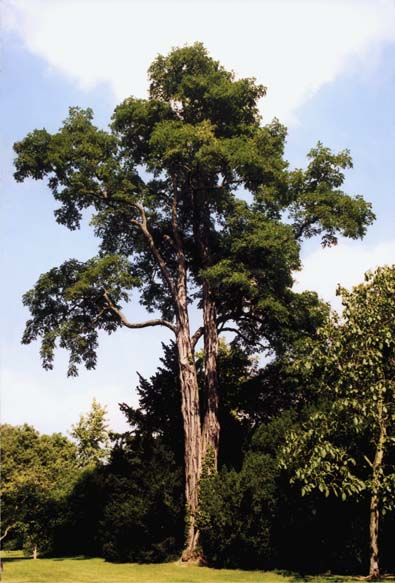
The Locust tree has become a common tree weed that nobody wants. It grows really tall. It often has no other branches other than the ones 60 feet up at nearly the top. It drops debris everywhere. It propagates like no other tree. And oh yeah, it is the tree most likely to fall directly on your house right from the base as the entire flat root system rips up from the ground and tips the entire tree over with no break in the actual trunk. I have seen it. It sucks.

When Hook Mountain Growers expanded the growing area it was necessary to remove 4 Locust trees from our property. The "green" part of me felt bad. Not that bad though as I realized I still had about 4 dozen other Locust on the property to prevent extinction of the species.

For the task I consulted with John Wickes arborists. They have been doing this type of work for 3 generations and are the best at it. Before having the trees removed and all proper permits lined up, I did some research on the Locust tree to see what we could do with it. At the time, I figured even firewood seemed like a good idea. I was pretty surprised at what I found.

Locust, especially black Locust, is some of the most structurally sound wood available and has been found to last 80 years. There are stories of farmers who use the stakes in their fields for 30 years and when they wear down they turn the stakes over and use the other side.

The reason for the natural rot resistance of Locust is due to the presence of tyloses in the wood which makes the wood very water tight. There are also natural extracts present which impart an antifungal property to the logs.

So the first step in utilizing the wood on your property would be to discuss with your tree removal team what size pieces you need and if you want them to save the chip for you.
I decided on 6 foot pieces as well as 3 inch thick pieces to use for stepping areas in beds. We also had them save us about 15 yards of mulch after the remaining tree pieces were passed through the chipper.

Here is what you can do with you locust wood:

Large Bed Borders
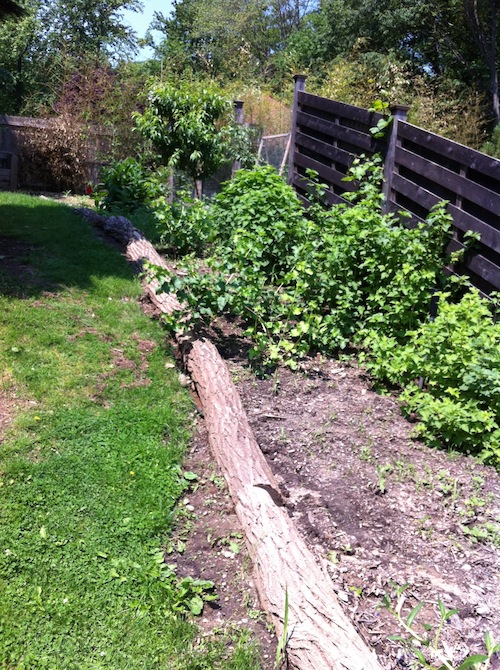
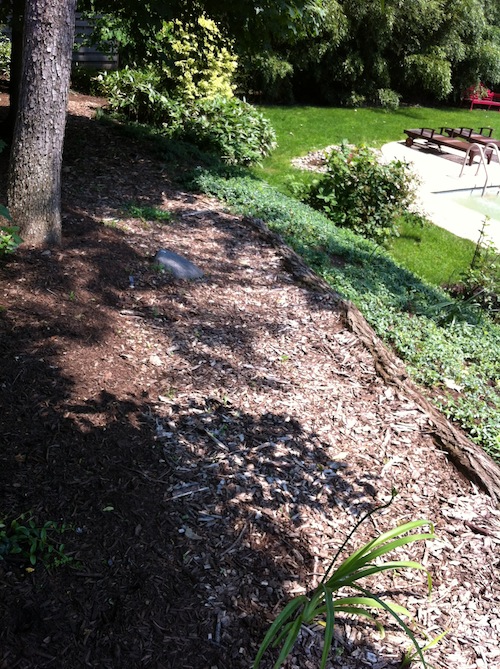
Steps for stairs down a slope:
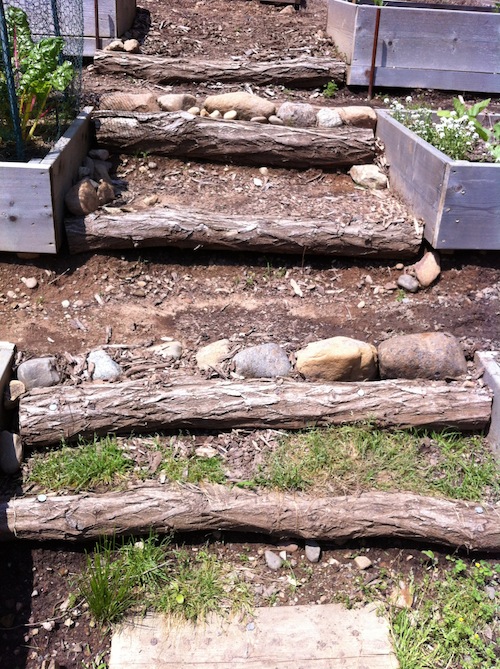


Wood Chips for pathway:


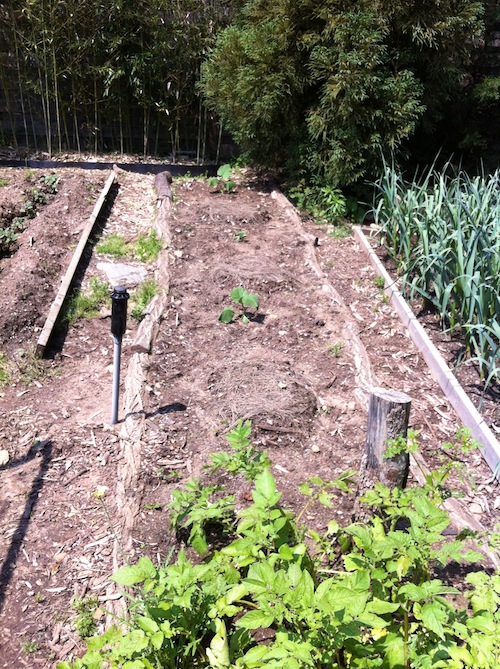
Raised bed border:


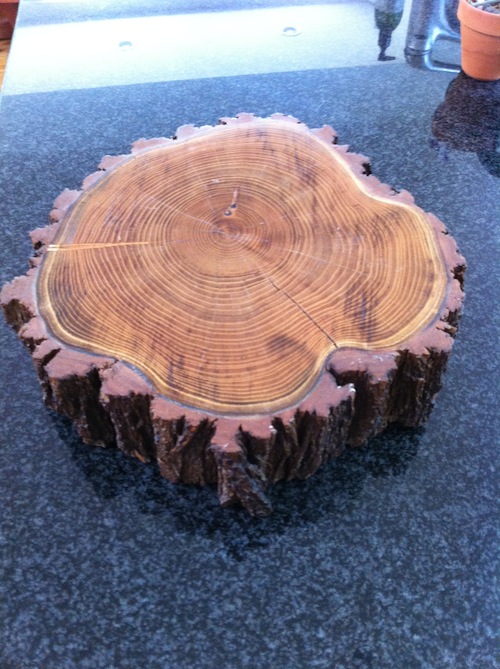
and if you want to sand and stain the wood:
Hope that inspires some ideas for all us Locust haters!
Sunday
Feb122012

Biochar 101

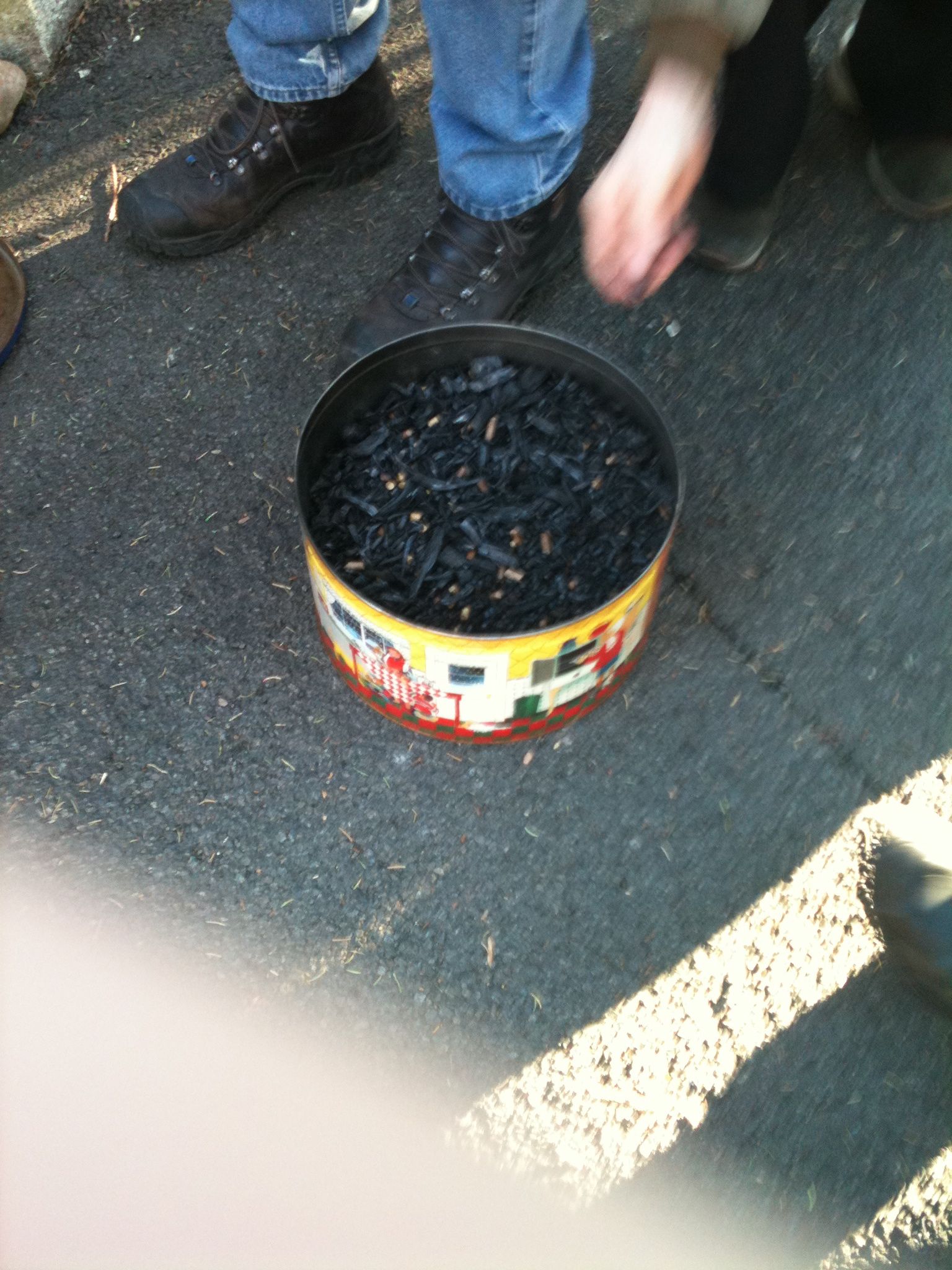
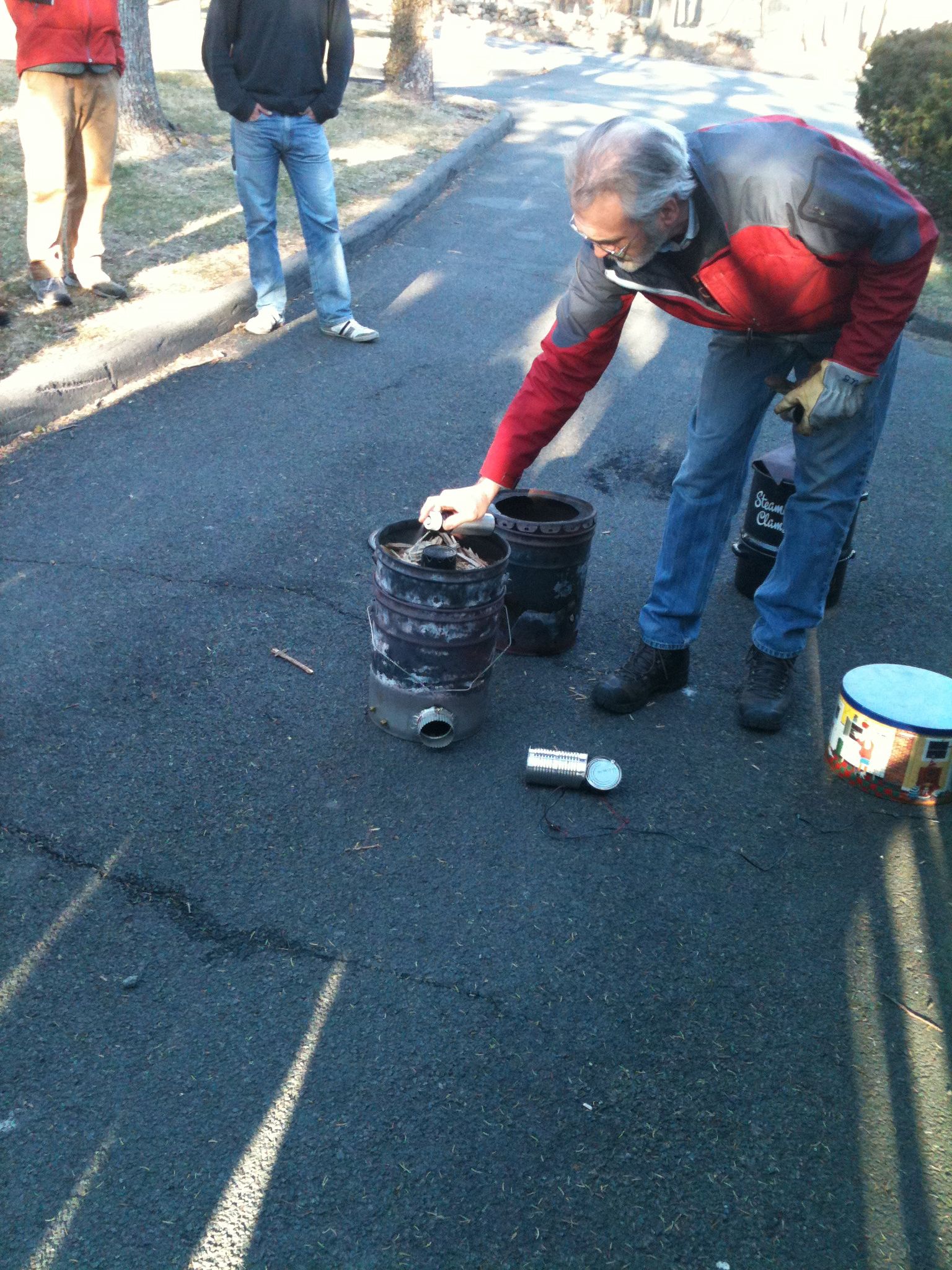
The actual process of biochar making takes about 20 minutesWhat does a farm intern do over the winter months to keep herself busy until the beginning of spring fun begins? Other than dream of crop rotation designs and new vegetables to try I also had the opportunity to attend an all day conference about biochar! Biochar is a very old concept that is only recently getting new attention for its carbon sequestering capabilities. The biochar story begins in Brazil when anthropologists discovered what they termed as “terra preta” or dark earth. When they tested the soil they found that it had very high levels of charcoal that had been buried thousands of years earlier. The impact of the charcoal made the soil more efficient in retaining water and nutrients and it can still be seen in the soil today.
    One major question I had going into this conference was what is the difference between charcoal and biochar? Hugh McLaughlin, a scientist at Alterna Biocarbon, answered that question for me. It was explained that charcoal is fuel that is used to cook and is made at around 300 degrees Celsius. Biochar on the other hand is a soil amendment and is made at 600 degrees Celsius. The key difference is the amount of mobile vs. resident matter. When you heat the biomass (woodchips, organic waste, manure, crop residues), to such a high temperature it becomes extremely stable and also creates a very porous structure. Good biochar should have high cation exchange capacity and absorption capacity – these are what make the biochar so beneficial to the soil. The main benefits of biochar are (1) improved moisture dynamic, (2) improved nutrient retention (N, P, K for example), (3) improved microbe survival during drought, and (4) improved plant – microbe synergisms. So, the idea is that biochar will keep carbon in the soil, rather than in the atmosphere, whilst simultaneously leading to improved soil health and larger crop yields.

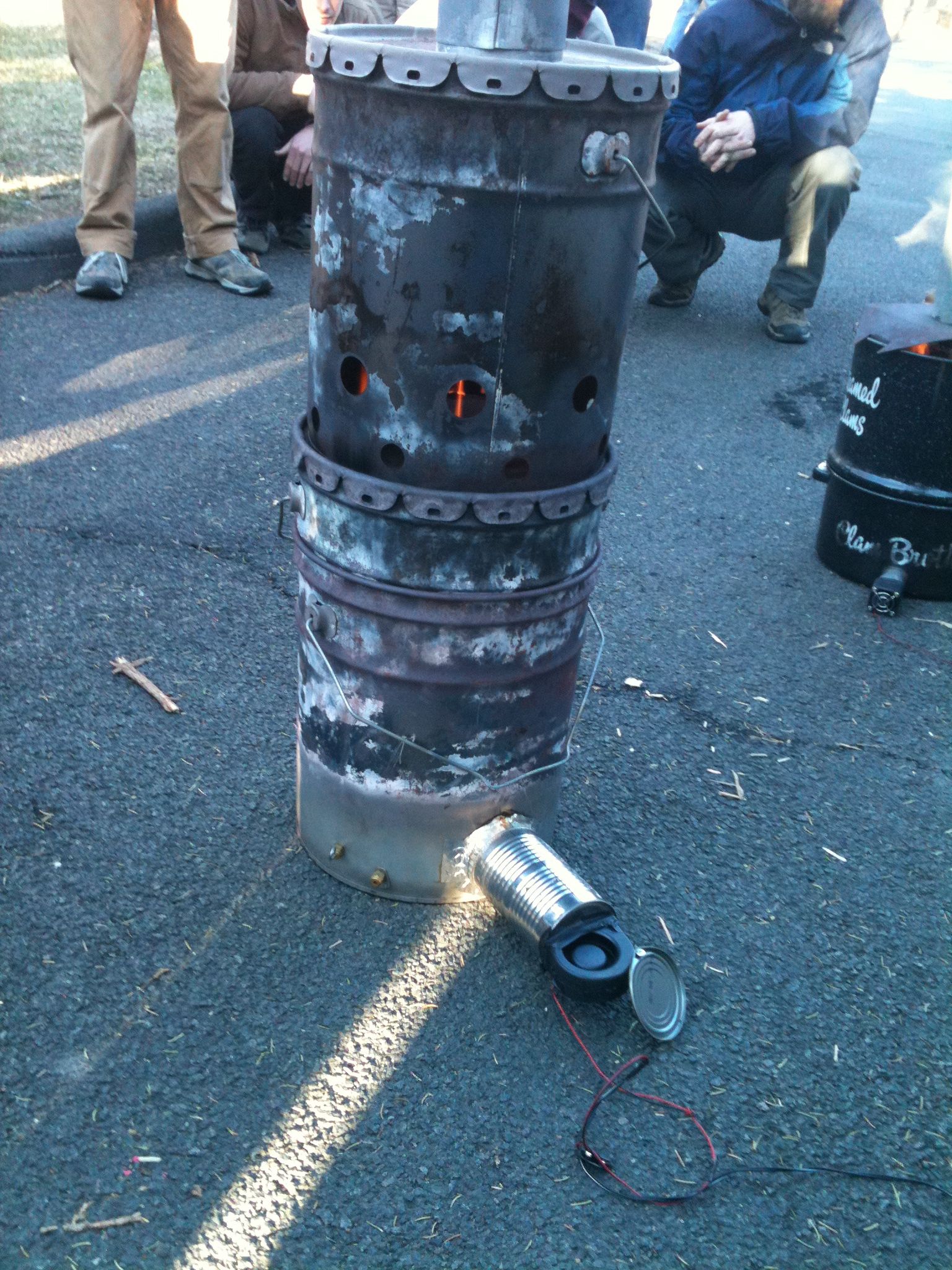
Lighting the feedstock using rubbing alcohol and woodchips
    The process of making biochar involves collecting your biomass (referred to as feedstock) and lighting it on fire in a sealed container with very low oxygen conditions. Ideally the feedstock you use is coming from your farm or very near by, or else it kind of defeats the whole carbon saving notion. There are many different devices to make biochar – ranging from homemade “TLUD” (Top Lit Up Draft) Ovens, to much larger scale kilns and retorts. Click HERE for instructions on building yur own TLUD.  They did a biochar making demonstration at the conference using homemade TLUDs. There are also more and more companies that are selling biochar on the web. The most reputable companies mentioned at the conference (in which the biochar has been tested and approved) were Soil Reef, Encendia and Colorado Biochar. It was also emphasized that testing your biochar is really important before using it. Now that there is a market for it, there are companies using left over wood scraps from construction sites as their feedstock. Bad biochar can actually do soil more harm than good – so it is important to know the contents of your char.
    Once you have your biochar – you need to charge it. There are no nutrients inherent to the biochar, so the most common way to charge biochar is to combine the char with compost in a 50:50 ratio. You can add the char to the compost in the early stages of the compost and let it go through the process of composting. You can also mix it with finished compost and let it sit for about 2 weeks – this process is referred to as “weathering the char”. Compost is great but the benefits only last so long, the idea with biochar is that it absorbs the nutrients and makes them available to the plants for a much longer period of time. When you are ready to apply it to the soil, you can just add it by hand and mix it with the topsoil. Application rates range from between 1-10 tons per acre depending on your soil needs.    


    There is still a lot of research to be done in this field to determine the lasting benefits of biochar. But there are certainly a lot of exciting prospects and research projects being done. One farmer at the conference brought his own biochar to give out to fellow farmers as long as they promised to report back their experience with the char. The community of biochar users is still relatively small and there remains a need for more information on the use of biochar on small and large scales. I am happy to report that we have a bag of this precious biochar to experiment with this season at the farm. We will continue to report on our findings and hopefully will have some record yields!  

 Voila! Biochar created!


Friday
Oct212011

Farmers Markets: Hawaiian Style

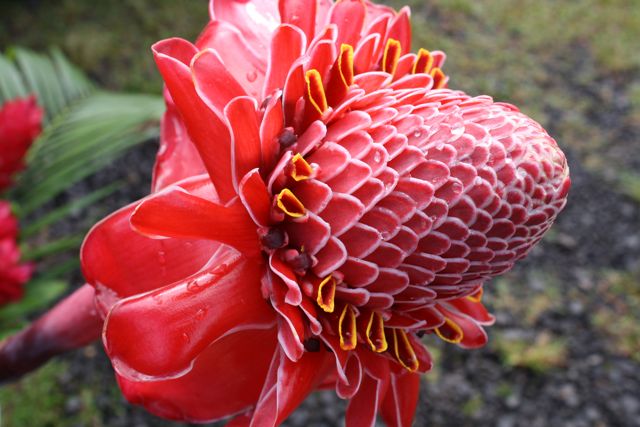
A flower from the ginger familyOur usual vacation every year takes place in October after we've done the majority of harvesting.  This year we went all out and travelled to the Hawaiian island of Kaua'i.  Being the farmers that we are, instead of heading for the sandy beaches and the crashing waves, we took to touring organic farms, botanical gardens and hitting the many farmers markets that occur sometimes up to 5 locations in one day.  Amazing considering the island is only 33 x 25 miles with a population of 60,000.  We were most fascinated at the opposite spectrum of growing conditions compared with the Hudson Valley.  With the rich volcanic soil, sunshine predominent days and abundant rainfall, we assumed Hawaii offered the perfect growing conditions for most crops.  Indeed we learned that was not so.  Our first farmers market was on the north end of the island in lush Hanalei where the emerald landscapes are dotted with multiple waterfalls in nearby mountains.  This was probably one of the nicest markets we've ever been to.  Every stand offered produce only organically grown and the variety of tropical fruits, something we rarely eat, became an obsession for us.

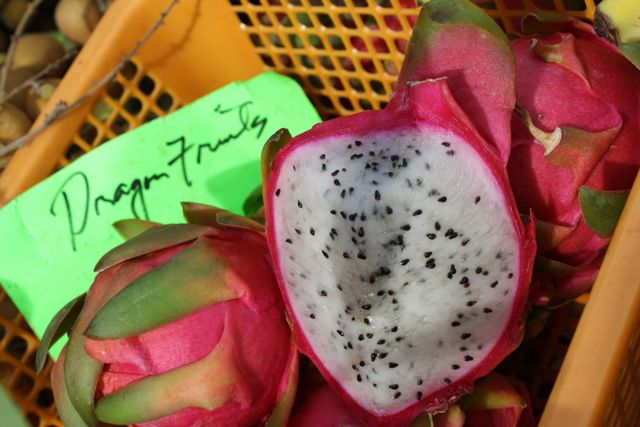
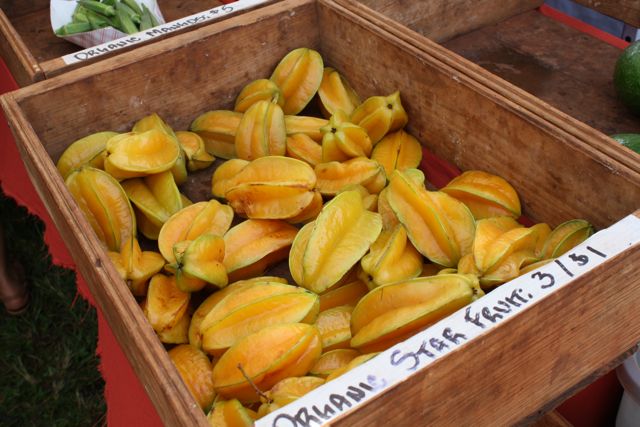
Is this not the most exotic and beautiful fruit?

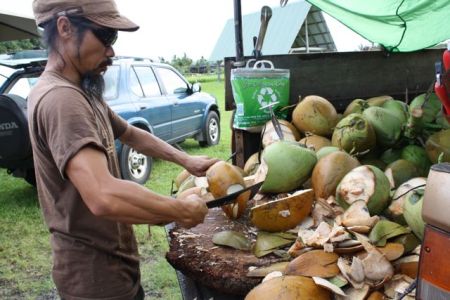
Young and mature coconuts were expertly cracked on the spot for hydration and then brought back to the same vendor to be hacked open to enjoy the white coconut meat.

When we spoke with a woman selling her seedlings about how fabulous is must be to grow there, she told us that she was jealous of us!  In the Hudson Valley, we could grow so much more food than farms on Kauai citing the 15 different fruit flies alone that devastate crops on the island.  In fact, you think Hawaii would be able to grow the most luscious tomatoes with all that sun and heat but large tomatoes are hard to come by because of insect damage and high humidity.  Cherry tomatoes are what farmers mostly grow there!

Star Fruit: A favorite fruit of the island for us.

Drunk on passion fruit (lillikoi), soursop, and longon fruits, we looked forward to our tours at an organic chocolate farm complete with chocolate tasting, and an organic goat farm.  Stay tuned for more tropicalia.


Friday
Sep302011

Considering Heritage Turkeys for the Thanksgiving Table

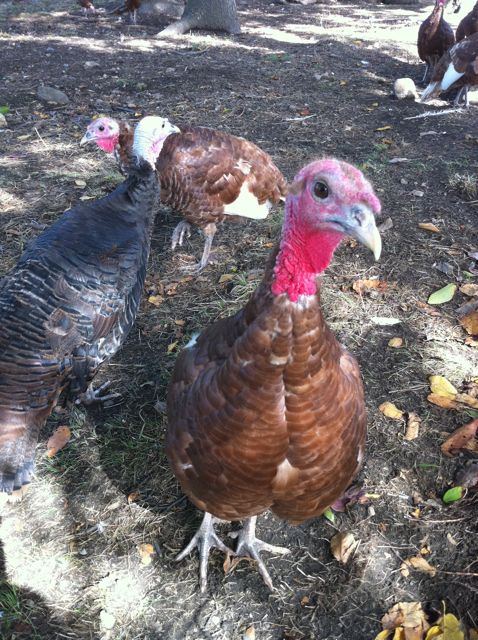
Each Thanksgiving, 45 million turkeys are cooked and eaten.  Chances are, the turkey that you will be enjoying on Thanksgiving is a typical white broad-breasted turkey bred to develop as large a percentage of white meat in as little time as possible.  Large scale agriculture is all about profit: raising animals having the largest volume of meat in the shortest amount of time. Usually there is little to no consideration on the quality and taste of the product.  Only recently have sustainable agriculture advocates and preservationists been able to bring awareness of heritage breeds to the table...literally.  Heritage breeds are what we ate before the push to raise animals quickly and cheaply became mainstream.  According to Patrick Martins, founder of Heritage Breeds USA in Brooklyn New York, “the heritage breed reflects man’s best attempt at a good tasting turkey.  The white broad-breasted represents man’s attempt to produce a turkey that lives indoors and grows quickly.”  

Many people may be disturbed to know that their broad breasted turkeys cannot reproduce on their own without the help of artificial insemination.  Their body shape prevents this from occurring naturally and because they gain so much weight so quickly, oftentimes, these birds, if left to grow older, would not be able to walk or stand as their legs would be unable to support their own body weight.  With many more people questioning where their food comes from and how it was raised, the door has been opened for heritage breed turkeys to make a comeback.  With names like Bourbon Red, Narragansett, Jersey Buff, Slate, Black Spanish and White Holland, these old-time turkeys have a distinctive rich taste, more dark meat and certainly more flavor.


Purchasing these breeds sometimes costs twice that of a pasture-raised broad breasted turkey and there is a good reason for that.  While the standard turkey takes 18 weeks to reach market size, heritage turkeys take 24-30 weeks.  Not only is it more costly to raise them but they are more time-consuming as well.  Because they have more of the instincts of the wild turkey, they want to fly unlike their sedentary and weighted cousins.  Still, even with the high costs to the consumer, farmers barely profit from selling these birds.  Burgeoning consumer demand for these breeds are being met by some small farms.  Heritage Breeds USA sold approximately 800 heritage turkeys in 2002 and are expecting to sell about 8000-10000 by mail order this season.  If you are looking for local resources, places where you can actually visit and see your heritage turkeys develop, grow and lead a happy existence (for at least a few months), you have only three choices.  Stone Barns in Pocantico Hills raises Bourban Red turkeys that sell out quickly, usually to membership holders.  Upstate in Germantown, New York, Peter Davies at Turkana Farms raise Bourbon Reds, Spanish Blacks, Royal Palms and Narragansetts, slaughtered three days before Thanksgiving and delivered to NYC or to be picked up at the farm. “There’s a difference in taste with heritage turkeys because it takes longer to reach market size and they get lots of exercise” states Mr Davies who also obtains organic grains to feed his birds from the nearby Lighting Tree Farm in Millbrook.  Heritage turkeys are so succulent that there is no need for brining and you cook them like any other turkey.  This rare commodity in the Hudson Valley usually sells out locally by October, however, you can purchase them from Heritage Breeds USA which obtains their turkeys from two farms in the midwest.

Heritage meats can still be enjoyed beyond the Thanksgiving table.  Peter Davies states that the Christmas goose, an Old World tradition, is also becoming a popular choice. It has the texture and consistency of beef rather than poultry and cooks just like a turkey.  Turkana farms offers a Toulouse Geese available for Christmas and offers wonderful recipes on cooking your bird.  We plan on making a Christmas goose again this season.  Don't forget to collect the "liquid gold" or goose fat to use in the coming months.  Sublime when eggs or potatoes are cooked with it!

Monday
Sep052011

Compost is Nice

AFTER
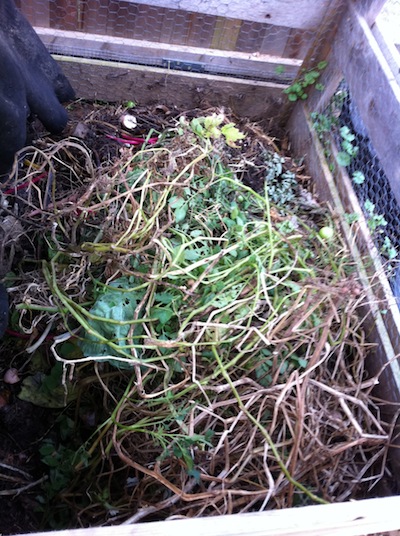
For all of us who lug their kitchen scraps outside in the cold and dark....who scour their home looking for brown material (carbon) to match the easier to find green matter...who layer their compost bin precisely as outlined in the textbooks...who turn their pile daily to ensure the proper aerobic bacterial population....good for you. For those of us who simply throw anything we can find into the pile and manage to turn it when the inspiration or energy seems to strike (once a week)....good for us too! For this week HMG has finally produced some really nice compost following the lazy plan.

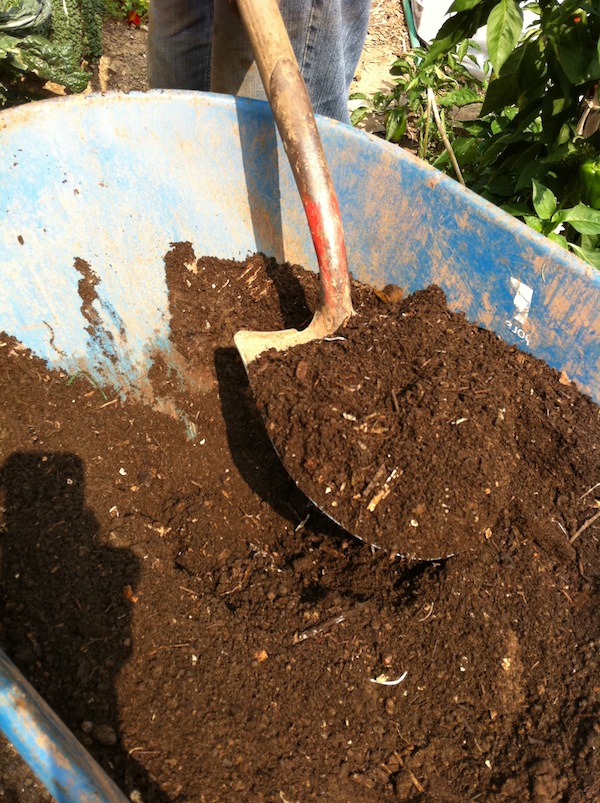
Compost when finished is a nice sight. Money savings becomes real, a forty pound bag of compost can cost between 5-12 dollars depending on where you get it, plus you have to take time to transport it as well as carry it everywhere.

Using a three bin system, HMG has produced what appears to be about 6-8 forty pound bags worth this season. Adding kitchen scraps, brown vegetable plant branches, occasional leaves (not too many) and a sprinkle of fireplace ash, we have made some pretty respectable looking compost.

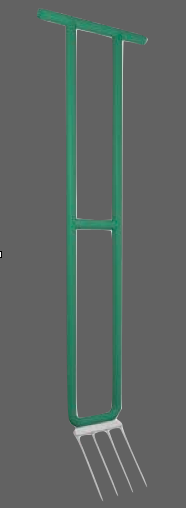
We have found with minimal attention compost is really not difficult to make. The most important aspects are to make sure you get some brown matter in there as well as to periodically turn the pile so as to prevent anaerobic bacteria from kicking in. You will know if this happens as your compost pile will begin to smell like takeout fish that was left in the car overnight. If this happens, simply turning the pile over a few times instantly cures the problem. We have found a small pitchfork the best for doing this.

BEFOREApplying the compost to needy beds is definitely a great feeling. For those of us who do this without the benefit of high heat compost, which is usually done with machine turned piles or piles which have air blown into them, we will see a nice seedling bed soon of every vegetable we have eaten for the past 6 months as those seeds have not died in the pile. Obviously this is not desired, although seeing 200 tomato seedlings in a 10 x 4 foot raised bed is interesting, simply raking them in or pulling the seedlings seems to be the best management option....and is there anything more sustainable then making your own compost? I don’t think so!


Charlie