alliums ameraucana Anthony Bourdain aphids Appleseed Permaculture aquaponics arthritis artichokes Asian Vegetables aussie basil baby chicks baby turnips bearss lime bee keeping beet greens beneficial insects benner tree farm Biochar Bitter Melon blight blooming hill farm boothby blonde cucumber brix broccoli brussels sprouts cabbage cabbage hill farm camp hill farm cancer caraflex celeriac chicken coop chickens children chinese tamale chives cilantro cilantro root coconut cold frames collard greens Compost coriander corn crop rotation cruciferous crucifers cucumber Dan Barber dan kittredge Dave Llewellyn detox dirty dozen dragon fruit Dutch white clover dwarf citrus eggplant Elderberries factory farms farm to table farmer's market farmers markets Fava beans ffarm to table fish oil flea beetle flowers food allergies food combining food miles founding farmers four wind growers Fred Kirschenmann french bulldog G6pd deficiency garlic garlic festival garlic scapes geese Glynwood grass-fed beef Great Outdoors Listening Tour green tomatoes greenhouse growing indoors Hanalei Hemlock Hill Farm heritage turkey heritage USA hudson valley farms hurricane Irene hyssop iced tea infections influenza Insect control isothiocyanates joan gussow jolie lampkin joong kaffir lime kale Kauai kohlrabi korean licorice mint Ladybugs late blight leeks lettuces local food locust tree maine avenue fish market menhaden meyer lemon mycelia mycorrhizal natural fertilizers nectary nightshades No Reservations Nurse cropping nutrient density okra organic Baby food organic christmas tree Organic Pest Control Parsley Paul tappenden peas Permaculture pesticides pesto petite watermelon plant sap pH plymouth barred rock pole beans potatoes preserving food purple basil qunice Radish Greens rainbeau ridge farm raised beds rampicante raw food real food campaign red hook Rockland Farm Alliance ronnybrook farm row covers salt-preserved duck eggs sambucus nigra seed saving seedlings Sheet mulching small space soil analysis soil blocks soil conductivity sorrel Squash Vine Borer star fruit sugar snap peas sustainability sustainable fishing Swiss Chard tabbouleh TEDx Manhattan terracing three sisters tomato sauce tomatoes trellis trovita orange turkana farms Tuttle Farm urban zen volt white clover winter harvest Winter Squash Young Farmers Conference
Indispensable Books and Resources
  • Edible Forest Gardens (2 volume set)
    Edible Forest Gardens (2 volume set)
    by Dave Jacke, Eric Toensmeier
  • The Winter Harvest Handbook: Year Round Vegetable Production Using Deep Organic Techniques and Unheated Greenhouses
    The Winter Harvest Handbook: Year Round Vegetable Production Using Deep Organic Techniques and Unheated Greenhouses
    by Eliot Coleman
  • The Biological Farmer: A Complete Guide to the Sustainable & Profitable Biological System of Farming
    The Biological Farmer: A Complete Guide to the Sustainable & Profitable Biological System of Farming
    by Gary F. Zimmer
  • The Garden Primer: Second Edition
    The Garden Primer: Second Edition
    by Barbara Damrosch
  • 1500 Live LadyBugs - A GOOD BUG! - Lady Bug
    1500 Live LadyBugs - A GOOD BUG! - Lady Bug
    Organic Insect Control
  • Acres U.S.A.
    Acres U.S.A.
    Acres U.S.A.

    The best farming and growing magazine money can buy!

  • Seed Starter Soil Block Maker Makes 4 Medium Blocks
    Seed Starter Soil Block Maker Makes 4 Medium Blocks

    2" Soil Blocker

  • Mini Soil Blocker
    Mini Soil Blocker
  • New York City Farmer & Feast: Harvesting Local Bounty
    New York City Farmer & Feast: Harvesting Local Bounty
    by Emily Brooks
  • What Doctors Eat: Tips, Recipes, and the Ultimate Eating Plan for Lasting Weight Loss and Perfect Health
    What Doctors Eat: Tips, Recipes, and the Ultimate Eating Plan for Lasting Weight Loss and Perfect Health
    by Tasneem Bhatia, Editors of Prevention


THE DAILY BROADFORK

Short journal entries detailing the nuts and bolts of our ventures in growing food at our micro-farm

Entries in Sustainable Farming (8)

Saturday
Aug072010

Preserving Farmland: America's Top Priority

The Glynwood CenterLast week, the New York Times ran a short editorial entitled "Death of a Farm," on the closing of America’s oldest continually operating farm in New Hampshire - Tuttle’s Red Barn farm.  John Tuttle first started the 240 acre farm in 1632 when he arrived to the New World from England.  Since then, it’s been passed down 11 generations.  To drive home the point of how long ago that was, in 1632, Gallileo was still publishing and was forced, by the Pope, to recant the idea that the earth orbits the sun the following year.  On Tuttle’s Red Barn Farm website, the current Tuttle family cites that the decision to close was borne from an exhaustion of resources including their bodies, minds, hearts, imagination, equipment, machinery, and finances.  Dwindling sales from customers that used to use shopping carts are now spending thrifty using only their hands for what they can afford to carry out.  Implicit in their explanation is the fact that it’s just cheaper to buy your food from the A&P than from a family run farm.  This sad story brought tears to my eyes that quickly dried when I toured the Glynwood Center in Cold Spring, NY this week.


Providing me with more Kleenex (or Seventh Generation facial tissue), though this time for tears of joy, the Hudson Valley is now an area that Obama has recognized as one of the 25 places in the country being considered by the government as a top prioroity area for land protection and the revitalization of rural communities.  US Agriculture Secretary Tom Vilsack, as part of the Great Outdoors Listening Tour, was there to learn from people directly involved in finding grassroots solutions to conserving our lands and waters and reconnecting Americans to the outdoors.  The Rockland Farm Alliance, for which Hook Mountain Growers is now an active member of the Board of Directors for the Cropsey Farm, was represented at the meeting on August 6th, 2010.

GLYNWOOD

The mission of the center is simple: to help communities in the Northeast save farming.  This non-profit center’s values are summed up here:

    “Glynwood believes that the rural working landscape is one of civilization’s highest achievements—that a countryside featuring healthy pastures, productive crops, fruitful orchards, well-managed woodlots, and sturdy barns is aesthetically beautiful and emblematic of thriving communities...Glynwood maintains that farming done in harmony with the natural environment can be both economically viable and environmentally sustainable...Glynwood regards food produced, distributed, and consumed locally as beneficial to human health and community, and to the natural environment.”


THE FARM


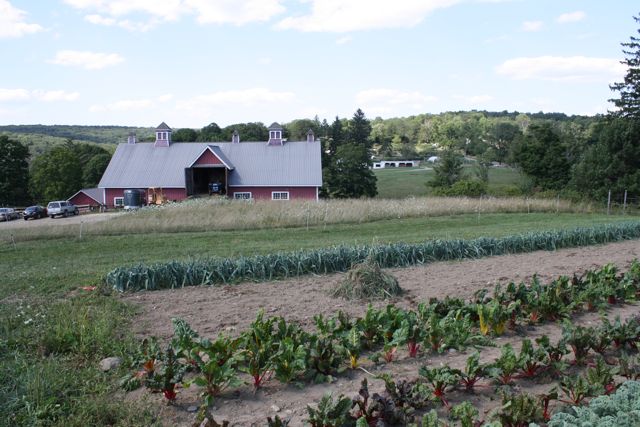
Glynwood’s unassuming entrance led us on a road to the main farm.  One must drive slowly and mindfully, traversing a bucolic narrow dirt road within the woods that follows a gentle brook.  Immediately you feel a transformation into a miraculous woodland reminiscent of Thoreaus’s Walden Pond.  We passed by one of the many cottages on the property with one being used as the backdrop to a Christmas photo shoot for the clothing company Aeropostale.  It ‘s August and holiday wreaths and mistletoe were strewn at every doorway.  Not so unusual if Christmas is in...Santa Barbara.  Ironically and sadly, it makes financially more sense to rent out your farm for a photo shoot because it sure brings in more money than selling vegetables.  Past the hoopla we met the venerable Dave Llewellyn, the head farmer at the center for a special insiders tour.  We first met Dave at a lecture he gave at the Young Farmer’s Conference at Stone Barns in December 2009.  His lecture sparked our interest in Nutrient Density farming and changed the way we view the soil and food quality.
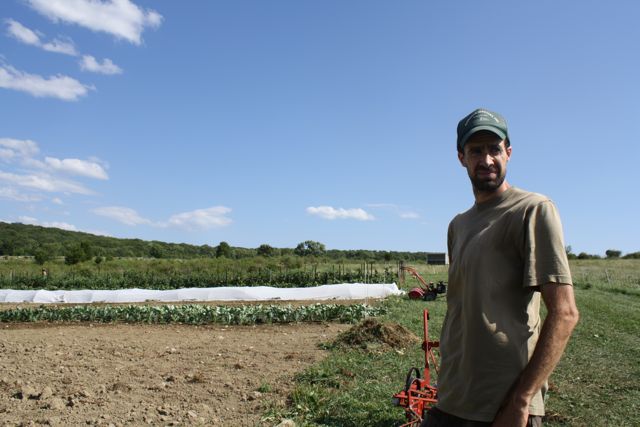
Dave grows vegetables in two separate areas: one is 3/4 of an acre and the other is 1/2 acre.  Of course, this doesn’t tell you much about the rest of the farm.  It’s 225 rolling pastoral acres are home to the grazing fields for cows, sheep, goats, chickens and horses.  One horse, named Maggie is even being used as a draught horse!  Beautiful young smiling lady farmers in electric tractors whiz by mowing down paths, man (or woman) the CSA distribution center, and make sure irrigation is working.  Ahh, I think I’ve found paradise.  I find out that their grass-fed cattle and poultry are sold to their CSA members and I wish I lived in the area to take part of this bounty. 
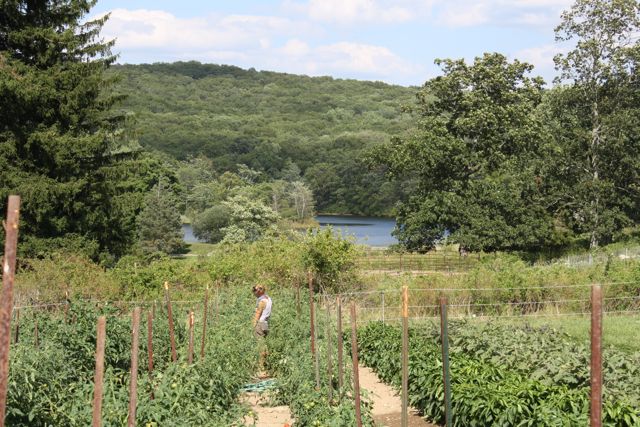


As Dave brings us to the growing areas, he mentions that the Glynwood center is in the process of leasing 15 acres in nearby Garrison, NY, for more growing.  We were a little shocked that they couldn’t find that acreage in their 225 acre center, but Dave pointed out that most of the land is rolling land perfect for grazing (and probably grape growing) but not for vegetables.  We found out that Dave has only been doing this for 10 years, prior to that, he was a law clerk.  He then  founded and managed a now defunct CSA in Mahwah, New Jersey with his wife before coming to Glynwood.  His plans for the 15 acres is groundbreaking.  It’s not just 15 acres for growing, but it’s going to be a model for how one can economically start-up and run a farming operation in the Northeast.  A very important mission since, according to the Bureau of Labor Statistics, 40% of our current farmers are now over 55 years old and the new generation of farmers need to be innovative especially faced with energy, climate and water challenges.  Kudos for Dave and the Glynwood Center for promoting sustainable agriculture in this area on a whole new level.
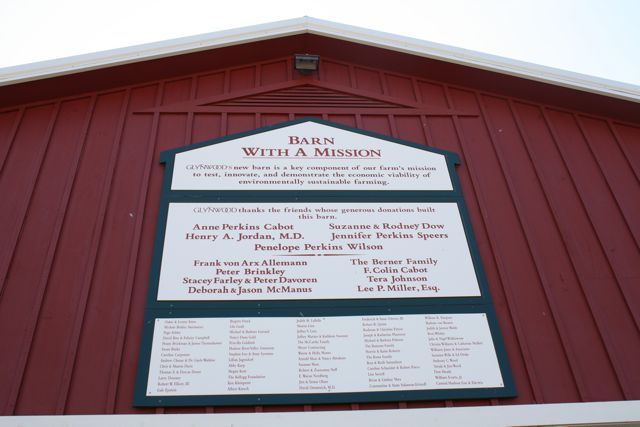
The recent addition to the center: "A Barn with a Mission"

This recent barn addition will house their first boot stomping Barn-Dance gala on Saturday September 11, 2010 which includes a 3 course dinner with the bounty of the Hudson Valley and, of course, dancing.  This is the chance to “revel in supporting Glynwood’s mission to saving farming.”  So if you were moved by the closing of the Tuttle’s Red Barn Farm in NH, don’t wallow in despair, there are still so many things you can do to promote the movement like spend your dollars at the farmers market or at your local family farm or just even coming to the Gala and better yet, if you can, donate to the cause.  And if you're a local Rockland resident, donating to the Rockland Farm Alliance will help two new community farms come to fruition.
Wednesday
Feb102010

Fish For Fodder: Can Eating Fish or Fish Oil Supplements be Sustainable?

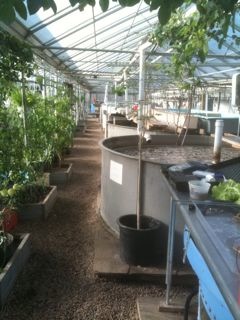
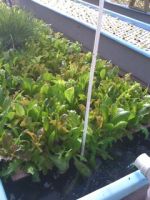
Kevin Ferry pulls some striped bass from the tanks at Cabbage Hill FarmIn the gray winter months, I clamor for some signs of the lush green vegetative growth I was privy to from April to November.  Farm life here, for the most part, is about sitting down and dreaming of more ways in which we can grow more food on our micro-farm, or trying to wrestle with crop rotation when you have such a small space and grow bio-intensively.  Fortunately, some nearby farms were still open to the public for tours during these bleak months so we visited Cabbage Hill Farm in Mt Kisco, New York.  All of their outside beds were resting for the winter months however upon walking into the main greenhouse, life was in full gear.  Cabbage Hill farm is known for their work in Aquaponics - which is the system whereby fish and plants live in a symbiotic recirculating relationship.  Vegetation on the left, fish on the rightThe fish provide nutritious waste which is then funneled out to the roots of plants and vegetables which happily grow from this nitrogen source, and in turn, clean the water that gets funneled back again to the fish tanks.  There is little to fear with PCB, dioxin and mercury fish contamination and in theory it is a sustainable system with the only input being the feed for the fish [though there was lots of electrical needs that could eventually be offset by solar panels].  This system imitates the ancient practice of allowing carp, herbivorous fish, to swim in rice paddies.  The rice benefit from the carp excrement and the roots filter the water for the fish.    At Cabbage Hill Farm 6000-8000 lbs of tilapia, trout and striped bass are sold to markets and local restaurants every year.


It is estimated that for every pound of vegetarian fish food used at Cabbage Hill 1/4 lb of fish and 8-10 lbs of vegetables (bok choy, chard, lettuces, mustard greens and herbs) are produced.


Sustainability

 
More and more, people are becoming aware that they can make sustainable choices in the types of fish they eat and there are several well-known chefs, like Rick Moonen of Vegas’s RM Seafood restaurant, who are trying to spread the word within the culinary industry.  What about fish oil supplements?  Can they be sustainable and what type of information does one need to eat fish sustainably?  This is a difficult question that I’ve been wrestling with especially since eating fish has so many obvious health benefits.  There are countless studies on the health benefits of omega -3 fatty acids which are found in high concentrations in oily fish.  I first began recommending fish oil to patients with cardiovascular disease at least a decade ago but with the plethora of studies continuing to show benefit for a wide range of conditions from cancer cachexia to depression, it has become the supplement du jour.   Since 2006, the US market for omega-3 neutraceuticals has doubled to an estimated $1 billion (and that doesn’t include the fortified foods like infant formulas for example).

Though the word sustainable is thrown around a lot, it’s helpful to really dissect the definition of what it truly means before coming to a reasonable conclusion of whether or not eating fish or consuming fish oil supplements can be sustainable.

According to Wikipedia, that bastion of knowledge that most people turn to on the web, sustainability means “the capacity to endure” which “can be applied to every facet of life on Earth.”  To me, it is most obviously applies to our limited resources but less obvious, it also pertains to the health and well-being of humans.  Pertaining to our discussion here, fish are the limited resource.  There are simple things one can do: refuse to buy and eat any fish that is being overfished i.e. Chilean Seabass, Beluga Sturgeon, Bluefish Tuna. These actions would be for the sustainability of the planet.  Then there are other fish you should avoid which is for the sustainability (health) of humans because of high pollutant and contamination levels (farmed salmon, orange roughy, swordfish and tuna (longline)).

This is relatively easy to grasp and there are numerous resource, pocket and mobile phone guides you can download and keep with you for when you shop or dine out.  I like the Monterey Bay Aquarium Seafood Watch which will break down the guides according to which area you live in the US.

Now the hard part. Is the use of fish oil an environmentally unsustainable practice?  This recently was discussed in an Op-Ed piece in the New York Times, and brought to my attention, the plight of the Menhaden fish, a fish that I had never heard of before this piece.  Menhaden provides one of the largest sources of omega-3 fish oils in the supplement industry.  Other sources include sardines, anchovies and cod which are fished mostly in Peru.

First a lesson in Omega-3 fatty acids which I will make as simple as possible:

Omega-3 fatty acids are an essential fatty acid, which means our bodies do not produce them.  They must be consumed.  The reason why certain fish have high levels of omega 3-fatty acids is that they either consume algae or they eat other fish that have in turn consumed algae.  So predatory fish like tuna or shark aren’t just born with high levels of omega 3 fatty acids, they consume fish that in turn eat smaller fish like Menhaden which, by the way, are a “colossal eater” of algae.  The larger the fish, the large the accumulation of omega3- fatty acids which is the good news, but the bad news is that these same fish are also larger accumulators of toxic pollutants like mercury, PCB’s and dioxins.  The same applies when you buy eggs high in omega-3 fatty acids: they are simply fed omega-3 fatty acids usually in the form of flaxseed but they may also have been fed Menhaden as well.  Be sure to look for the label “vegetarian fed” on your egg cartons.  So what’s Menhaden and why is it important in the ecological scheme of things?

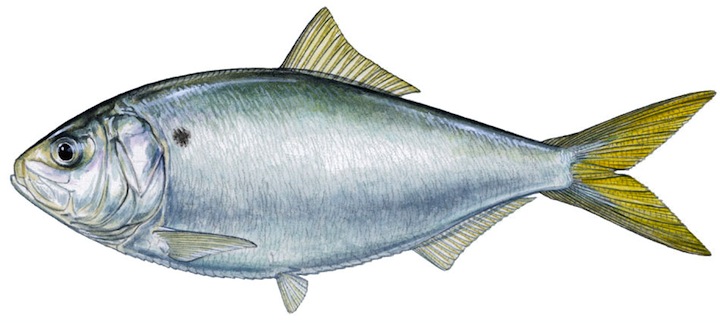
Menhaden, an oily inedible fish, that used to swim in schools as large as 40 miles long on the eastern seaboard, have been fished so drastically over the last 200 years that the impact is being felt in the entire ecologically systems of both the Atlantic ocean and the Gulf of Mexico.  To understand this, one needs to know what Menhaden do:

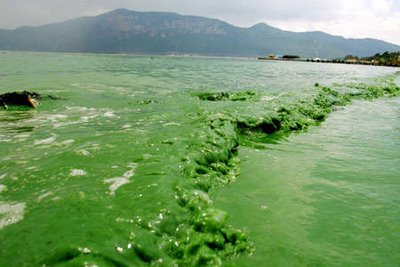
1. Menhaden are filter feeders.  One Menhaden fish can filter 4-8 gallons of water per minute.  Because they only eat phytoplankton, which are algae, or cellulose from rotting vegetation, (one of the few fish that do this) they essentially clean the water.  What happens if the water is not cleaned?  Though there are other causes of algal blooms which lead to “dead zones,” areas in the water that cannot support any life, Menhaden can dramatically reduce these areas, but only if they are around.  Massive Algal Bloom in a Freshwater Chinese LakeThink of a swamp ecology - thick algae blocks sunlight which decreases oxygen and thus create a inhospitable environment for fish and shellfish.


2. They are the main food source for other marine animals like bluefish, striped bass and fluke.  The Menhaden are the preferred meal for these predators which is substantiated by the fact that it’s the best bait you can use when fishing.  When this is eliminated, populations of these fish are greatly reduced.  These predators then hunt other fish like herring and those populations eventually will decrease.

This Book Rocks! A great read.As you can see, when you take this particularly unknown fish out of the water, the ecosystem begins to fall apart.  A must-read for all those who consume fish and care about the environment is H. Bruce Franklin’s The Most Important Fish In The Sea.  During his extensive research several biologists to environmental advocates emphasized the critical role of Menhaden; “[One] can’t overemphasize the importance of this fish to the ecology of the entire East Coast” or that the Menhaden are “the absolute keystone species for the health of the entire Atlantic ecosystem.”  His book provided me with the inspiration to look into this matter further as it pertains to my patients and my use of prescribing fish oils.


What to do with this information?

Eat Vegetable Sources of Omega 3’s

There are many plant sources of omega-3 fatty acids in the form of alpha-linolenic acid.  These include flaxseed and oil, walnuts, purslane and canola oil, hemp seed and hemp milk, chia, and soybean.  The issue here is that the beneficial omega-3’s known as DHA and EPA, which are readily available from fish, are not in these vegetarian sources.  The body must convert them slowly to these forms and a small percentage of the population has the genetic polymorphism that doesn’t enable the critical enzyme delta-6-desaturase to convert alpha-linolenic acid to the long chain DHA and EPA.


Eat fish and not supplements

This is becoming more and more difficult to do give the effects of toxic contaminants that have filled our oceans and rivers.  However, there are choices one can make when eating out or purchasing fish.  The most important being knowing exactly where your fish comes from.  The Monterey Bay Aquarium and the Environmental Defense Fund both provide interactive guides online about good, bad and worse choices. As a frequent consumer of sushi, I especially like their pocket sushi guide where you can download HERE.

Educate yourself on the companies that produce your fish oil.

One of the things you can do to make an impact on the Atlantic ocean’s ecosystem is to vote with your dollar.  Do not support companies that use Menhaden either as their source for fish oil, pet food, food products or fertilizer.  In fact, according to the Environmental Defense Fund, one of the worst choices (purity standards) you can make in purchasing fish oil supplements is from the company that continues to be responsible for the destruction of the Menhaden population: Omega Protein which makes Omega Pure fish oil.  They had contaminant levels well beyond the standards for their survey.  Finally, consider algae-based omega-3 supplementation.  The caveat here is that it provides primarily DHA and not EPA fatty acids.

Read what your dog food is made of: brands like VeRUS, Wellness Core Ocean formula, Earthborn Holistic Ocean or Solid Gold Holistique Blend Fish all use Menhaden fish in their formulas.  There are PLENTY of other safe choices.Butters says: "Boycott Menhaden in your food!  Better yet, become acquainted with Omega Pure’s website and their products.  Menhaden oil is the source of omega 3’s in Smart Balance Buttery Spread and Cindy’s Kitchen “All Natural” salad dressings.  Don’t buy!


Become a Seafood Watch Advocate

By joining, you can increase awareness to the restaurants and markets you shop as well as being able to educate your friends and families about their choices and the effect those choices have on our delicate and fragile ocean ecology.  Join HERE.

Farmer Pam, MD

Friday
Dec042009

The Future of Food and Farming: 2009 Young Farmer's Conference at Stone Barns


“The farmer is the only person in our economy who buys everything retail, sells everything wholesale and pays the freight both ways” - JFK

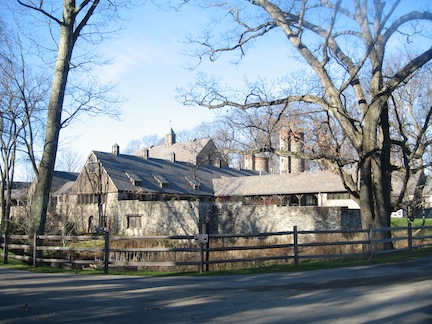
The Old Rockefeller Dairy Barn is now Stone Barns Ag Center
For the second time, we attended the "Young Farmer’s Conference: Reviving the Culture of Agriculture" (YFC) held at Stone Barns Agricultural Center this year in Pocantico Hills, New York.  This 2 day course was geared towards providing both the young and new farmer with tools and ideas to help ensure their success, to provide a place where these new farmers can network and exchange ideas, to learn the nuts and bolts of sustainable farming, and to discuss the obstacles, especially financial obstacles, of starting and maintaining your own farm.  The New York Times reported earlier this year, on a wave of liberal arts students choosing their summer internships, not at Goldman Sachs, but at farms in search of work (usually unpaid or nominal wages) and also fostering the student's belief in the need for social change.  This seemed to be reflected in the sea of 250 fresh young faces at the sold-out YFC this year.

With only 400,000 farmers in this country providing about 95% of the food we eat, the future of farming is dependant on a new generation of farmers that not only can farm, but are innovative and creative enough to face the new set of challenges that farming faces:  energy, climate and water changes.  We are facing the end of cheap energy, we'll need farming systems that will be resilient with climate change, and we’ll need to learn to grow food with 1/2 the amount of water we now use.
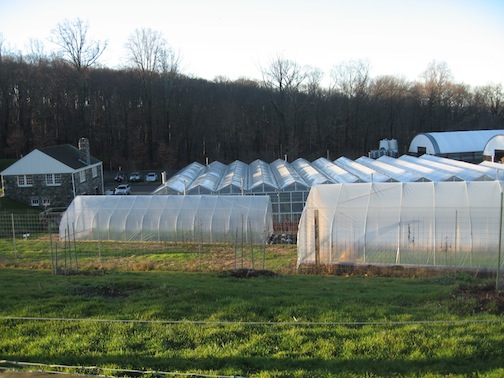
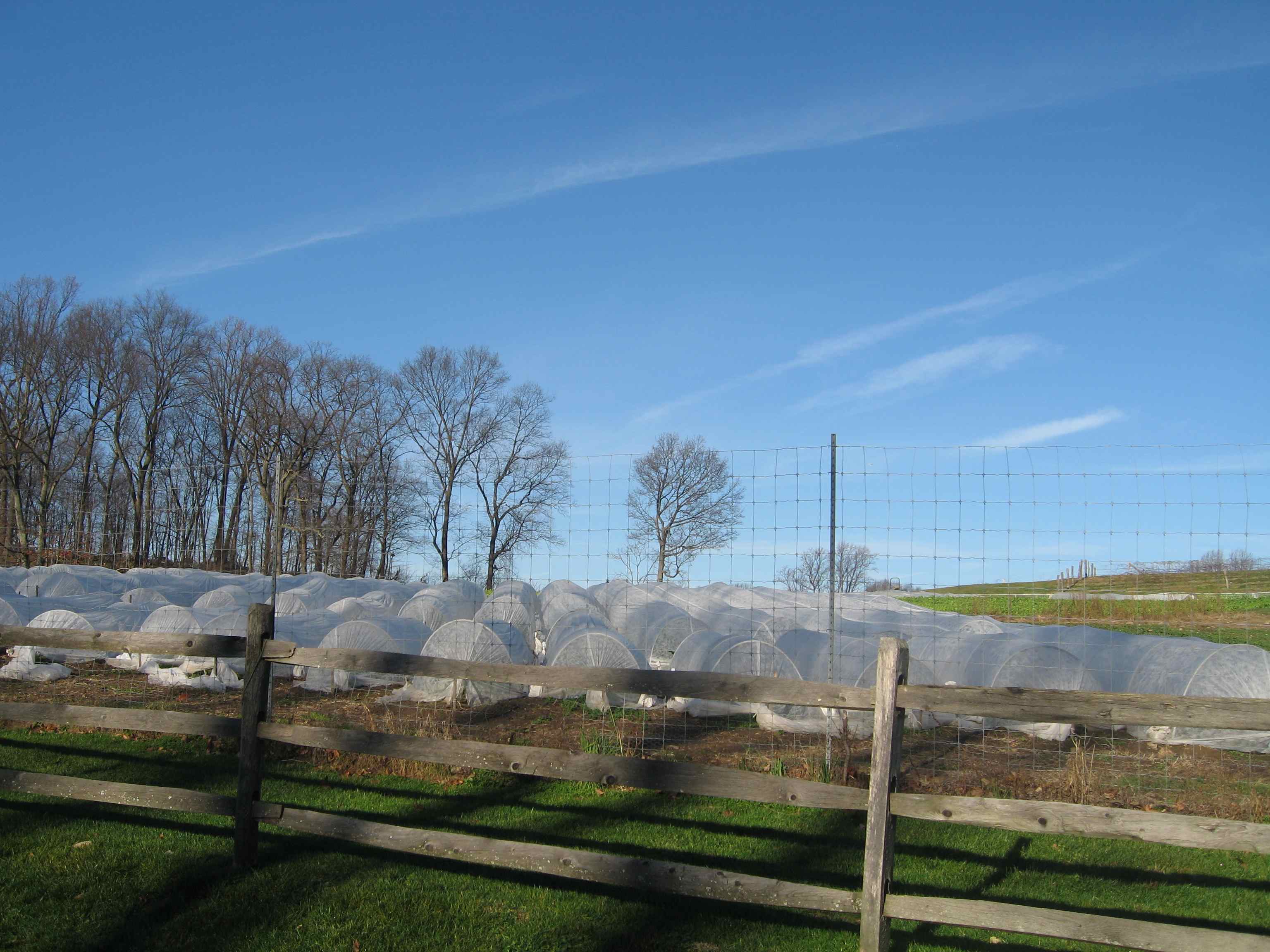
High Tunnels at Stone Barns

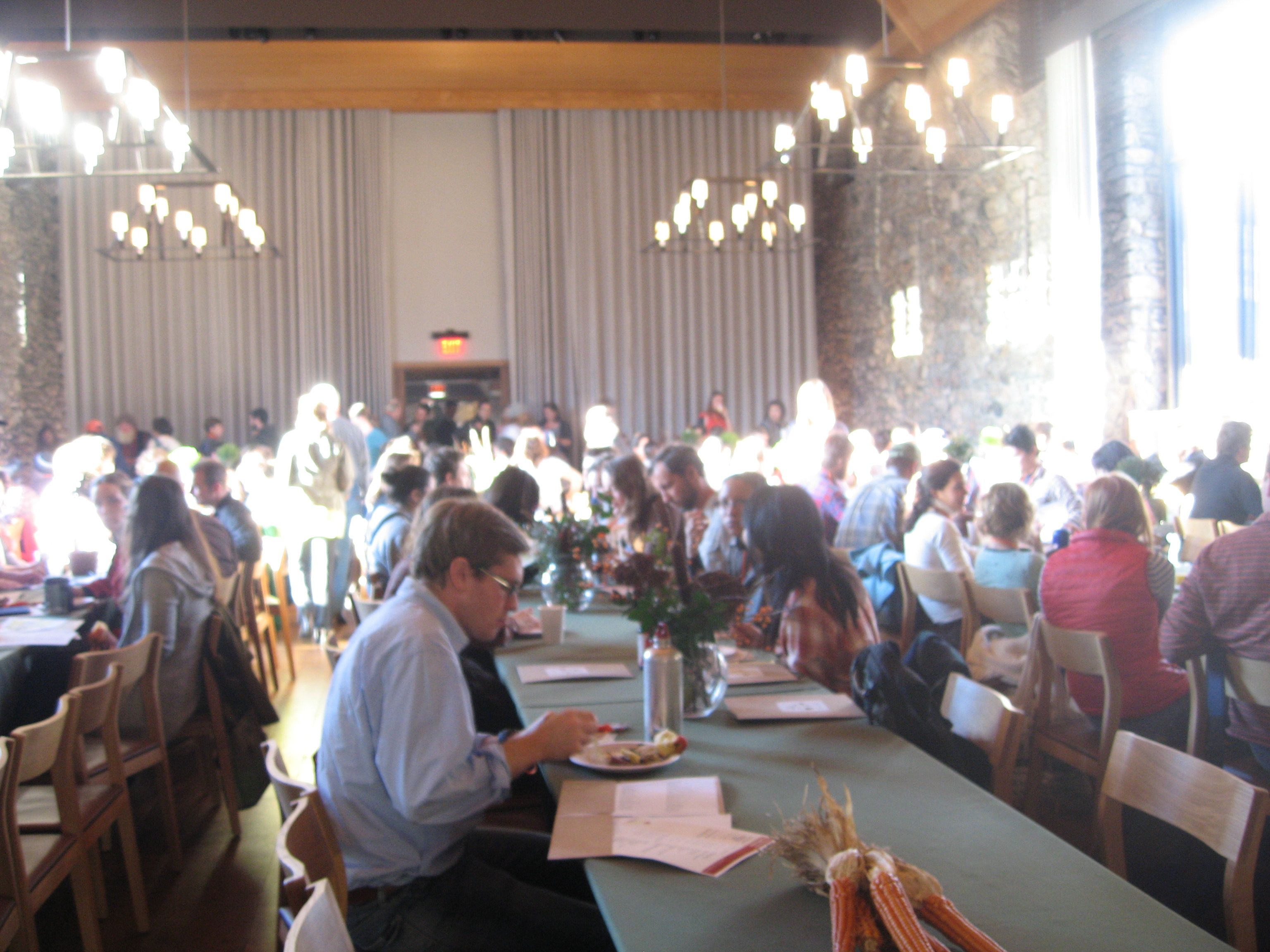
We started the first day with a beautiful breakfast provided by our favorite restaurant in the world, Blue Hill, in the context of a modern elegant setting with farmhouse nuances.

Meals in the grand dining room


THE CONFERENCE

Charlie's first lecture was an extremely practical one for those farmers who want to grow through the winter season. It was given by the head farmer at Stone Barns, Jack Algiere. It was extremely informative and fun to watch Jack get a bed ready for the next planting. As is usual with farmers, and not in many other business models, their are no "trade secrets" Everyone is always available to help their neighbor or competing farm learn the latest technique or any modality that will increase yield. It is so refreshing to be around people like that. One can only imagine what the day would feel like in other businesses if everyone approached work and their "competition" in this manner.

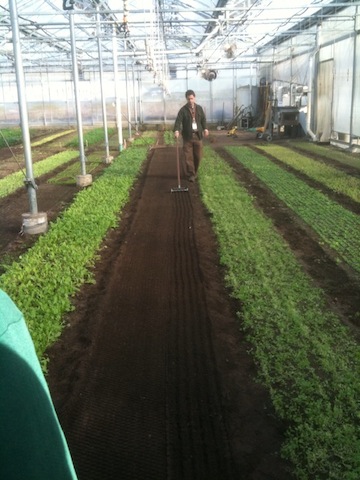
Jack Algiere demonstrating greenhouse seeding

I veered off to a lecture given by Benneth Phelps and Ethan Roland on Permaculture, which is a sustainable way of farming, gardening and landscaping where it provides design tools for those that grow biodynamically, organically or even conventionally.  Everything is about increasing efficiency; tools and plants have multi-purposes, for example.  Things are planted with the goal of the "least effort for the largest effect."  I like that.  The most common example is the Sunchoke, also known as the Jerusalem Artichoke.  You plant this once and it not only yields a delicious root vegetable to be consumed, but it also grows tall providing ground cover that may act as a barrier to wind or provide shade, and also provides beautiful chocolate-scented flowers.  The beauty here for me is that I’ll never have to replant this; it’s perennial!  So I just got a food source, shade, wind protection and cut flowers in one plant!  We planted these out last October.

The next lecture we went to was “Vegetables with Taste: Growing and Marketing Vegetables with a Culinary Focus” given by Tom Wilcox and Caroline Pam from The Kitchen Garden Farm in Massachusetts.  They are a lovely couple with a food background (Caroline was a food critic and they both have been schooled in cooking) who now farm full time. It was very sobering to hear their financial data and how hard they work just to maintain a salary that is competitive to that they pay their workers. They gave some great insight into the personal relationships growers have with their clients and how important it is for business and also how rewarding it makes their day.

The next lecture we went to was given by Connor Stedman from Gaia University on Treecrops and Agroforestry.  This was a subset and extension of the Permaculture lecture and we came away with ideas for nut and fruit trees and bushes.  Next steps for HMG are currants, gooseberries, hardy kiwi and Paw Paw (a taste of the tropics in the Northeast!), American Persimmons, and hazelnut trees.


Photo from the Glynwood Center
On Friday we were inundated with extremely practical information.  The first was on soil nutrition given by Dave Llewellyn at the Glynwood Center in Cold Spring, New York.  The Glynwood Center is an amazing non-profit center that promotes environmentally sustainable agriculture and the preservation of farmland in the Northeast.  Dave spoke about nutrient density in vegetables citing a shocking example of the state of the present day quality of our food.  In order to get the equivalent nutrients of 1 apple grown in the 1930’s, we’d have to eat 6 of our present day apples!  Vegetables and fruits can be measured by a simple tool called the refractometer which tells you the “brix” content of the plant.  RefractometerWe think of brix typically in the wine, orange juice and maple syrup industries.  It's a measurement of sugar content but it also translates to a higher nutritional quantity of the plant.    For me, this was an "aha" moment.  I've been looking at various studies either supporting or refuting the idea that organic food is more nutritious.  Recently, a review came out stating that organic foods are no more nutritious than those conventionally grown. The reason why we may be seeing these discrepancies is that organic doesn't necessarily mean higher nutritional quality as defined by brix measurements!  Sure, I firmly believe that we should eat food that is free of chemical fertilizers, herbicides and insecticides and still believe that organic certified foods are important; those health effects may not be measured in terms of nutrition but unmeasurable by the potential effects years or decades later.  But, this is the reason why organic certification is not the be all and end all of what it means to be the perfect food.  It's ultimately much more important to know specifically where your food comes from rather than looking for a label at a supermarket.


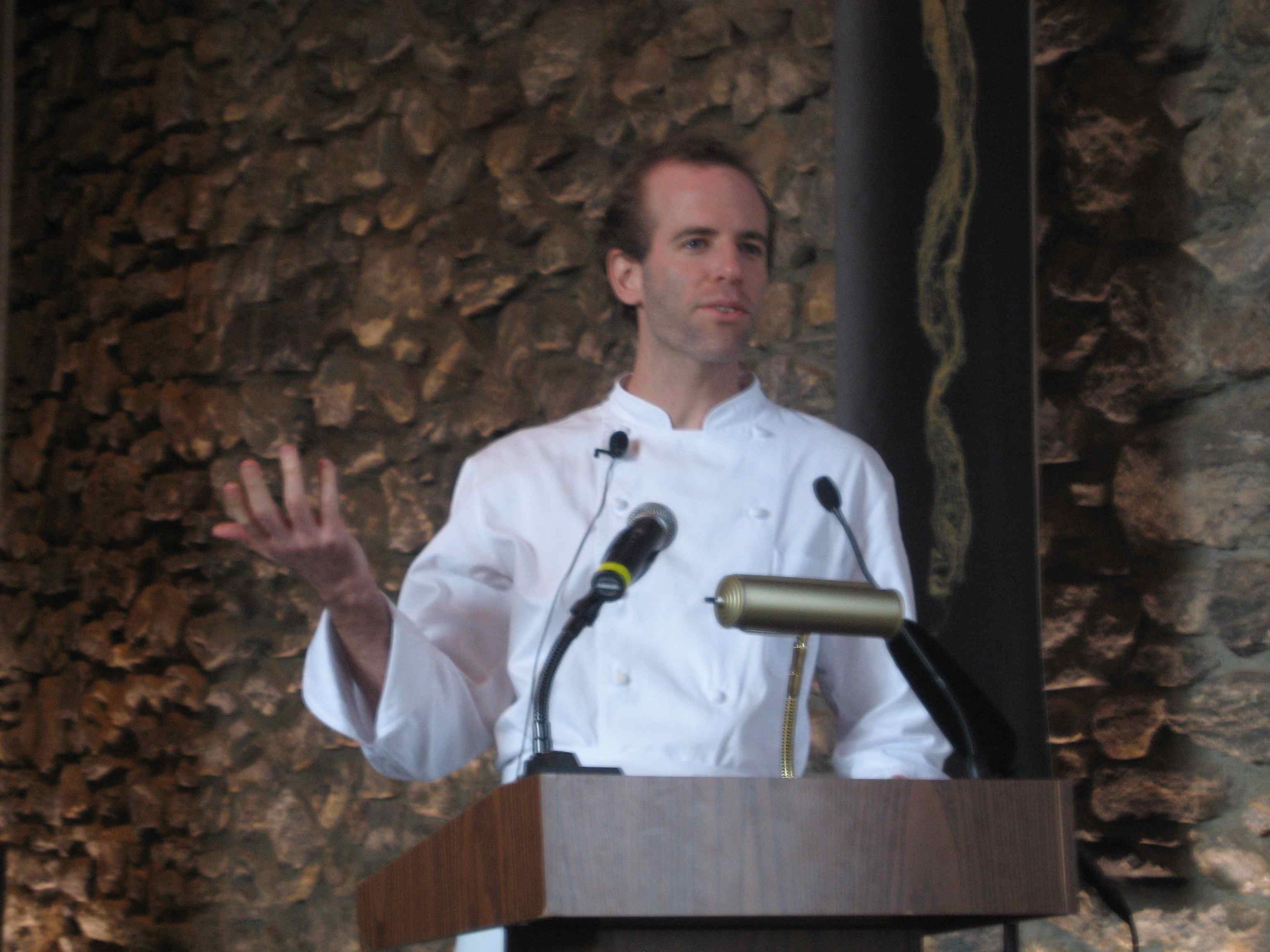
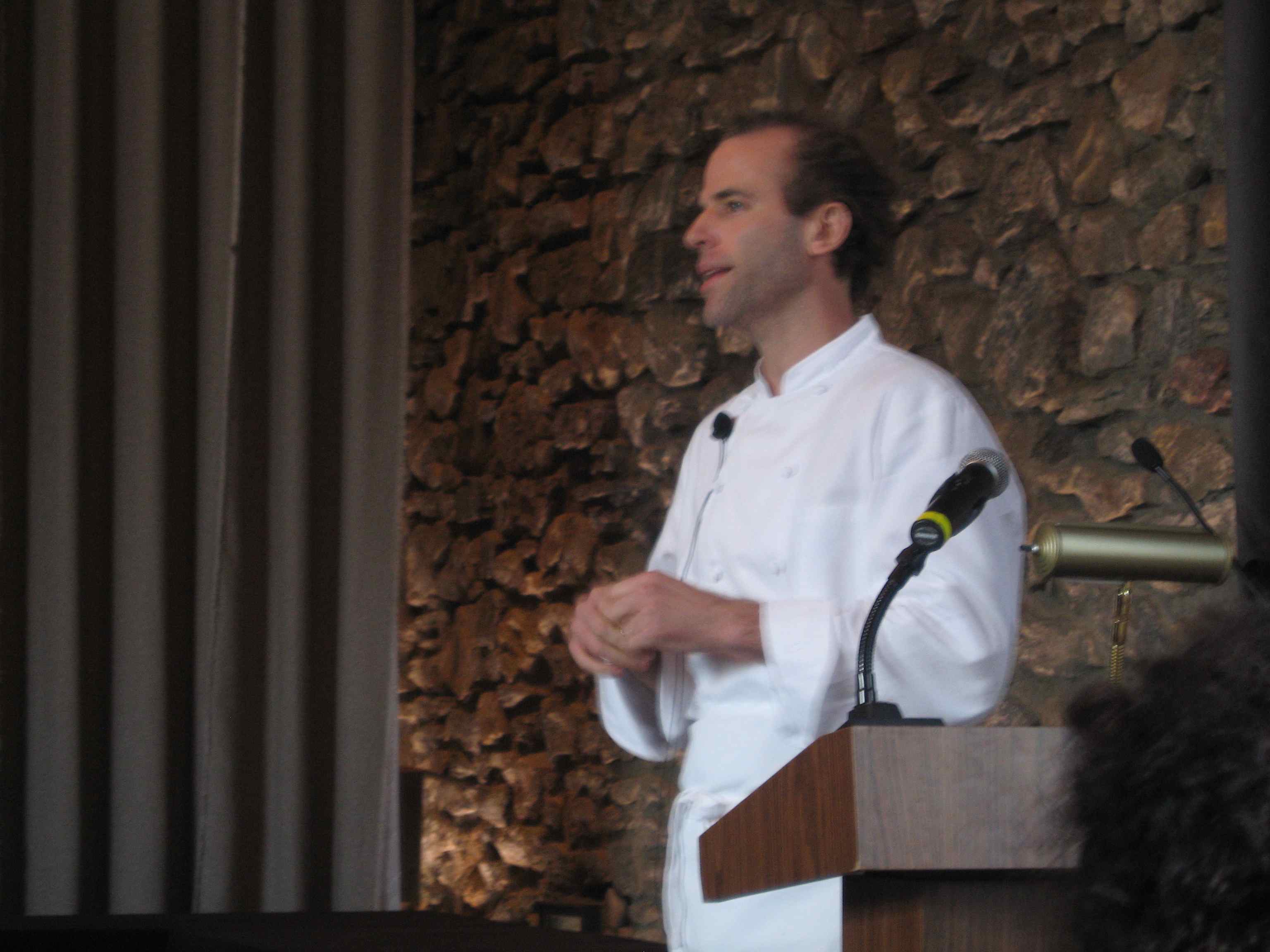
This was reinforced when we had our lunch time Q and A with Dan Barber, chef of Blue Hill at Stone Barns and Blue Hill NYC, and winner of the 2009 James Beard award for Outstanding Chef.  (See Inside Dan Barber's Kitchen)  This guy was such a charismatic, witty, and energetic speaker that I had a fleeting thought that his head might explode while talking.  He told us about a great story of some Mokum carrots he served as one of the entrees at the Blue Hill tasting menu. A cantankerouDan Barber, Food Gods customer called him up to complain about how embarrassed she was for her guests who were at the table because they were served some measly carrots at a meal that cost $90-125 per person excluding beverages.  Mind you, the carrots were pulled fresh from the farm, marinated for 4 hours in a carrot stock and 5 other things I couldn’t imagine doing to some carrots to produce an intense carrot experience.  The customer didn't feel she was getting what she paid for because carrots, in her mind, are a cheap produce item.  In any case, we got around to the sobering stats of running a restaurant, the reality of buying locally, organically and realizing that the cost of food, even at Blue Hill, can even drive the buyers there to sometimes seek the lowest price.  Mr. Barber had once tested the brix content of an organic carrot the restaurant received from California and that reading was a big fat ZERO!.  Normally a good reading would be 8 or higher.  A great example of how organic doesn’t mean everything.

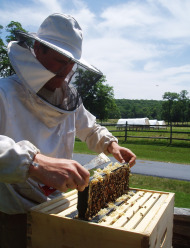
Padraic MacLeish. Photo from www.mnn.comOur last lecture of the day was on Small Scale Beekeeping by Padraic MacLeish, beekeeper at Stone Barns.  We learned the biology of bees and the logistics of keeping bees on a small scale in New York including obtaining hive materials, equipment, approaching bees, and getting sweet honey.  BTW, if you want bees for next year, start now!  You need to start the process of buying and getting their hives set up now so that you will be ready by spring.  The Pfeiffer Center in Chestnut Ridge, New York will be giving a biodynamically-oriented intro course February 2010. 


CLOSING REMARKS

Closing remarks were given by Fred Kirschenmann, a leader of the organic/sustainable food movement, Distinguished Fellow at the Leopold Center for Sustainable Agriculture at Iowa State University, and manager of a 3500 acre organic farm in North Dakota and president of the board at Stone Barns.  This extremely uplifting speech was important especially to those young and aspiring farmers who understand the reality of running their own farm - low pay, long hours and inclement weather.  He envisions that agriculture will change over to smaller operations with more knowledgeable farmers who can manage and intensively restore the biological health of the soil.   More importantly, the new young farmers will fundamentally redesign a system where everything is bred for high yield (maximum production and short term return) to a resilient system that is about nutritional quality, not just yield.  He gave us 6 suggestions for the young farmers in the room.

          1. To recognize that challenges are always opportunities.

          2. To accumulate a new capital other than money.  A human capital can provide us with       imagination, creatively and innovation.  This will be critical to solving the problems.  He referred to an essay by ecologist Richard Heinberg called “The 50 Million Farmers” who predicts that by the year 2040, there will be 50 million people growing food in their own gardens or in community gardens.  This is the type of human capital that we need.

          3. Creation of a caring economy: referred to a book by Riane Eisler: "The Real Wealth of Nations: Creating a Caring Economics" whereby we create a system simply to help each other thrive and survive rather than the competitive one man/woman to him/herself kind of ethic that has predominated our economy.  He gave the example of the company Shepherd’s Grain  where grain farmers from Washington, Oregon and Idaho developed a relationship with local millers and bakers and together determined the price based on growing conditions and production costs.  It’s not based on the usual lower marketplace price of grain.  This business model is working.  Sales have exploded and this is a model we should look at.


          4. Reduction of transaction costs.  Travelling 250 miles to a Bronx farmer's market in a pick up truck won’t be sustainable when oil eventually approaches $300/barrel.  Places like Basis Foods in New York are committed to helping small and mid-sized farmers find a place for their products in restaurants and markets all while reducing transportation costs .  For the consumer, all their food will be entirely traceable.


           5. Create and pay attention to new sustainable models.  One example is Will Allen who grows tilapia and perch in addition to veggies in his 3 acre urban farm in Milwaukee, Wisconsin.  This is a closed cycle that feeds 10,000 people on 3 acres!

           6. Engage governmental agencies.  Yeah, we're really disappointed in some of Obama's appointments but there is hope in the new young blood in the USDA forming the resistance and trying to develop new policies.

This conference was such an inspiration for us that we plan to make big changes at our micro-farm.  Bees next year, serious scientific inquiry into the real nutritional quality of the food we produce, more efficient techniques will be in place, permaculture design applied to the remaining parts of the property that have not been tapped into and maybe trying out some Aquaponics.  That’s right - growing our own fish source!  We’ll be sure to be at the conference next year and in the meantime, I hope everyone who reads this will continue to vote with their dollars in making the right food choices to both support their own health and their local farmers.

Page 1 2