alliums ameraucana Anthony Bourdain aphids Appleseed Permaculture aquaponics arthritis artichokes Asian Vegetables aussie basil baby chicks baby turnips bearss lime bee keeping beet greens beneficial insects benner tree farm Biochar Bitter Melon blight blooming hill farm boothby blonde cucumber brix broccoli brussels sprouts cabbage cabbage hill farm camp hill farm cancer caraflex celeriac chicken coop chickens children chinese tamale chives cilantro cilantro root coconut cold frames collard greens Compost coriander corn crop rotation cruciferous crucifers cucumber Dan Barber dan kittredge Dave Llewellyn detox dirty dozen dragon fruit Dutch white clover dwarf citrus eggplant Elderberries factory farms farm to table farmer's market farmers markets Fava beans ffarm to table fish oil flea beetle flowers food allergies food combining food miles founding farmers four wind growers Fred Kirschenmann french bulldog G6pd deficiency garlic garlic festival garlic scapes geese Glynwood grass-fed beef Great Outdoors Listening Tour green tomatoes greenhouse growing indoors Hanalei Hemlock Hill Farm heritage turkey heritage USA hudson valley farms hurricane Irene hyssop iced tea infections influenza Insect control isothiocyanates joan gussow jolie lampkin joong kaffir lime kale Kauai kohlrabi korean licorice mint Ladybugs late blight leeks lettuces local food locust tree maine avenue fish market menhaden meyer lemon mycelia mycorrhizal natural fertilizers nectary nightshades No Reservations Nurse cropping nutrient density okra organic Baby food organic christmas tree Organic Pest Control Parsley Paul tappenden peas Permaculture pesticides pesto petite watermelon plant sap pH plymouth barred rock pole beans potatoes preserving food purple basil qunice Radish Greens rainbeau ridge farm raised beds rampicante raw food real food campaign red hook Rockland Farm Alliance ronnybrook farm row covers salt-preserved duck eggs sambucus nigra seed saving seedlings Sheet mulching small space soil analysis soil blocks soil conductivity sorrel Squash Vine Borer star fruit sugar snap peas sustainability sustainable fishing Swiss Chard tabbouleh TEDx Manhattan terracing three sisters tomato sauce tomatoes trellis trovita orange turkana farms Tuttle Farm urban zen volt white clover winter harvest Winter Squash Young Farmers Conference
Indispensable Books and Resources
  • Edible Forest Gardens (2 volume set)
    Edible Forest Gardens (2 volume set)
    by Dave Jacke, Eric Toensmeier
  • The Winter Harvest Handbook: Year Round Vegetable Production Using Deep Organic Techniques and Unheated Greenhouses
    The Winter Harvest Handbook: Year Round Vegetable Production Using Deep Organic Techniques and Unheated Greenhouses
    by Eliot Coleman
  • The Biological Farmer: A Complete Guide to the Sustainable & Profitable Biological System of Farming
    The Biological Farmer: A Complete Guide to the Sustainable & Profitable Biological System of Farming
    by Gary F. Zimmer
  • The Garden Primer: Second Edition
    The Garden Primer: Second Edition
    by Barbara Damrosch
  • 1500 Live LadyBugs - A GOOD BUG! - Lady Bug
    1500 Live LadyBugs - A GOOD BUG! - Lady Bug
    Organic Insect Control
  • Acres U.S.A.
    Acres U.S.A.
    Acres U.S.A.

    The best farming and growing magazine money can buy!

  • Seed Starter Soil Block Maker Makes 4 Medium Blocks
    Seed Starter Soil Block Maker Makes 4 Medium Blocks

    2" Soil Blocker

  • Mini Soil Blocker
    Mini Soil Blocker
  • New York City Farmer & Feast: Harvesting Local Bounty
    New York City Farmer & Feast: Harvesting Local Bounty
    by Emily Brooks
  • What Doctors Eat: Tips, Recipes, and the Ultimate Eating Plan for Lasting Weight Loss and Perfect Health
    What Doctors Eat: Tips, Recipes, and the Ultimate Eating Plan for Lasting Weight Loss and Perfect Health
    by Tasneem Bhatia, Editors of Prevention


THE DAILY BROADFORK

Short journal entries detailing the nuts and bolts of our ventures in growing food at our micro-farm

Entries in Permaculture (6)

Friday
Apr262013

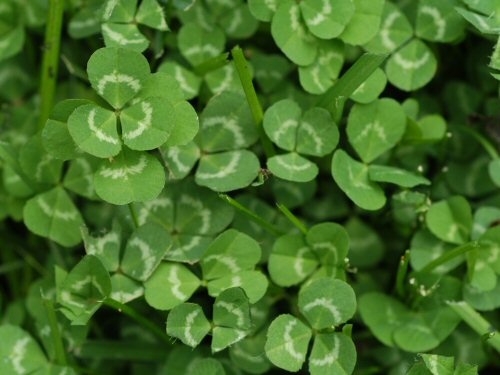
Walkways in the farm and garden: Dutch White Clover

After the last few super rainy seasons our farm walkways between the raised beds have gotten a beating.  Where we had originally planned to have wood chips, torrential rains have managed to wash them away to the bottem level and on top of that, eroding the pathways as well.  Since then, we've been trying to figure out how to solve this problem assuming that extreme weather patterns will continue.  This season, inspired by Joan Gussow's garden, we've decided to plant dutch white clover inbetween all the raised beds.  You've seen dutch white clover before: it's typically in non-chemically treated lawns (along with dandelions) and produces a white flower if left to grow.  We needed something that has mutiple functions.  It needed to be:

1) steppable and tolerate, at times, high traffic conditions

2) provide erosion control

3) benficial to the farm by producing nitrogen and attracting beneficial insects and be

4) asthetically pleasing

Because this serve multiple functions, it is considered a permaculture plant.  Sounds great?  We hope so!


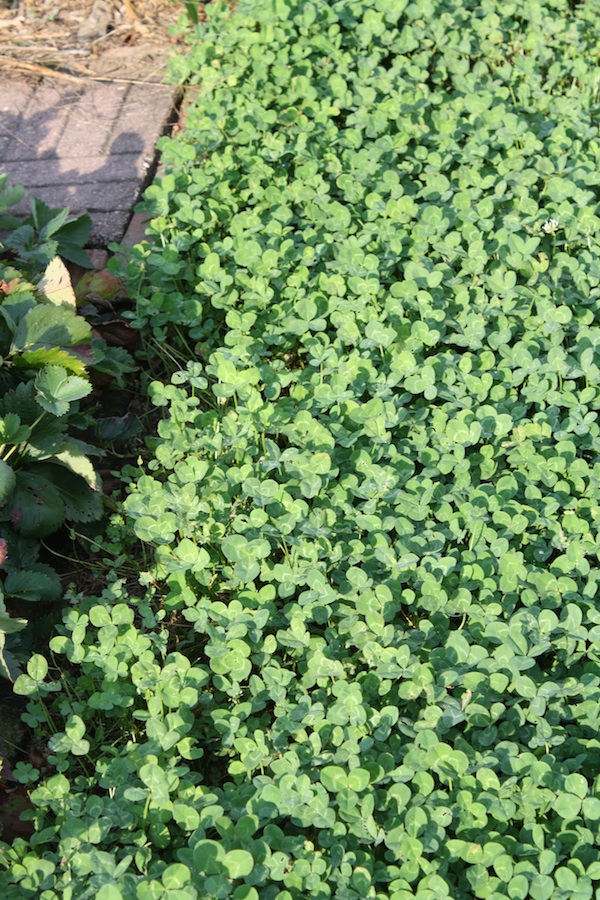
Here is a snapshot from Joan's garden...she told us the trick with planting these is to be very vigorous in pulling out competing weeds in the beginnng. 
 

Sunday
Aug262012

The Natural Medicine Cabinet: Elderberries for Immune Support

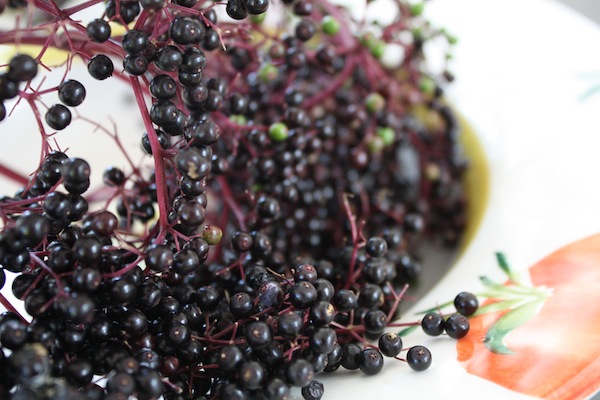
The permaculture growing area we planted in the Spring of 2011 surprisingly began to really mature this year.  We didn't expect to have much in the way of fruits so early on and we also didn't expect to be stripped of most of it by early summer due to squirrels and chipmunk activity.  Fruit protection will be another venture for next spring but there were a few things that the animals left for us: blackberries and elderberries.  While blackberries are easy to come by, elderberries, or sambucus nigra, are a rare find.  A plant with many uses, these berries are edible, their flowers bring beneficial insects and the berries have medicinal properties.  Elderberries have relatively strong scientic evidence that they have activity against the flu and can reduce the duration of symptoms by 56%.  The popular extract "Sambucol", made by Nature's Way, was specifically studied.

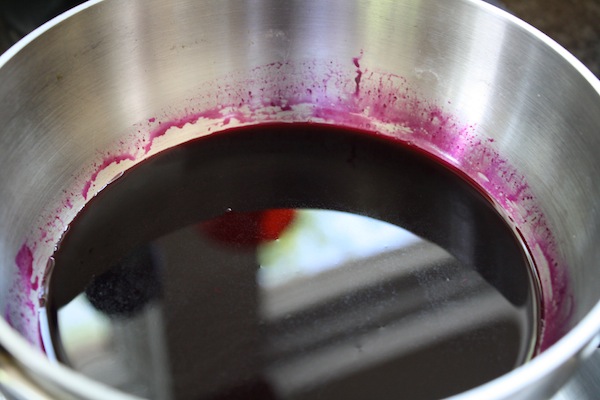
You can tell that the primary flavinoids are the anthocyanidins based on the deep fuscia color in the extract (don't wear white when preparing it!).  These anthocyanadins are thought to have immunomodulating and anti-inflammatory effects.  Laboratory studies show activity against H1N1 virus (Swine Flu) and inhibits replication of several strains of influenza A and B.

Be careful not to use unripe berries, leaves or stalks of the plant which contain cyanogenic glycosides which release cyanide when consumed.

Uses: Drizzled on top of vanilla ice cream, in a cocktail, mashed in some bananas for baby food, and as a medicine.  We plan on having this ready as a syrup for upper respiratory infections for us and baby during the upcoming winter months...


RECIPE: ELDERBERRY SYRUP

I made this without honey since we have an infant under 1 year old...

8 ounces of elderberries

sugar

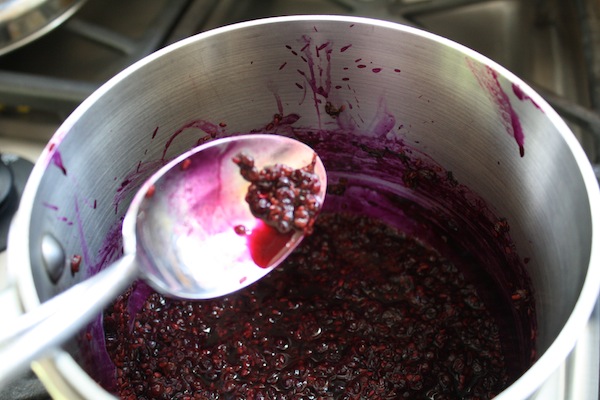
Directions: Carefully heat elderberries in a small sauce pan.  Add a few teaspoons of water to prevent burning.  Using the back of a spoon, mash the berries as they very gently simmer.  When you've extracted all the juices, strain through a fine sieve.  The liquid will be a gorgeous dark fuschia color. 

Put liquid back into sauce pan and for every 1 Tbs of liquid you extracted use a little less than 1 Tablespoon of sugar into the pan.  Gently simmer stirring frequently.

You can use this right away or use a canning method to preserve the syrup for future use.  The end of the summer is right upon us and this is the time to squirrel away all that food you've grown to enjoy in the upcoming months...


Friday
Apr222011

An Auspicious Earth Day: Permaculture Planting for the Future

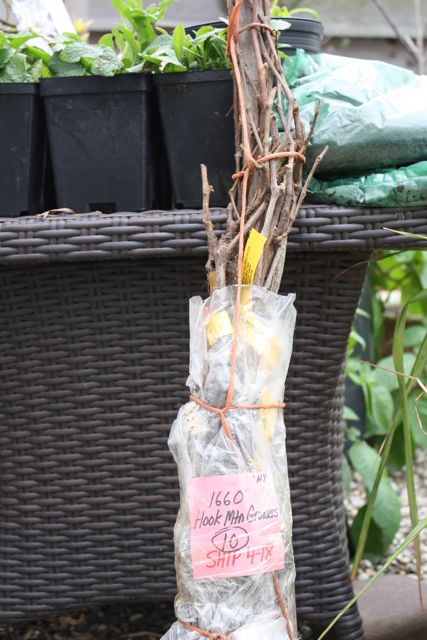
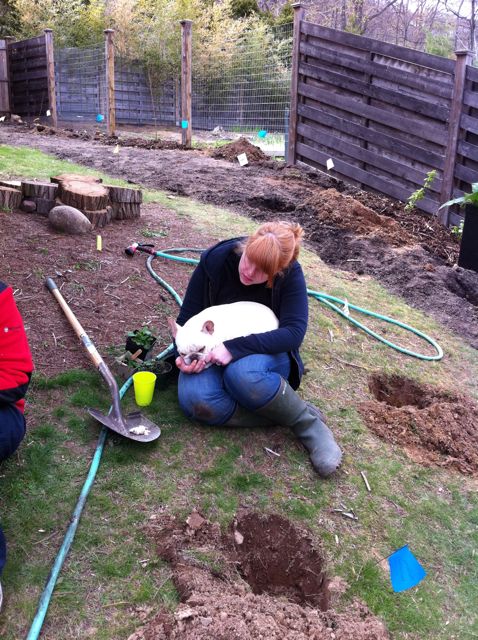
Ten Grape vines from St. Lawrence Nursery in New YorkThis Earth Day was auspicious in so many ways.  This was the first day we went to ground with our edible forest garden after years of permaculture planning...all under the guidance of Ethan and Dyami of Appleseed Permaculture.  It was also a day our four part-time hardworking interns were here: Alison, Eileen, Pippa and Rissa.  Another auspicious aspect: it was fruit day on the biodynamic calendar and we somehow dodged the rain in the forecast. 

Permaculture is about "permanent agriculture" and there are dense but great textbooks written on the subject.  It is a nice complement to our annual vegetables because it provides food and medicine and is low maintence.  Something we very much welcome.


We started the day organizing plants and digging holes.  Then came the actual planting and sheet mulching with cardboard we've been saving for years.  Woodchips from our locust trees topped off the cardboard and pathways.

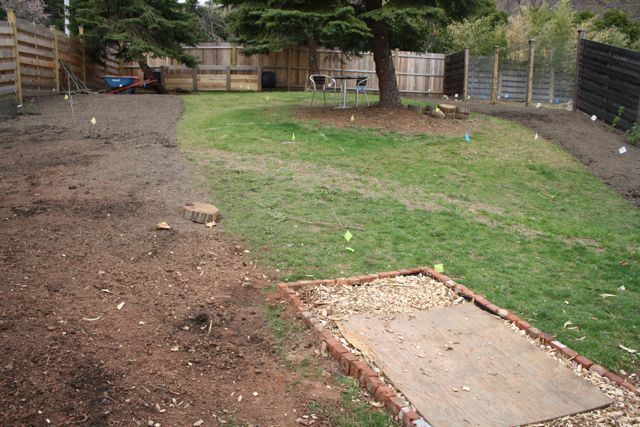
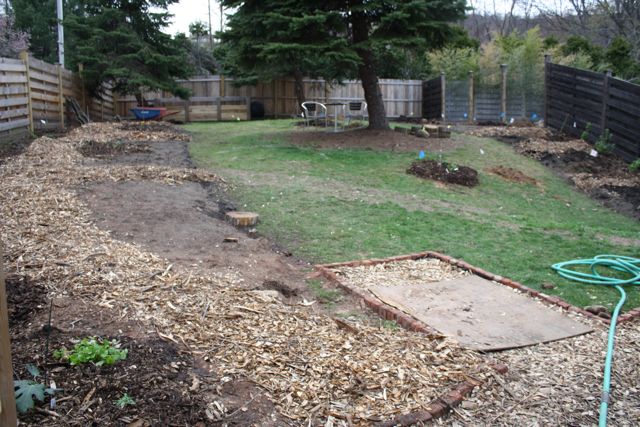
Ground prepped and ready for work: "Before" 

We planted too many things to mention but on the partial list: apples, peaches, blueberries, yellow raspberries, elderberry, quince, goumi among other perennials with specifics functions like comfrey as a dynamic accumulator, licorice and New Jersey tea as nitrogen fixers, beneficial insectary plants, aromatic pest confusers and many many more.

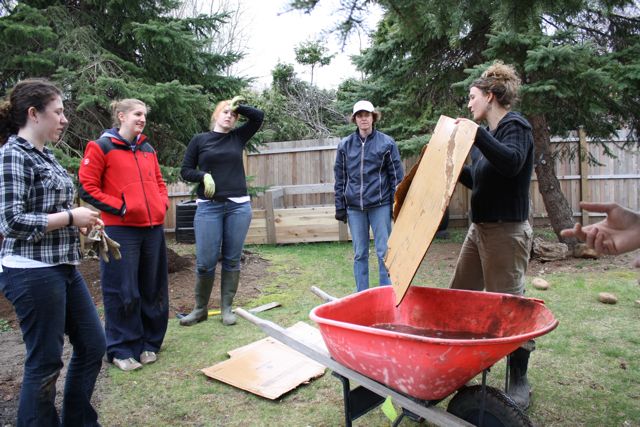
 Alison, Pippa, Rissa, Eileen and Dyami learning the fine points of sheet mulching

All of us were spent after a long but satisfying day of work with new found knowledge, inspiration and the comraderie of being together, collaborating and tending the earth.  This is what earth day is all about isn't it?

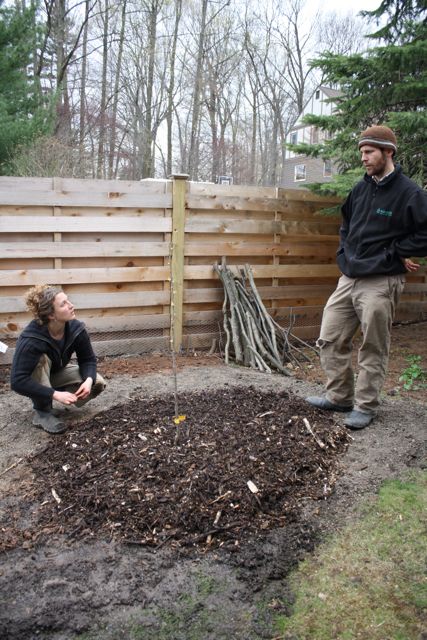
 Dyami and Ethan pondering over a fruit tree

As Charlie and I sit down to feast on dinner, we reflect on the day's events, incredible accomplishments, on friendships forged, French Bulldogs coddled...... and as we do all this we stray away from the present moment for a bit to imagine the future of these fruit and berry trees that will feed us until we grow quite old.  A beautiful ending thought on this Earth Day, 2011.  Now off to watch Fringe...

 Henry, the most coddled French Bulldog with Aunt Rissa

"After" : We'll keep you updated as things grow and bloom

Friday
Mar112011

Luring Beneficial Insects: A Permaculture Plan for Pest Control

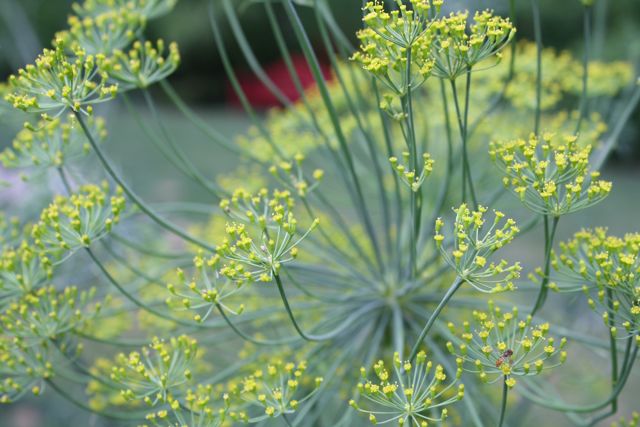
Dill: Check out the tiny hoverfly on the bottom rightPermaculture is a system of agriCULTURE that is PERManent.  It is a perennial polyculture of plantings and it's designed to be low-maintenance and food producing.  This spring we are gearing up to convert a small swath of property alongside the annuals growing area to an edible forest garden using permaculture principles.  While we are busy seeding away for ourselves and our plant sales, part of what I'm trying to plan for is a wide range of flowering plants that will attract beneficial insects.  The trick is to have enough flowering plants from spring through late fall to ensure the presence of these welcome bugs.  These are called "nectary plants" by Permies.

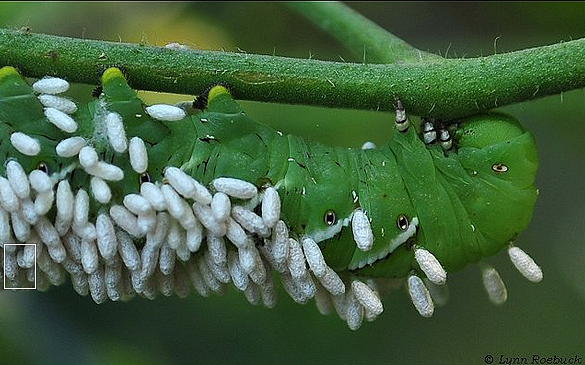
There are 2 types of beneficial insects.  Predatory insects catch and eat pests.  Common examples are ladybugs and hover fly larvae.  They have an insatiable appetite for aphids.  By the way, our county's famous "suburban forager" Paul Tappenden tells me he quite likes the taste of aphids and thinks they have a walnut quality about them.  Hmmm.  I'll pass.  The other type are parasitoid insects which lay their eggs on or inside the eggs, larvae, or adults of the pest in question.  When the parasitoid eggs hatch, they devour the pest.  A common example, if you re familiar growing tomatoes, is the tomato hornworm.  In our first year of growing, I uncovered this horrific looking bug while pruning tomatoes.  It was covered with what looked like grains of rice.  I screamed and ran far away figuring the ick factor would be lessened by distance.  Trying to solve the mystery, I googled "green caterpillar with rice" and voila!  I found out that this was a GOOD thing for the garden.  Those rice grains hatch to become baby braconid wasps that devour the host and fly on to find the next hornworm.  What did we do before the internet?

So the trick is to plan out a place to attract these good bugs by planting nectary plants.  One of the best types of nectary plants are in the Apiaceae family, previously known as the Umbelliferae family because their flowers produced umbrellas of tiny flowers.  You know this family well: dill, carrots, celery, chervil, cilantro, fennel, parsley, parsnip and angelica.  So when you don't get to eating your herbs or veggies before they flower, don't pull them - leave them in the garden to attract these beneficials!  They are goreous as well.

This is the list of perennials (and some annuals) we're growing specifically for their nectary properties.

Yarrow

Bee Balm

Sweet Cicely

Anise Hyssop

Licorice

Dill

Fennel

A great introduction to Permaculture and its principles and for more information on beneficial insectaries read Gaia's Garden, Second Edition: A Guide To Home-Scale Permaculture


Friday
Oct082010

Weekly Musings: Quince for Kale

Imagine everyone on your street using their land, however big or small, to grow food, whether perennial or annual, and using the food to feed each other?  “Food miles”, a term which refers to the distance food is transported from the time of its production until it reaches the consumer, would be whittled down to “food feet.”  One of the hopes of our micro-farm was to set up a model of growing to encourage others to follow our example, no matter how small their growing space or how much growing experience they had.  Our neighbors, Bob and Enid, who we met at various functions promoting the sustainable food movement, recently gave us 5 lbs of quince fruit from their tree.  We happily gave Bob and Enid a share of our abundant kale and end of season tomatoes.

We are in the process of planning and planting various perennial trees and shrubs to provide us with fruit, berries and nuts on the section of our property we fondly refer to as our future edible forest garden.  Many of these will take years to grow and produce and we were thankful for a local supply of fruit - one we had not really cooked with before.  We had purchased and eaten quince paste, also known as Membrillo, a few years ago, which we served with a plate of pungent cheese. We found the quince paste to be an outstanding sweet accompaniment.


QUINCE
Cydonia Oblonga

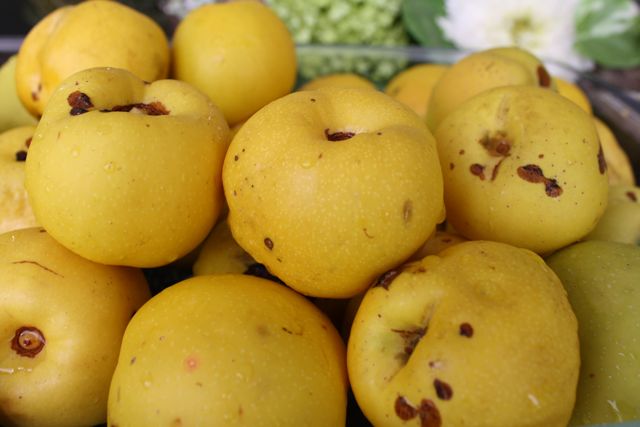
The quince fruit is highly fragrant and smells of apples and pears with the presence of floral notes as well.  When I first took notice of it, I immediately wanted to eat it raw.  Well, it was inedible.  Quince is usually not enjoyed fresh because it is highly tart and astringent.  It needs to be cooked.  The fruit is typically harvested in the fall and a mature tree can yield 75 lbs of fruit.  Though the country of Turkey ranks highest in the  production of quince fruit, it is a pretty hardy tree and can be grown in zones 5-9 in this country.  According to Lee Reich, the Hudson Valley guru of edible landscaping, in the spring “branches are festooned with large white or pinkish blossoms, each resembling a “single” rose blossom...in the late summer and autumn, the show is quite dramatic from the large yellow fruits, which can be left dangling on the stems for many weeks.” 

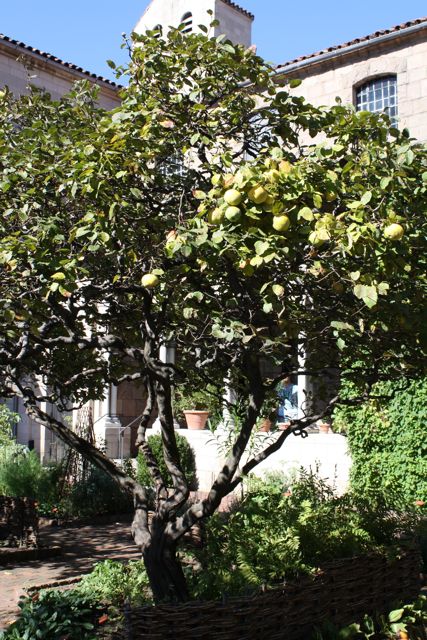
GROWING QUINCEQuince tree at the Bonnefont Herb garden at The Cloisters in Fort Tryon Park

Quince is a relatively compact tree growing rarely more than 10 feet high and two-thirds that width.  It can have multiple trunks but if you train it to have one trunk, it can take on a gnarled, twisted and picturesque appearance.  The best example can be seen in NYC at The Cloisters in Fort Tryon Park where four famous quince trees grow at the periphery of four beds that make up the Bonnefont Cloisters Herb Garden containing over 250 species of medieval medicinal herbs.

Plant quince trees in full sun and well drained soil.  Decide whether you want to have it grown as a shrub or with 1 to 3 trunks during its first growing season and prune accordingly.  If you are in the Hudson Valley, Micosta Nursery in Hudson, New York sells 6 different varieties.  You need only one tree as quince is self-fruitful.  Raintree nursery is also a good source for the west coast. 

RECIPE: QUINCE PASTE

Quince paste is a wonderful homemade gift for your foodie friends and family.  It is time consuming and should be given to those who appreciate the effort.  Since it stores well in the refrigerator for up to 3 months, it’s a great idea to make several batches to eat through the winter months and to give out as holiday gifts.  When cooking, enjoy the aromas of banana, flowers, apples and almonds that waft from the stove.  The essential tools to make this recipe are a food mill, food processor, rubber spatula, wax paper and a 9x12 roasting pan.


4-5 lbs of quince, scrubbed clean
sugar
water


Preheat oven to 350 degrees and line pan with wax paper

Place whole quince in pan, cover with foil and bake for 2 hours.  When quince is cool enough to handle, remove as much of the flesh as possible into a large food processor taking care not to put in seeds, core or any hardened, brown areas.  This is the time consuming and messy part.

Add enough water, 1/4 cup at a time to make a puree the consistency of a thin pudding.  Use the smallest disk on your food mill and process the entire batch.

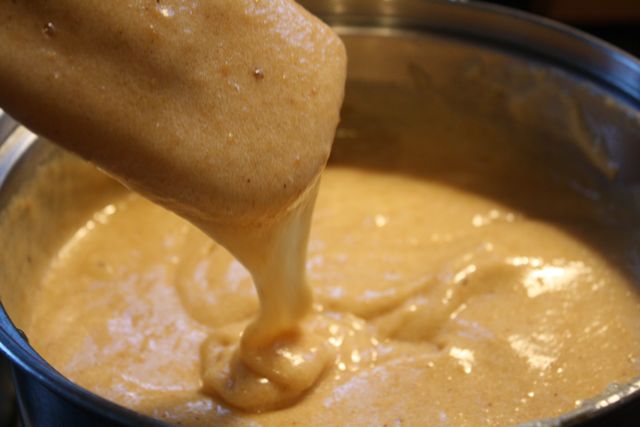
Measure out how much puree you’ve made and multiple by 2/3.  Measure out that amount of sugar.  Put puree in a heavy saucepan on med-low heat and add sugar.  For example, I made 6 cups of puree and added 4 cups of sugar.  Stir constantly for 25 minutes.  Puree will darken in color.  Be careful not to burn your puree.

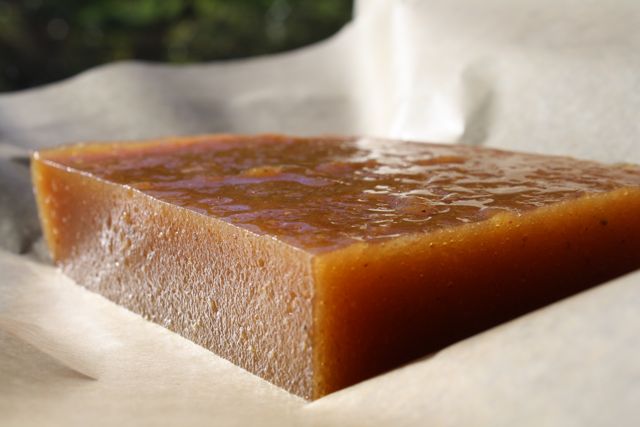
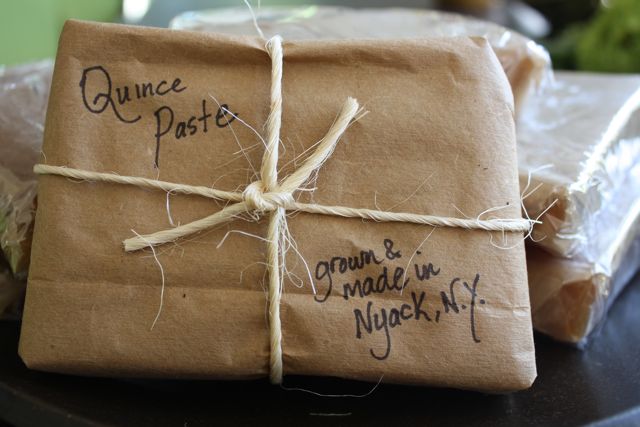
Pour into your wax-lined pan, cool then cover with plastic and chill overnight.  With a knife and spatula section off slices of your paste.  It should have a jelly and gum drop consistence.  Wrap in wax paper store and plastic and store in an airtight contained in the refrigerator.

Serve with pungent cheeses like Manchego or use as a substitute for your usual jam.


Stirring quince and sugar mixture constantlyQuince paste should have the consistency between jelly and gum dropsYeah, I had a little Martha Stewart in me when I did this.