alliums ameraucana Anthony Bourdain aphids Appleseed Permaculture aquaponics arthritis artichokes Asian Vegetables aussie basil baby chicks baby turnips bearss lime bee keeping beet greens beneficial insects benner tree farm Biochar Bitter Melon blight blooming hill farm boothby blonde cucumber brix broccoli brussels sprouts cabbage cabbage hill farm camp hill farm cancer caraflex celeriac chicken coop chickens children chinese tamale chives cilantro cilantro root coconut cold frames collard greens Compost coriander corn crop rotation cruciferous crucifers cucumber Dan Barber dan kittredge Dave Llewellyn detox dirty dozen dragon fruit Dutch white clover dwarf citrus eggplant Elderberries factory farms farm to table farmer's market farmers markets Fava beans ffarm to table fish oil flea beetle flowers food allergies food combining food miles founding farmers four wind growers Fred Kirschenmann french bulldog G6pd deficiency garlic garlic festival garlic scapes geese Glynwood grass-fed beef Great Outdoors Listening Tour green tomatoes greenhouse growing indoors Hanalei Hemlock Hill Farm heritage turkey heritage USA hudson valley farms hurricane Irene hyssop iced tea infections influenza Insect control isothiocyanates joan gussow jolie lampkin joong kaffir lime kale Kauai kohlrabi korean licorice mint Ladybugs late blight leeks lettuces local food locust tree maine avenue fish market menhaden meyer lemon mycelia mycorrhizal natural fertilizers nectary nightshades No Reservations Nurse cropping nutrient density okra organic Baby food organic christmas tree Organic Pest Control Parsley Paul tappenden peas Permaculture pesticides pesto petite watermelon plant sap pH plymouth barred rock pole beans potatoes preserving food purple basil qunice Radish Greens rainbeau ridge farm raised beds rampicante raw food real food campaign red hook Rockland Farm Alliance ronnybrook farm row covers salt-preserved duck eggs sambucus nigra seed saving seedlings Sheet mulching small space soil analysis soil blocks soil conductivity sorrel Squash Vine Borer star fruit sugar snap peas sustainability sustainable fishing Swiss Chard tabbouleh TEDx Manhattan terracing three sisters tomato sauce tomatoes trellis trovita orange turkana farms Tuttle Farm urban zen volt white clover winter harvest Winter Squash Young Farmers Conference
Indispensable Books and Resources
  • Edible Forest Gardens (2 volume set)
    Edible Forest Gardens (2 volume set)
    by Dave Jacke, Eric Toensmeier
  • The Winter Harvest Handbook: Year Round Vegetable Production Using Deep Organic Techniques and Unheated Greenhouses
    The Winter Harvest Handbook: Year Round Vegetable Production Using Deep Organic Techniques and Unheated Greenhouses
    by Eliot Coleman
  • The Biological Farmer: A Complete Guide to the Sustainable & Profitable Biological System of Farming
    The Biological Farmer: A Complete Guide to the Sustainable & Profitable Biological System of Farming
    by Gary F. Zimmer
  • The Garden Primer: Second Edition
    The Garden Primer: Second Edition
    by Barbara Damrosch
  • 1500 Live LadyBugs - A GOOD BUG! - Lady Bug
    1500 Live LadyBugs - A GOOD BUG! - Lady Bug
    Organic Insect Control
  • Acres U.S.A.
    Acres U.S.A.
    Acres U.S.A.

    The best farming and growing magazine money can buy!

  • Seed Starter Soil Block Maker Makes 4 Medium Blocks
    Seed Starter Soil Block Maker Makes 4 Medium Blocks

    2" Soil Blocker

  • Mini Soil Blocker
    Mini Soil Blocker
  • New York City Farmer & Feast: Harvesting Local Bounty
    New York City Farmer & Feast: Harvesting Local Bounty
    by Emily Brooks
  • What Doctors Eat: Tips, Recipes, and the Ultimate Eating Plan for Lasting Weight Loss and Perfect Health
    What Doctors Eat: Tips, Recipes, and the Ultimate Eating Plan for Lasting Weight Loss and Perfect Health
    by Tasneem Bhatia, Editors of Prevention


THE DAILY BROADFORK

Short journal entries detailing the nuts and bolts of our ventures in growing food at our micro-farm

Entries in Preserving Food (4)

Sunday
Aug262012

The Natural Medicine Cabinet: Elderberries for Immune Support

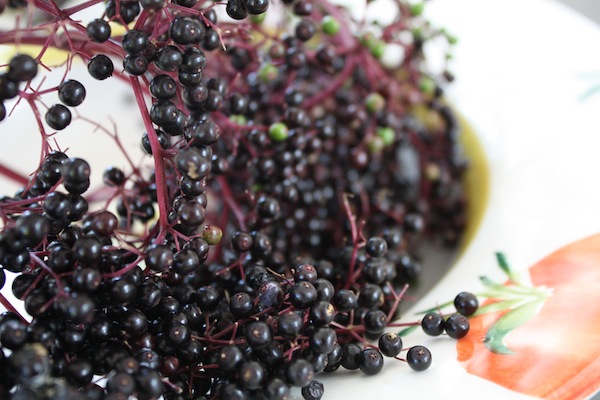
The permaculture growing area we planted in the Spring of 2011 surprisingly began to really mature this year.  We didn't expect to have much in the way of fruits so early on and we also didn't expect to be stripped of most of it by early summer due to squirrels and chipmunk activity.  Fruit protection will be another venture for next spring but there were a few things that the animals left for us: blackberries and elderberries.  While blackberries are easy to come by, elderberries, or sambucus nigra, are a rare find.  A plant with many uses, these berries are edible, their flowers bring beneficial insects and the berries have medicinal properties.  Elderberries have relatively strong scientic evidence that they have activity against the flu and can reduce the duration of symptoms by 56%.  The popular extract "Sambucol", made by Nature's Way, was specifically studied.

You can tell that the primary flavinoids are the anthocyanidins based on the deep fuscia color in the extract (don't wear white when preparing it!).  These anthocyanadins are thought to have immunomodulating and anti-inflammatory effects.  Laboratory studies show activity against H1N1 virus (Swine Flu) and inhibits replication of several strains of influenza A and B.

Be careful not to use unripe berries, leaves or stalks of the plant which contain cyanogenic glycosides which release cyanide when consumed.

Uses: Drizzled on top of vanilla ice cream, in a cocktail, mashed in some bananas for baby food, and as a medicine.  We plan on having this ready as a syrup for upper respiratory infections for us and baby during the upcoming winter months...


RECIPE: ELDERBERRY SYRUP

I made this without honey since we have an infant under 1 year old...

8 ounces of elderberries

sugar

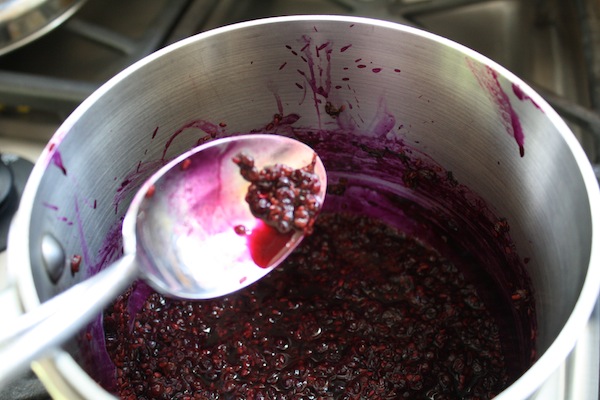
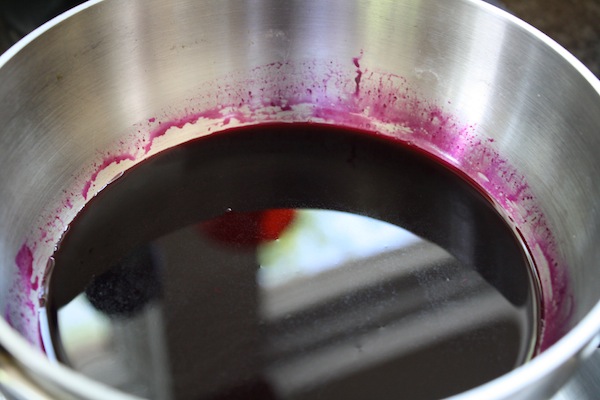
Directions: Carefully heat elderberries in a small sauce pan.  Add a few teaspoons of water to prevent burning.  Using the back of a spoon, mash the berries as they very gently simmer.  When you've extracted all the juices, strain through a fine sieve.  The liquid will be a gorgeous dark fuschia color. 
Put liquid back into sauce pan and for every 1 Tbs of liquid you extracted use a little less than 1 Tablespoon of sugar into the pan.  Gently simmer stirring frequently.
You can use this right away or use a canning method to preserve the syrup for future use.  The end of the summer is right upon us and this is the time to squirrel away all that food you've grown to enjoy in the upcoming months...
 

Friday
Jun012012

Growing Food to Feed Your Baby

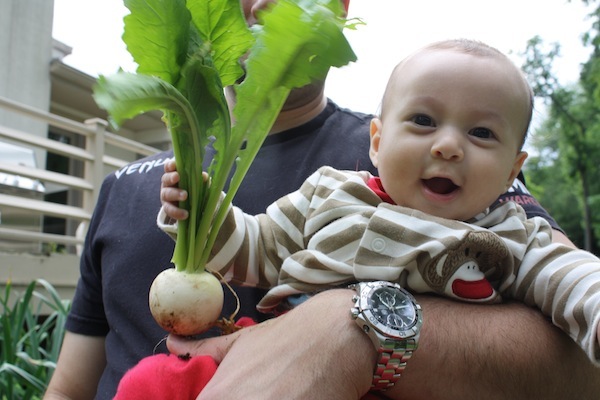
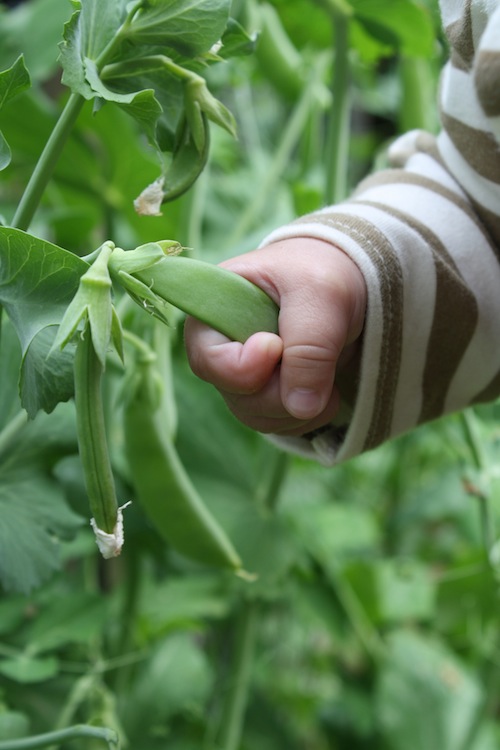
Everything is really taking off here at Hook Mountain Growers and the new employee is beginning to demand a taste of the farm. Our new farmer Gabriel will soon be adding solid foods to his diet and we have begun to really focus on what we can grow to satisfy his needs both nutritionally and with attention to his newly developing senses.  Though just shy of 5 months, the little guy has been heavily eyeing us whenever he sees us eat and this is all good timing because in the next month, he will be facing a bounty of food choices that we've carefully planned and planted in our farm.  One thing is for certain, I am not going to start with boring rice cereal for this one. 

He's already been introduced in utero to a wide variety of food and his breast milk has had a rotating flavor menu of various spices and eclectic foods.  He's been exposed to harvesting, meal preparations and delicious aromas wafting in the kitchen.  We hope this is all preparing him to understand the importance of food in our lives. 

In his book, Feeding Baby Green, Dr Alan Greene encourages starting solids with vegetables because they are the toughest flavors to learn to enjoy. Grains and fruits, the most commonly introduced foods, take a back seat because they can be bland or too sweet.  The idea is if you start with sugary flavors, the baby will seek out that sugary taste.  If you give bland food like rice cereal, then addition of flavors and spices later on may be too foreign and not enjoyable.

So what do we have that's on the menu for Gabriel in 2012?


Purple, Yellow and Orange Carrots

Baby Japanese Turnips

Sugar Snap Peas and English Peas

Blue, red and white potatoes

Swiss Chard

Yellow Beets

Kale, Collards and Cabbage

Butternut and Rampicante Squash

Angled Luffa Gourd

Bush Beans, Long Beans, Fava Beans

Watermelon

Apples, pears and peaches

Blackberries, raspberries, and currants

HERBS!


I want to highlight HERBS because I believe baby food shouldn't be bland.  What better way to start introducing flavors than adding them either to the broth the vegetable will be steamed in, or directly pureed with the vegetable.

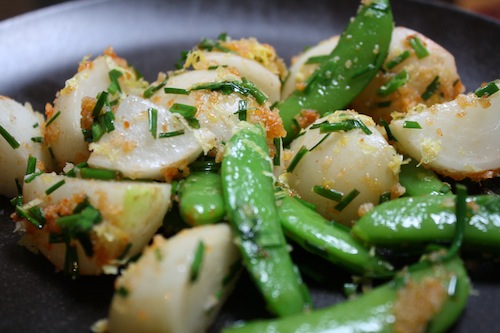
We're going to puree the Japanese baby turnips with tarragon and the Sugar snap peas as well for the baby, but for us...


RECIPE: Baby Turnips with Sugar Snap Peas

Serves 2 as an appetizer

1 cup sugar snap peas
1 bunch baby turnips, cut in half or quarters
1 Tbs butter or Earth Balance if dairy free
2 Tbs bread crumbs
2 Tbs chives
2 Tbs lemon zest
Siracha hot sauce
Salt

Blanch the the turnips for 3 minutes and the sugar snap peas for 2 minutes.  Heat the butter in a non-stick skillet over medium-high heat and add the turnips and peas and cook for 2 minutes.  Then add bread crumbs, chives, siracha and salt.  Cook for an additional minute.  Remove heat and add lemon zest and serve.


Thursday
Aug042011

Uses for Purple Basil

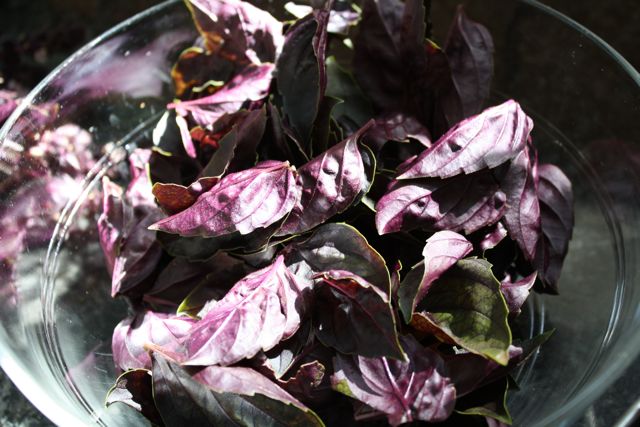
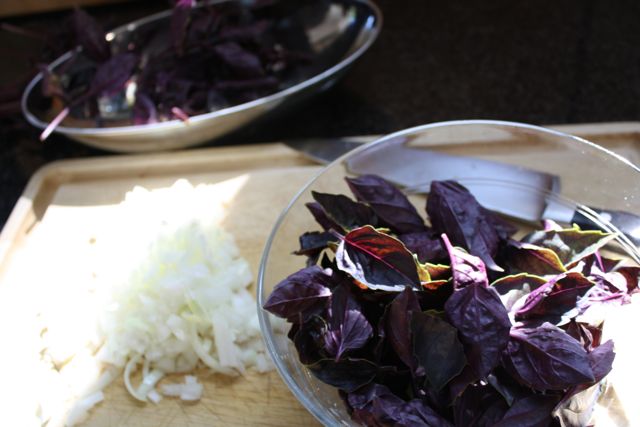
Purple Amythyst BasilWe're growing a lot of different varieties of basil: Sweet Italian, Holy, Thai, Purple and Purple Ruffled.  I have plenty of uses for the Thai, Holy and Italian varieties but I'm often stymied when my purple basil is lush and full, waiting for a culinary use.  I do use it as a finishing herb on top of salads, pastas and appetizers as a burst of purple color but it still leaves me with an abundance of the herb.  I've tried to make a pesto from it which came out beautifully in taste but a little disconcerting in color.  The final blackish eggplant color was not appetizing to everyone.  So what to do? 


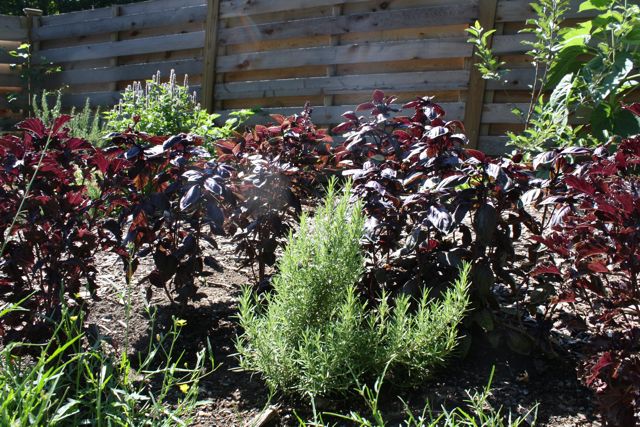
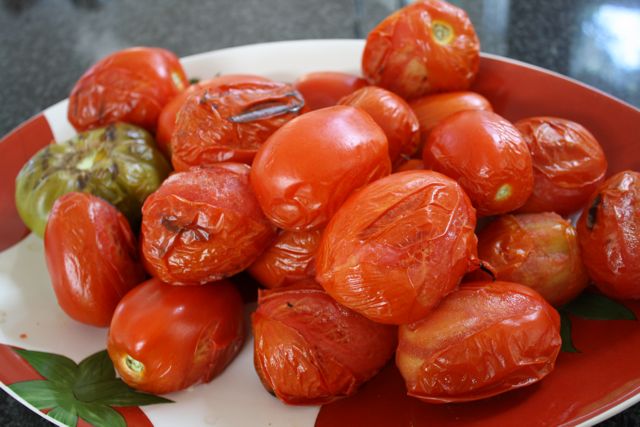
The basils make a gorgeous batch of aubergine color in the herb garden in our edible forest garden.  I figured my favorite grilled tomato basil sauce would be a perfect vehicle since it wouldn't change the color of the sauce.

I used the prolific producing Plum Regal tomato since it's so meaty with little water content.  An Aunt Ruby's Green tomato snuck in there since it was super ripe

And recent harvested Spanish Roja garlic, Dakota Tears onions making the sauce virtually all from the farm.


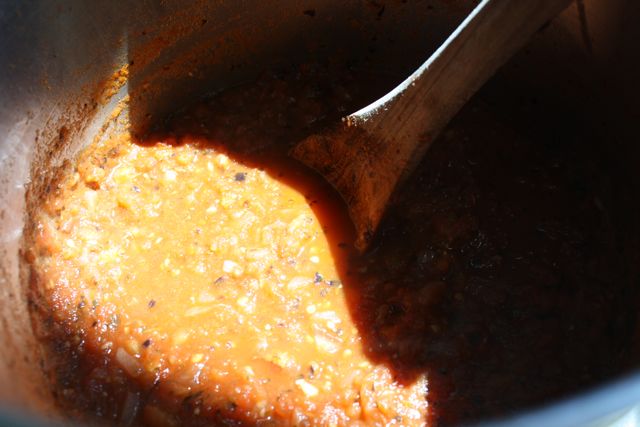
And the finished product looks great.  The black specks which are the purple basil actually look like the grilled bits of tomatoes and the resulting sauce is, as usual, spectacular.

For the recipe posted last year (I have yet to find a better and easier marinara to make than this one).  Click HERE.  More tomato uses to come as we are swimming in tomatoes.


Wednesday
Jul152009

Weekly Musings: Cilantro/Coriander Root


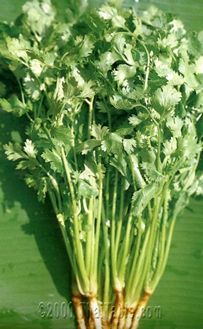
Cilantro, also known as coriander or Chinese parsley, is a uniquely pungent herb used in many Latin and Asian dishes. Though most people use the leaves, every part of the plant - leaf, stem and root - can be eaten. Medicinally, it is used for a variety of gastrointestinal dysfunctions: indigestion, nausea, diarrhea, lack of appetite and as an antiflatulent. It is also used as a chelating agent to remove mercury in the body. It's commonly seen in many natural detoxification protocols but few clinical studies are available to support this use. Coriander has been found to have antibacterial, antifungal, and antiparasitic properties in laboratory and animal studies and has been used to prevent food poisoning.  A study from Berkeley California found that the fresh leaves possessed bacteriacidal activity against Salmonella.  No wonder it's a common addition to cuisines of many third world countries. These are all important considerations given last year’s salmonella outbreak leading the the temporary unavailability of tomatoes and jalapenos. In addition, it is a rich source of vitamin C, calcium, magnesium, potassium, and iron. Use this this herb liberally!


A lot of people have difficulty growing cilantro. The summer heat often leads to bolting and the ideal growing conditions are sunny but cool days. Finding an area that gets early morning or late afternoon sun, but shaded during the hottest part of the day, may help. You can also as try seeding more closely together so that the leaves provide some shade to keep the soil cooler. If, in the end, you only get bolted cilantro, there are various applications for its use.

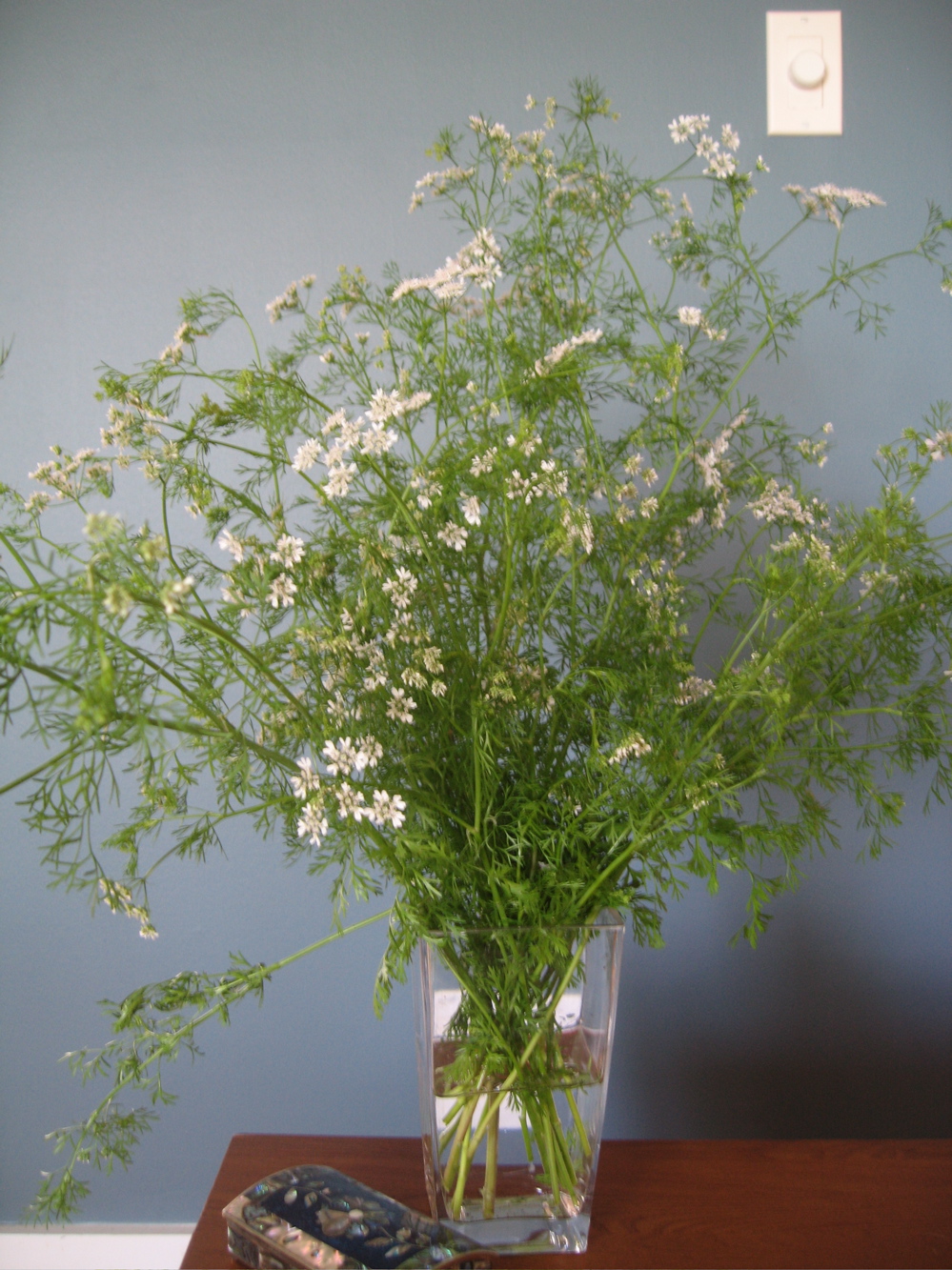
The lacy flowers attract beneficial insects to the garden. This is an especially important consideration when growing food organically. We use a variety of different “beneficials” flowers to do what pesticides do - get rid of damaging insects. Cilantro attracts hoverflies which prey on aphids and mealybugs. If you leave the flower to seed, the seed can be used as a culinary spice. The flowers are also beautiful in flower arrangements.

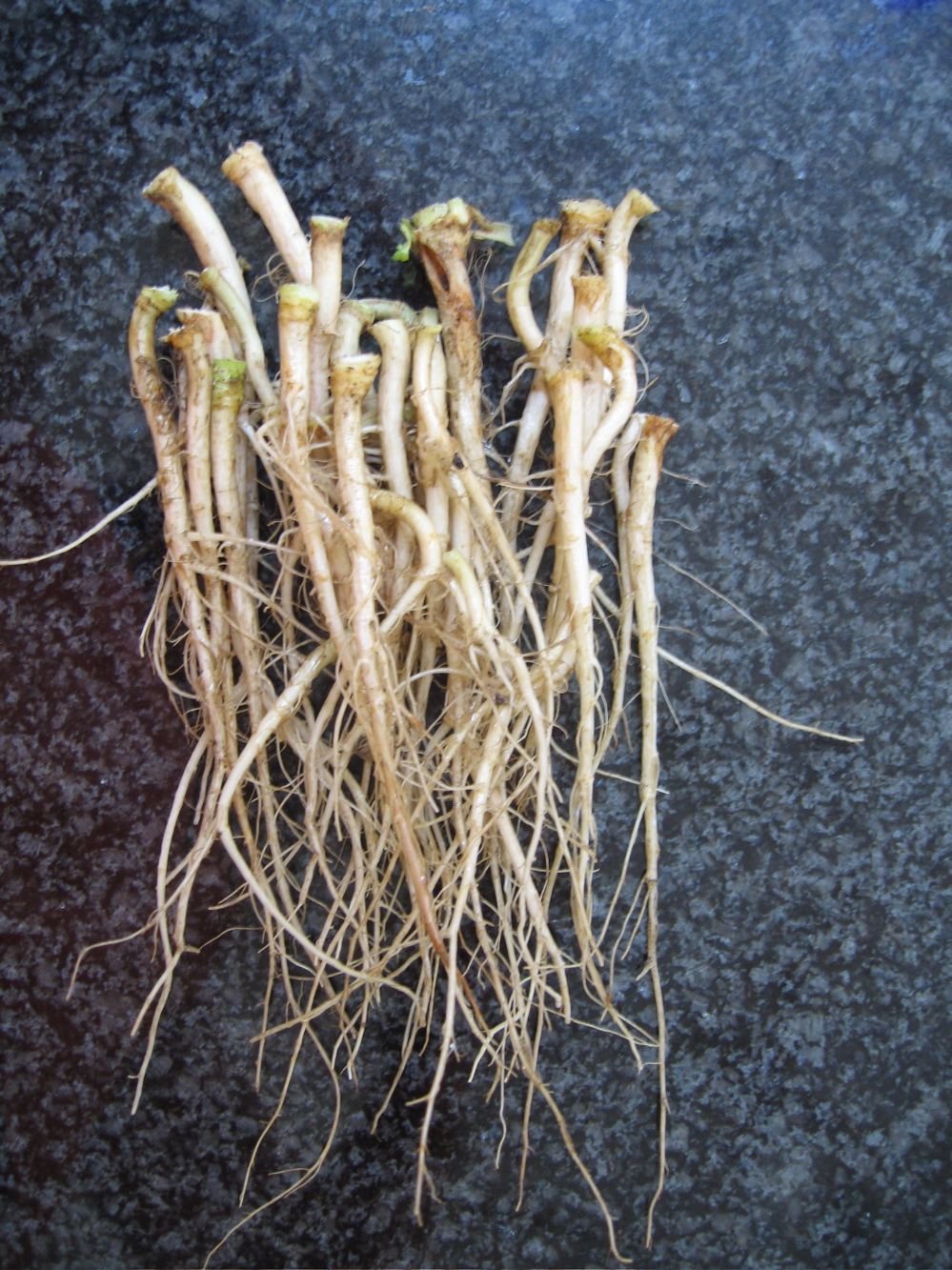
Most people discard the stems and roots of the plant.  Don't throw it away!  Commonly in Thai cooking, the roots are used in soups and curry pastes. What I do is clean and dry the roots and freeze them. Over time, I’ve amassed a nice amount of coriander root to use in my cooking throughout the year. No need to defrost the roots when you need them, they can be chopped and pounded while still frozen.


Peppercorn-Coriander Root Flavor Paste


Use this as a marinade for fish, chicken or pork. I’ve used this with grilled chicken.  Let the marinade sit for 3 hours.

2 tsp black peppercorns
5-6 large garlic cloves, coarsely chopped (about 2 Tbs)
3 Tbs coarsely chopped coriander roots
Pinch of salt
1 tsp Thai fish sauce

Place peppercorns and garlic in a mortar and pound to make a paste. Add coriander roots and salt and continue pounding to make a paste. You can use a small blender or food grinder instead. Stir in fish sauce. Makes 2-3 tablespoons of paste. Can be stored in a well-sealed jar for up to 4 days.

Adapted from the book Hot Sour Salty Sweet by Jeffrey Alford and Naomi Duguid


Farmer Pam, MD