alliums ameraucana Anthony Bourdain aphids Appleseed Permaculture aquaponics arthritis artichokes Asian Vegetables aussie basil baby chicks baby turnips bearss lime bee keeping beet greens beneficial insects benner tree farm Biochar Bitter Melon blight blooming hill farm boothby blonde cucumber brix broccoli brussels sprouts cabbage cabbage hill farm camp hill farm cancer caraflex celeriac chicken coop chickens children chinese tamale chives cilantro cilantro root coconut cold frames collard greens Compost coriander corn crop rotation cruciferous crucifers cucumber Dan Barber dan kittredge Dave Llewellyn detox dirty dozen dragon fruit Dutch white clover dwarf citrus eggplant Elderberries factory farms farm to table farmer's market farmers markets Fava beans ffarm to table fish oil flea beetle flowers food allergies food combining food miles founding farmers four wind growers Fred Kirschenmann french bulldog G6pd deficiency garlic garlic festival garlic scapes geese Glynwood grass-fed beef Great Outdoors Listening Tour green tomatoes greenhouse growing indoors Hanalei Hemlock Hill Farm heritage turkey heritage USA hudson valley farms hurricane Irene hyssop iced tea infections influenza Insect control isothiocyanates joan gussow jolie lampkin joong kaffir lime kale Kauai kohlrabi korean licorice mint Ladybugs late blight leeks lettuces local food locust tree maine avenue fish market menhaden meyer lemon mycelia mycorrhizal natural fertilizers nectary nightshades No Reservations Nurse cropping nutrient density okra organic Baby food organic christmas tree Organic Pest Control Parsley Paul tappenden peas Permaculture pesticides pesto petite watermelon plant sap pH plymouth barred rock pole beans potatoes preserving food purple basil qunice Radish Greens rainbeau ridge farm raised beds rampicante raw food real food campaign red hook Rockland Farm Alliance ronnybrook farm row covers salt-preserved duck eggs sambucus nigra seed saving seedlings Sheet mulching small space soil analysis soil blocks soil conductivity sorrel Squash Vine Borer star fruit sugar snap peas sustainability sustainable fishing Swiss Chard tabbouleh TEDx Manhattan terracing three sisters tomato sauce tomatoes trellis trovita orange turkana farms Tuttle Farm urban zen volt white clover winter harvest Winter Squash Young Farmers Conference
Indispensable Books and Resources
  • Edible Forest Gardens (2 volume set)
    Edible Forest Gardens (2 volume set)
    by Dave Jacke, Eric Toensmeier
  • The Winter Harvest Handbook: Year Round Vegetable Production Using Deep Organic Techniques and Unheated Greenhouses
    The Winter Harvest Handbook: Year Round Vegetable Production Using Deep Organic Techniques and Unheated Greenhouses
    by Eliot Coleman
  • The Biological Farmer: A Complete Guide to the Sustainable & Profitable Biological System of Farming
    The Biological Farmer: A Complete Guide to the Sustainable & Profitable Biological System of Farming
    by Gary F. Zimmer
  • The Garden Primer: Second Edition
    The Garden Primer: Second Edition
    by Barbara Damrosch
  • 1500 Live LadyBugs - A GOOD BUG! - Lady Bug
    1500 Live LadyBugs - A GOOD BUG! - Lady Bug
    Organic Insect Control
  • Acres U.S.A.
    Acres U.S.A.
    Acres U.S.A.

    The best farming and growing magazine money can buy!

  • Seed Starter Soil Block Maker Makes 4 Medium Blocks
    Seed Starter Soil Block Maker Makes 4 Medium Blocks

    2" Soil Blocker

  • Mini Soil Blocker
    Mini Soil Blocker
  • New York City Farmer & Feast: Harvesting Local Bounty
    New York City Farmer & Feast: Harvesting Local Bounty
    by Emily Brooks
  • What Doctors Eat: Tips, Recipes, and the Ultimate Eating Plan for Lasting Weight Loss and Perfect Health
    What Doctors Eat: Tips, Recipes, and the Ultimate Eating Plan for Lasting Weight Loss and Perfect Health
    by Tasneem Bhatia, Editors of Prevention


THE DAILY BROADFORK

Short journal entries detailing the nuts and bolts of our ventures in growing food at our micro-farm

Entries in Organic gardening (23)

Sunday
Jul182010

Weekly Musings: The Curious Cabbage

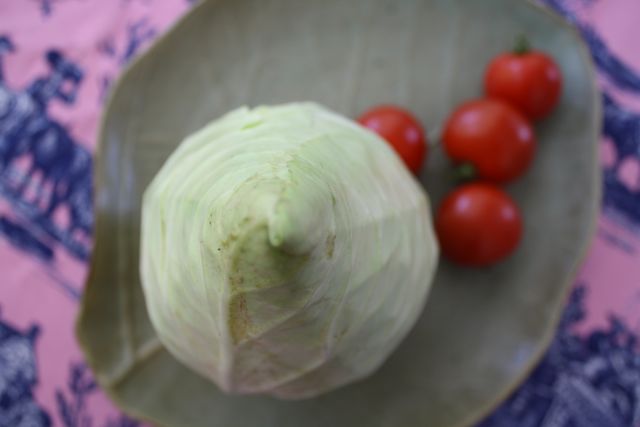
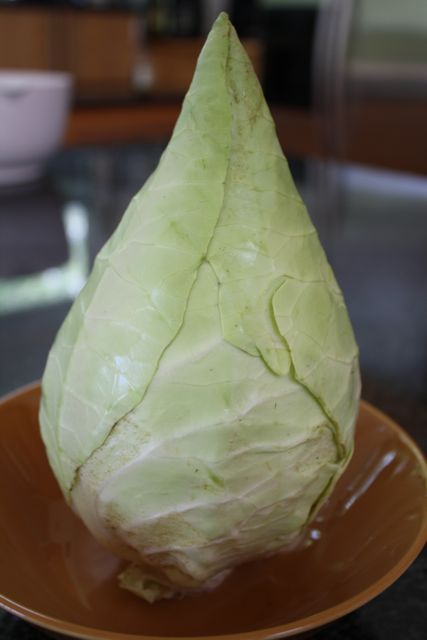
Aerial view of the Caraflex cabbageThis growing season has been unusual.  Lilacs blossomed 2 weeks earlier in the spring and the crepe myrtles that are normally late bloomers in August, are already on the way out in mid July.  As other growers and gardeners in our area have confirmed, the sustained heat wave accompanied by a very buggy season filled with cucumber beetles, squash vine borers, earwigs and slugs, has made for challenging growing conditions.  Heat came on early, big and strong this summer forcing a premature end to peas, sugar snaps, lettuces and mustard greens.  Surprisingly, the cabbage, traditionally a cool-loving crop, has managed to form beautifully in the heat with little fuss.  Well, that is, certain varieties of cabbage are doing well.  Napa or Chinese cabbage was devastated by earwigs that set up hotels deep between the leaves and left us with doily cabbage heads that soon after, bolted from the heat.  We are having success with two varieties of cabbage that we picked because of their compact nature.  Many people do not grow cabbage in their home gardens because of the space requirement.  Makes little sense to build 1 story homes on a city block when you can put up skyscrapers, right?  We grew them anyway to experiment and promote a polyculture farm and chose these two varieties: a mini red cabbage and a funny-looking cone shaped pointed mini cabbage called Caraflex. From a small farm financial standpoint it seems crazy to grow things that are so space intensive.  Flying Tomato Farms in South Dakota estimated that with the space, labor, and materials it takes to harvest 15 cabbages from a 25 foot row in their small farm, they should charge $21 per cabbage head to make up for the gross amount that can be made in the same space growing a lettuce mix.  They opted not to charge that amount and instead, viewed the small cabbage harvest as a treat.
MEDICINAL PROPERTIES

As part of the cruciferous family of vegetables, cabbage produces sulfur and nitrogen containing glucosinolates.  That breaks down to form isothiocyanates which may help to prevent cancer by helping to eliminate carcinogens and enhancing the transcriptions of tumor suppressing proteins in the body.  Many of these compounds contribute to the distinctive bitter and sulphur tasting qualities and are decreased with high heat cooking or microwaving.  Summer heat and drought will increase levels of isothiocyanates increasing the bitterness and the cooler temperatures of fall will make for milder tasting crucifers.  There are particular isothiocyanates that can interfere with thyroid function particularly if there is an iodine deficiency which is becoming more and more common with the increased use of sea salt and the demineralization of our soils.
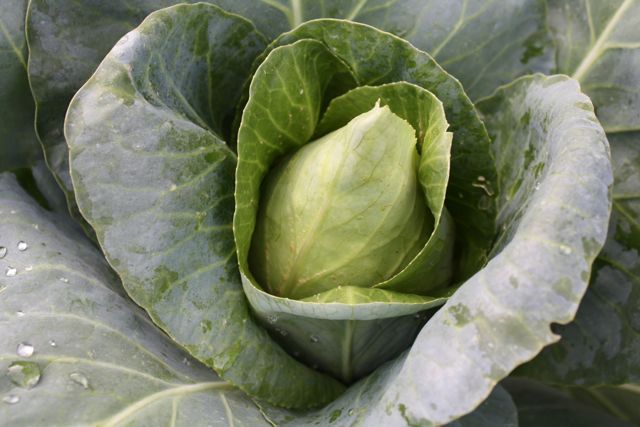
Interestingly, cabbages with open leaves accumulate more vitamin A and C and carotenoids than heading varieties whose inner leaves never see the light of day.  Caraflex is a heading variety and the benefit of these cabbages is their higher sugar content and better storage life.  Caraflex will keep in the refrigerator 8 weeks after harvest.


Recipe: Cabbage and Fennel with Parsley Lemon Butter in Egg Noodles

Serves 2 hungry people

1/2 small Caraflex or Savoy cabbage
1 large fennel bulb, cored
1 large leek, white part only
4 Tablespoons of unsalted butter
sea salt and freshly ground pepper
juice and zest of 1 lemon (Meyer lemon if you have)
3 Tablespoons of parsley or chervil
8 oz egg noodles (I used spaetzle)

1. Cut cabbage, fennel and leeks into thin slices, wash but don’t dry.

2. Cook egg noodles in boiling, salted water and drain.

3. Melt 1 tablespoon of butter in a large wide skillet.  Add vegetables and 1/2 tsp of salt.  Cover pan and cook gently for 10 minutes checking halfway to make sure there is enough moisture in the pan so there is steaming and not browning of the vegetables.  Meanwhile, simmer lemon juice in a small pan until slightly reduced.  Remove from heat and whisk in remaining butter.

4. Finely chop lemon zest with the parsley.  Add half in the butter mixture and the other half to the vegetables.

5. Combine the noodles, vegetables and zest-herb mixture in a large bowl and taste for additional salt and pepper.
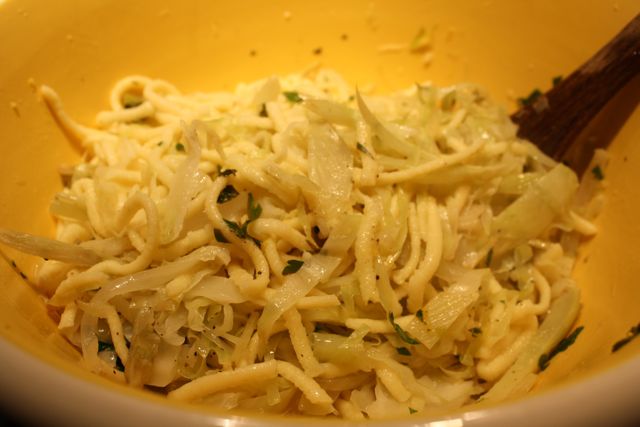
 

 Recipe adapted from Deborah Madison's book Local Flavors


Thursday
Apr222010

Weekly Musings: Spring Lettuce - Guest Writer and Nyack Chef Jolie Lampkin

This journal entry, we invited a local Nyack Chef, Jolie Lampkin, who purchases our produce for her clients (and herself!) to write about what is abundant at the moment: spring lettuces. Jolie is singlehandedly able to consume the entire contents of a large bag of our salad greens in a couple days (no small feat!) so we think she's the perfect author for this article on lettuces. A gardener and veggie-lover, her focus is using local and sustainably grown ingredients as inspiration to create meals that are healthy, imaginative, and delicious. She specializes in fresh, seasonal cooking for busy families and intimate multi-course dinner parties for special occasions....
 
 
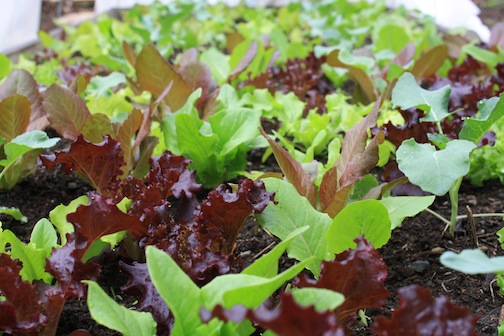
"Spring is here at last, bringing with it the first green leaves, those wild pinks and yellows of daffodils and tulips, that heady scent of lilacs. We venture outside, half-delirious, spring-dizzy, our tender winter arms and legs like white shoots soaking up the sun on those first warm days. It's with this change in the weather that I start to crave salad greens. Goodbye, savory stews of winter, long-simmering pots of soup! Now's the moment for something really fresh-tasting and light.
 
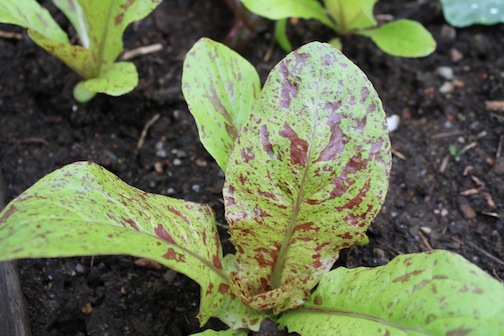
In times not so long ago, our farmer ancestors survived the long winters by storing hardy fall fruits and vegetables in underground root cellars (think cabbages, root vegetables, onions and apples), and by canning the more perishable fruits and vegetables. Beans and grains were dried, to be made into nourishing soups and ground for loaves of bread; meats and cheeses were preserved by salting. Conspicuously absent from the winter diet, however: fresh greens. So it's no wonder that after a winter of eating all that heavy food, people were thrilled by the appearance of the first early spring greens. They'd eat them as salad, as we do now, but also concoct spring "tonics", thought to help purify the body. Tonics might include a bit of whatever was around--dandelion, nettle, watercress, and violet leaves--all valuable sources of many of the vitamins and minerals which would have been lacking in the winter diet. A new favorite lettuce: "Spouted Trout
 
Of course, these days we can eat salad--and pretty much anything we want--year round. Whether we should or not, though, is another thing entirely (is that January tomato anything at all like a July tomato?). But even if you're not eating exclusively seasonal produce, many people do find themselves naturally leaning towards the heartier fare during the fall and winter and lightening up during the spring and summer months. So if, like me, you find yourself scarfing down salad by the bowlful lately, don't be alarmed! This is a good thing--your body is telling you what it needs--and you should listen.
 
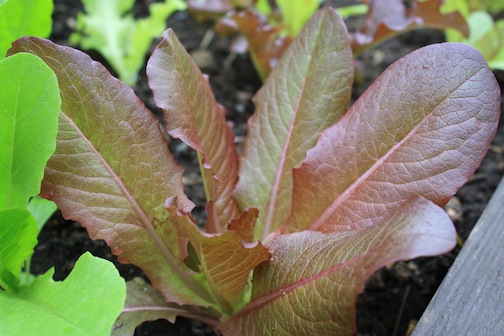
Lucky for us salad-lovers, lettuces are easy to grow, and are actually at their best in cool temperatures. This is because cold weather encourages lettuce to produce more sugars, resulting in much better flavor. Ever tried to grow lettuce in the summer? Not only will it tend to bolt quickly, but it will most likely be more bitter than you'd like. Because of this, it's best to grow it in partial shade during the summer months.
 
Chives, an early spring arrival, have a great assertive flavor. They're deliciously oniony without being overpowering. Also easy to grow, they are perennials and will come back each spring. They like a lot of sun and will even continue to do well into the early summer months, if you continue to cut them back. Their purple blossoms are also lovely in the garden or as a garnish, if you allow them to go to seed.
 
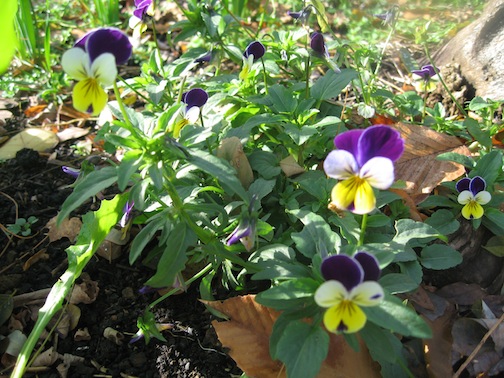
Johnny-jump-ups (violas, a cousin of the violet), our guest star, thrive in cool weather as well, but will do fine into the summer if planted in a partly shady area and consistently pinched back. Their blossoms have a delicate, mild flavor and look beautiful in salads. The leaves and blossoms are also very high in vitamin C. Johnny Jump-Ups
 
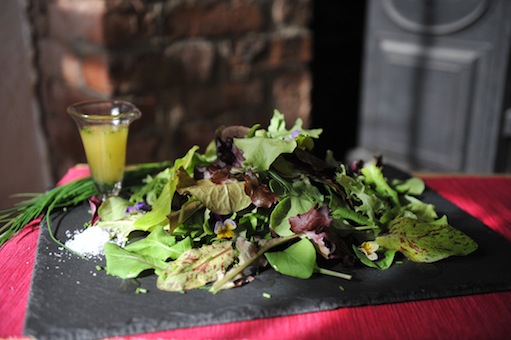
So here's a spin on the idea of spring tonic: a recipe for a simple salad with some of the first flowers of the season, with a dressing that tastes both subtle and intoxicating. It allows the flavors of the lettuces to shine, while truffle oil lends a note of mystery. Arugula's hiding in the mix, with its unexpected peppery bite. Chives give things a little zip. The Johnny-jump-ups are my nod to the violet leaves featured in old-time tonics--and besides, they're just gorgeous".
 
Spring salad with truffle oil vinaigrette

 
1T Champagne vinegar
1/4t fresh lemon juice
3T white truffle oil
2T extra-virgin olive oil
salt (I like fleur de sel) and freshly ground black pepper, to taste
 
Hook Mountain Growers lettuce mix with Johnny-jump-ups, washed and spun till very dry in a salad spinner
1T chopped chives
 
In a small bowl, whisk together the Champagne vinegar and lemon juice. Slowly drizzle in the oil, whisking as you go till the mixture is emulsified. Add the salt and pepper and adjust to taste. Toss a spoonful or two of the vinaigrette around with the greens (you might not need all of it, depending on how much salad you plan to eat--the leaves should be very lightly coated with the vinaigrette), add the chives and serve immediately. If you're a salt fiend like me, you may want to sprinkle a little fleur de sel on top of the dressed salad as well.

 
Jolie Lampkin

For more information on what Jolie offers, you may contact her at jolielampkin@gmail.com

photo by Jolie Lampkin

Tuesday
Mar302010

Weekly Musings: Spring Sorrel

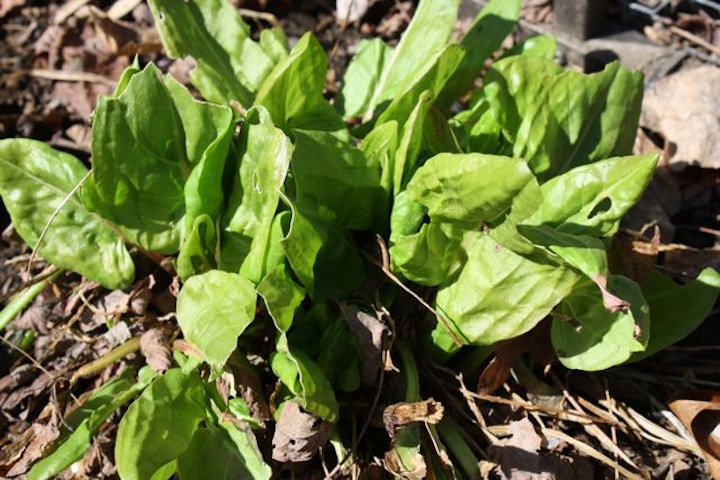
One of the very first things to appear in the garden is the perennial herb Sorrel (rumex acetosus).  Rarely  found in produce sections, sorrel is more frequently seen in farmers market stands.  But this one is easy for you to grow yourself.  This European vegetable/herb is used in cooking (as a sauce accompaniment to fish and meat, in salads as young leaves, sauteed, and in the class French sorrel soup) and has medicinal properties as well.  Sorrel has an acidic apple-lemony taste to it which adds a tangy flavor to dishes.


 Medical Notes

Sorrel is high in Vitamin C and A and was used in the distant past to prevent scurvy.  Like spinach and rhuabarb, sorrel is high in oxalic acid.   It's important to note that oxalic acid binds calcium, zinc and iron to some degree in the gastrointestinal tract so that it possible that it can interfere with the absorption of these minerals in supplements.  Also, in large amounts sorrel can theoretically increase the risk of calcium oxalate kidney stones, the most common type of kidney stone.

Sorrel is also found medicinally in certain combination products with gentian, European vervain and elder used together for the treatment of acute and chronic sinusitis and in the herbal formula Essiac, purportedly helpful for cancer.  The high level of tannins have an astringent affect of mucosal tissues reducing secretions.


Growing Sorrel

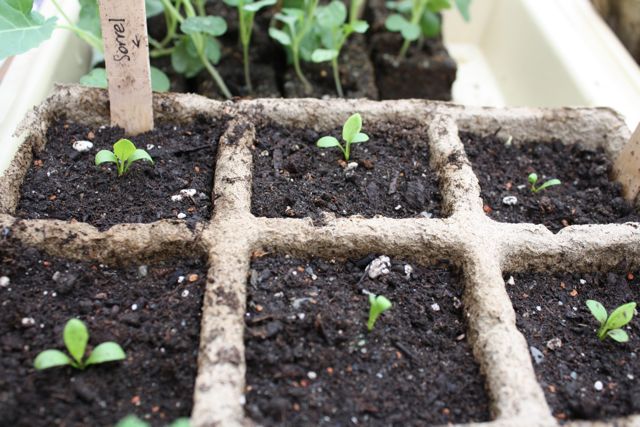
Tiny seedlings in CowPots in the greenhouseThis is one of the easiest plants you can grow - there is little maintenance and it comes back every year.  It is also a cut-and-come-again plant that can supply you with food throughout the growing season.  Sorrel tastes best when harvested as young leaves.  Once established it is one the earliest greens to appear and after the second year it begins to spread and can be divided every few years.  It likes sun but perfers partial shade especially when the weather gets hot.

You can directly seed in early spring and thin to 12" apart or start early indoors and transplant when the threat of a hard frost is over.


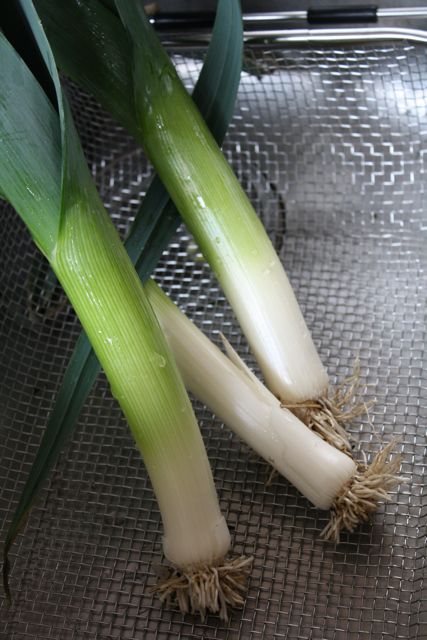
Leeks planted last summer overwintered nicely under a row cover.I used Nicola potatoes stored in the root cellar from last fall.


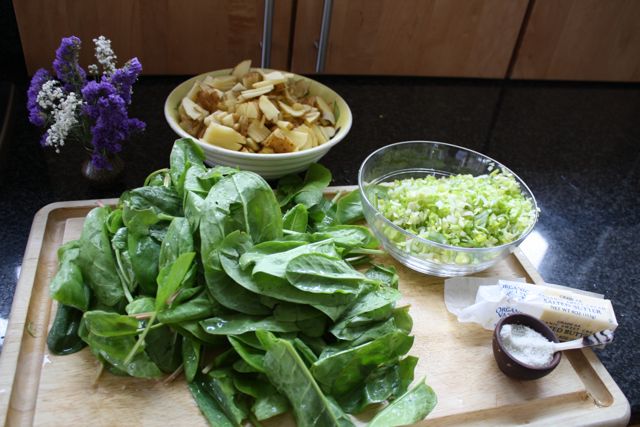
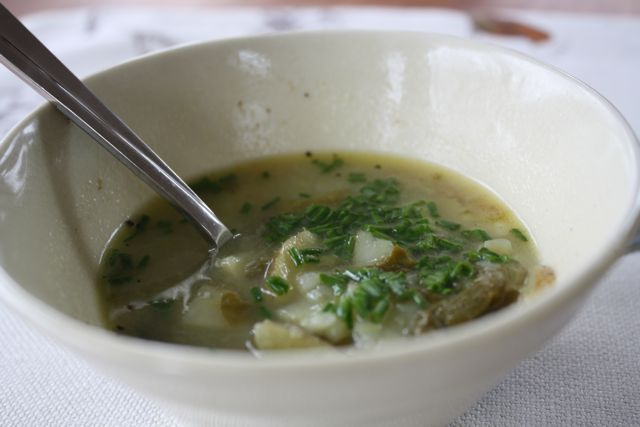
Recipe: Potato, Leek and Sorrel Soup

Ingredients:

2 Tbs Butter

3 Large or 6 Medium Leeks, white parts only, finely chopped

1.5 lbs boiling potato, quarted and thinly sliced.  You may leave the skins on if potatoes are organic.

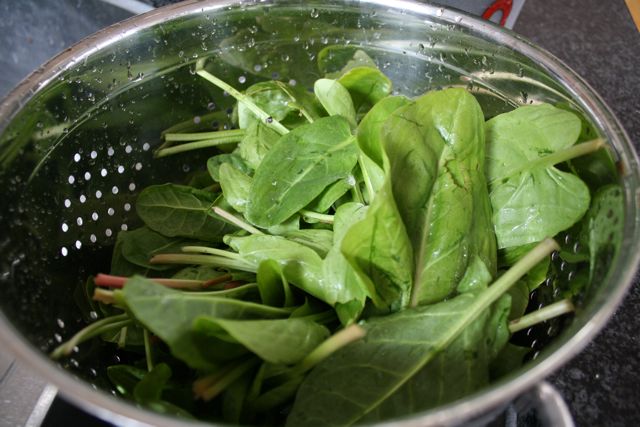
2-4 handfuls of Sorrel leaves, stems removed

Salt and Pepper

7 cups of water


Heat butter in a wide soup pan and add leek and potatoes cooking over low heat covered for 10 minutes.  Add 7 cups of water and 1.5 tsp of salt and bring to boil.  Reduce to a simmer, partially covered, until the potatoes become very soft to the point of breaking apart, about 35-40 minutes.  In the last 10 minutes, add the sorrel to the pot.  Press a few of the potatoes against the side of the pan to break them up and give the soup some body.  Season to taste with salt and pepper and serve. Optional: top with creme fraiche or snipped chives.

Serves 4-6.

Adapted from Deborah Madison’s cookbook Vegetarian Cooking for Everyone


Farmer Pam, MD

Sunday
Nov152009

Weekly Musings: Kohlrabi - What the Hell is That?

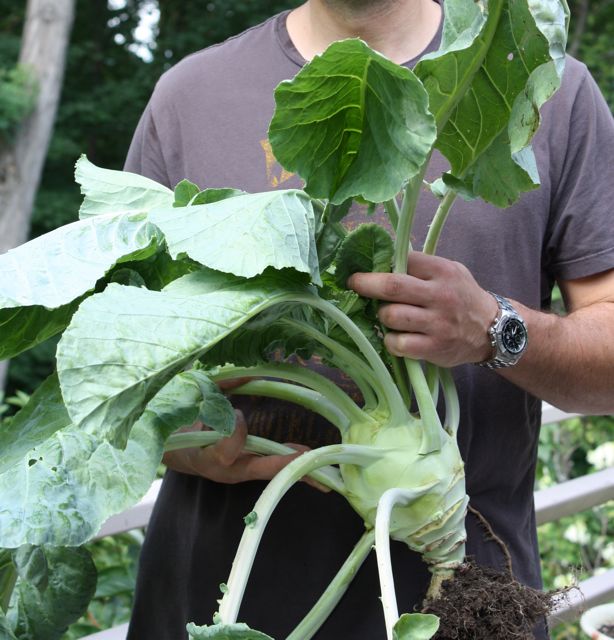
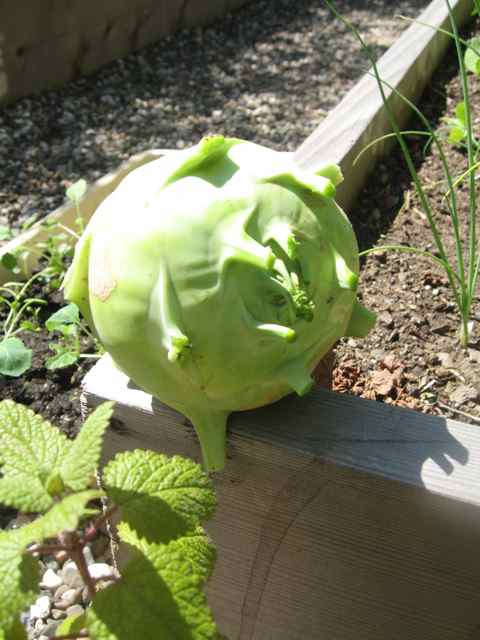
Kids call this the flying saucer vegetableOne of the many things I’ve learned from having a micro-farm is being forced to explore my boundaries. I have a constant curiosity about things and a love of learning.  I guess that’s how I went from English Major in college to advertising post college, to medical school, to holistic/integrative medicine, to farmer.  This has applied to, among other things, food.  While I’m not quite as adventurous as insect-organ-rodent eating Andrew Zimmern of Travel Channel’s Bizarre Foods, I could be persuaded to, at least, try many cultural delicacies.  But one does not have to venture far from the beaten path to explore the vast varieties of vegetables available either at farmer’s markets or to be grown at home.  Kohlrabi is one of the vegetables I’ve been introduced to in the last 2 years that I have really come to love.  Prior to this, I had never heard of or eaten Kohlrabi and was skeptical of this sci-fi looking bulb with it’s big leafy protrusions.  But as I experimented with it, it has now been added to my repertoire of cancer-fighting cruciferous vegetables in addition to being a good source of fiber, potassium, calcium and vitamins C and A.

In my practice, I see a fair amount of people with different cancers in different stages and one of the things that they are most interested in when seeking unconventional therapies or ways in which they might complement their existing allopathic treatments, is what they should eat to support their bodies.  One of the family of vegetables that I always stress, based on current research, are the family of cruciferous vegetables also known as brassicas.  The phytochemicals most notably important are indole-3-carbinol and isothiocyanates which, on a cellular level, may lead to the arrest and death of cancer cells.  Patients are always surprised to learn about the variety of brassicas available, aside from the usual broccoli, cauliflower and cabbage.  Well, we can now add kohlrabi to the list.  It’s important when modifying one’s diet to rotate foods if not for anything other than avoiding sheer boredom.  When you present variety and surprise, people are less apt to revert to their usual poor eating choices.

Kohlrabi: The Basics


Kohlrabi are European in origin.  The name translates to “cabbage-turnip” in German but found its way to Northern Indian in the late 17th century.  But to this day, Kohlrabi is still an unknown to most people in the US.  That was proven when I went to Chelsea Market -- the ultimate foodie’s shopping paradise in the trendy Meatpacking district of Manhattan and home to the Food TV Network.  When I’m planning on pairing a dinner I rely on two people to turn to for exquisite pairings: my local connect Joe Printz at Grape D’Vine in Tappan NY and Chelsea Wine Vault at Chelsea Market.  So I asked the staff at Chelsea Wine Vault for a pairing with my kohlrabi cakes.  “What’s kohlrabi?” he asked.  Puzzled, he referred me to an even more experienced pairer who pairs wine for the Food Network TV, and who also wasn’t sure what kohlrabi was. After a description of the taste of the veggie - a cross between broccoli stems and turnips, he made a pairing that was right on.  

Kohlrabi is a pale green bulb (or purple) that forms from the stem just above the soil and is best eaten small (2-3” in diameter) in warm weather since it can become woody in texture if grown any larger.  But cooler weather allows the stem to get larger without the change in consistency.  Usually, it is grated raw for salads and coleslaw or chopped and used as a component in stir-fry dishes.  The leaves, if young, can be used in the same way as kale.  I like to find other ways to prepare kohlrabi and my favorite one is kohlrabi cakes with minted yogurt sauce (see below)


Growing/Harvest/Storage Tips:

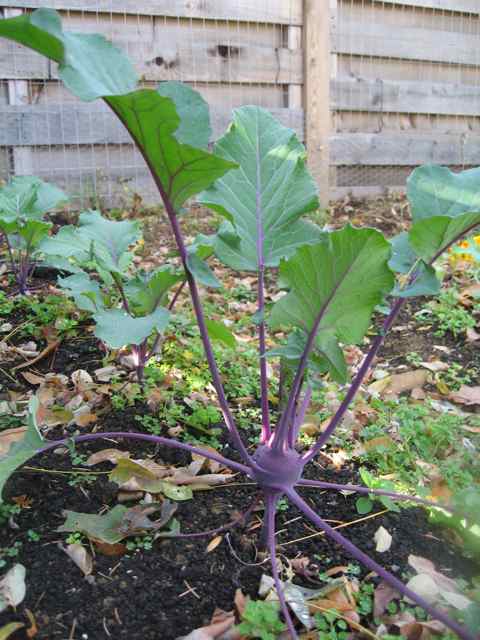
This easy to grow vegetable can withstand shady areas so I often tuck it in places along the fence where nothing else will flourish.  Though this can be direct seeded, I like to start indoors in soil blocks 4-5 weeks before transplanting out both in the cool spring weather and again in the late summer for a fall harvest.  Quick to mature (50-65 days), the varieties I’ve grown most successfully is “Kossack” and I’m experimenting with the purple variety “Kohlibri“.  If grown in warmer weather, be sure to harvest when small (2-2.5” diameter).  The bulb will be more forgiving in the fall when you can allow it to get as large as 4” and still retain the sweet and crunchy consistency.  Bulbs can be kept in the refrigerator for several weeks but only with their leaf stems removed.


Young fall purple kohlrabi
Recipe: Kohlrabi Cakes with Minted Yogurt Sauce

4 Kohlrabi bulbs (approximately 1.5 lbs)
1/2 cup chopped scallions
2 eggs, lightly beaten
2 Tbs bread crumbs
1 tsp sea salt
1/2 tsp grated ginger
1/2 tsp dried red pepper flakes
Freshly ground pepper
1/4 cup of oil for frying (I use grapeseed or rice bran oil)
1 1/2 cups of minted yogurt sauce

Peel (for large bulbs) and shred kohlrabi and set aside in colander to drain for 30 minutes.  Squeeze out any excess moisture
Combine kohlrabi with scallions, eggs, bread crumbs, ginger and red pepper flakes, S &P.  Blend well in a mixing bowl.
Heat oil in large skillet and drop mixture to preferred size  until golden, 3-5 minutes per side.  Drain on paper towels.  Serve with yogurt sauce.

Minted Yogurt Sauce:

Combine 1 1/2 cups of greek yogurt with 1/4 cup chopped mint, 1 Tbs lemon juice and 1/2 tsp of salt and black pepper to taste..  Refrigerate until ready to use.


Adapted from The New Basics Cookbook by Julee Rosso & Shiela Lukins


Farmer Pam, MD

Friday
Aug282009

End of the Summer Nightshade Fest

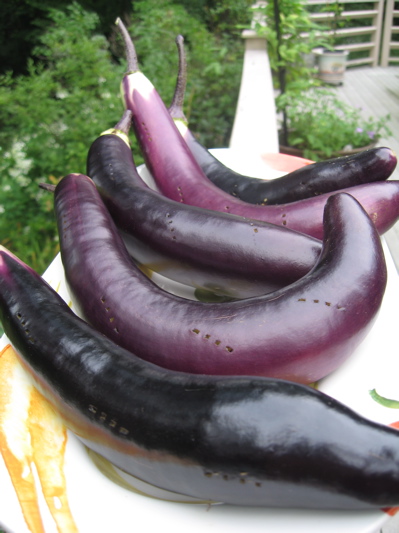
It's still August in New York but today's weather forecast calls for a high of 69 degrees.  It already feels like a premature fall and thoughts of getting my cold weather crops out now feel more of a priority than basking in the glory of my few surviving tomato plants.  The garden is now filled with expectant nightshade fruits: Tuscan and Japanese eggplant, Adirondack Blue and Nicola potatoes, purple, chocolate, orange and red bell peppers, green and purple jalapenos, thai red chili peppers and green and purple tomatillos.  It's amazing how much of the summer diet is comprised of this family of vegetables also known as Solanaceae.  The ominous sounding nightshades also include many poisonous plants such as nicotine (yes, I'd classify that one as a slow poison), belladonna, and jimson weed.  The danger comes from the alkaloid content of these plants which can cause effects on the nervous system. 

Belladonna

When I was a first year in medical school, one of the toxidromes commonly used to remember the side  effects of the class of drugs called anti-cholinergics was "hot as a hare, dry as a bone, red as a beet, mad as a hatter, blind as a bat."  These common drugs, all from belladonna, are used in small quantities: atropine (as eye drops used to dilate the pupils), scopolamine (for motion sickness), and Donnatal (gastointestinal spasms).  The toxidrome translated to the classic overdose symptoms of this alkaloid - fever, urinary retention, flushing, delirium/hallucinations, and dilated pupils.  Interestingly, the name belladonna means "beautiful lady" because it was historically and cosmetically used to dilate the pupils in women; apparently an attractive attribute at the time.  I can imagine these women, "blind as a bat," suffering with their atropine-induced dilated pupils all in the name of beauty.  Women have been subjected to some type of physical harm for beauty throughout the ages: bound feet in China, suffocating corsets a few centuries ago, and now the contemporary issue of eating disorders.  Yes, I digress, back to food....

Edible Nightshades

Although the alkaloid content found in the food nightshades are very minimal, there are the susceptible few that can react to the compound even with just faint traces of the substance.  Though there are few studies that examine the relationship between nightshades and inflammation, there have been many anecdotal reports that the elimination of these foods can significantly improve inflammatory conditions, most notably arthritis.  In my work with patients, a large component addresses nutritional and dietary aspects and their contribution to health and illness.  I view food as the medicine that you put in your body 3-5 times per day and your symptoms may have a huge connection to what you may be feeling.  There are few people who are willing to initially do this and would rather take pharmaceuticals to address symtomatology, but most people seeking my care have either failed that approach and are desperate or they are more interested in root causes for their symptoms and are extremely proactive in their health.  One of things that I look for are an abundance of a specific type of food in the diet, or in this case, a family of foods.  Anecdotally, I can say that there have been a few people who have reacted positively to the elimination of nighshades (much to their dismay).  These specific patients had a significant and sometimes complete resolution of their arthritic symptoms and though one can argue that there is very little scientific data to support this theory connecting nightshades and inflammation, these happy patients are not complaining.  It is also of interest to note that the compound found in chili peppers, also a nightshade, called capsaicin can be used topically for symptoms of arthritis.  The mechanism seems to be related to capsaicin's affects on pain receptors and it is likely that there is very little, if any, significant absorption of this compound.

I am in no way advocating that one should eliminate the beautiful and tasty vegetables, I wholeheartedly endorse their use as they contain so many other beneficial compounds essential for good health.  I leave you with 3 extremely tasty recipes using potatoes, tomatoes and eggplant.


Recipe 1 of 3: Tomato, Eggplant and Mint Salsa 

1/2 cup olive oil plus 2 Tbs

4 cloves garlic, roughly chopped

1 cup onion, finely diced

2 tsp minced garlic

1 1/2 tsp salt

1/4 tsp black pepper

4 cups medium-diced eggplant (leave skin on)

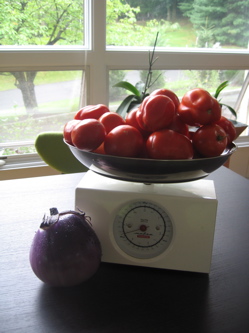
4 lbs tomatoes, peeled, seeded and diced

2 tsp smoked paprika or aleppo pepper

1/4 cup red wine vinegar

1/2 cup finely chopped mint


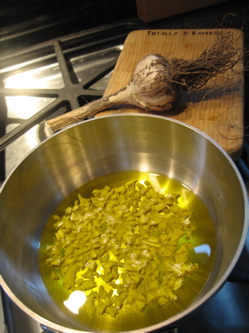
1. Make garlic oil: combine 1/2 cup of olive oil with chopped garlic and gently warm in saute pan until the oil just starts to rupple.  Turn off heat and allow garlic to infuse the oil - aout an hour.  Remove garlic.

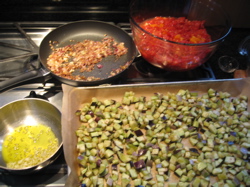
2. Warm 2 Tbs olive oil in saute pan add onions and cook until tender and slightly carmelized.  Add the minced garlic and cook until fragrant.  Season with 1/2 tsp salt and the pepper.

Most people are unaware of the vast varieties of garlic. Homegrown Spanish Roja was used here.

3. Preheat oven to 450 degrees.  Toss eggplant with remaining 1/4 cup of olive oil (or more) and 1 tsp salt.  Spread onto a parchment-lined rimmed baking sheet in a single layer and place in the oven.  Gently and occasionally turn the eggplant with a spatula.  Roast until tender, about 20 minutes.

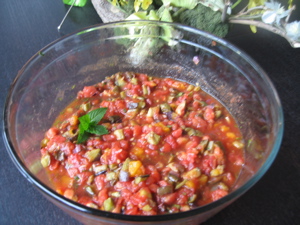
4. Combine onions eggplant, tomatoes, paprika/aleppo pepper, vinegar and mint in a large bowl.  Taste with salt and pepper, if desired.

5. Can be served with pita chips (brush slices of pita wedges with remaining garlic oil and bake at 350 for 10 minutes), tortilla chips or spooned over some warm rice and topped with feta cheese.

Adapted from Amy Goldman's 'The Heirloom Tomato: From Garden to Table"

Recipe 2 of 3:  Spicy Eggplant Spread with Thai Basil

Eggplant is notorious for requiring huge amounts of oil to cook with.  This healthy version roasts japanese eggplant in the oven and combines it with the other ingredient thus eliminating the need for excess oil.

1 lb japanese eggplant

1 1/2 Tbs light brown sugar

2 Tbs rice wine vinegar

1 Tbs soy sauce

2-3 jalapeno peppers, finely minced

3 Tbs toasted peanut oil

3 galric cloves

3 Tbs chopped basil (can be a Thai, Holy and/or Cinnamon basil)

Salt

2 Tbs black sesame seeds, toasted

optional: fish sauce ( 2 tsp)


Roast eggplant by preheating oven to 425.  Poke eggplant with a fork in several places and bake until the point of collapse.  Let cool and peel off skin and coarsely chop flesh.  

Mix the sugar, vinegar, soy and chilis together (and fish sauce if desired).  Heat a wok or skillet over high heat and add oil.  When it begins to haze, add garlic and stir fry for 30 seconds. Add eggplant and stir fry for about  minutes then add sauce and fry for 1 minute more.  Remove from heat and stir in the chopped basil. 

Mound eggplant in a bowl and garnish with extra basil leaves and sesame seeds.  Or spread on croutons or crackers and garnish each individually.


Adapted from Deborah Madison "Vegetarian Cooking for Everyone"


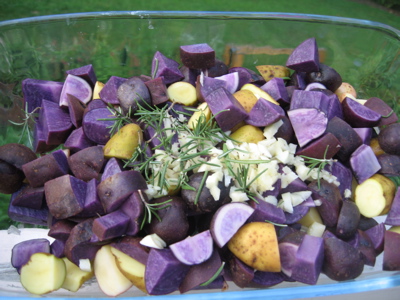
Recipe 3 of 3: Roasted Potatoes with Garlic and Rosemary

2 lbs new potatoes (I used Adirondack Blues and Russian Fingerlings in this picture) - 3/4" pieces

1 Sprig Rosemary, leaves roughly chopped

Olive oil, enough to just coat potatoes (approx 2-3 Tbs)

2-3 cloves of garlic, chopped

Salt to taste

This recipe couldn't be more simple.  Heat oven to 375 degrees.  Mix all ingredients and bake for 20 minutes turning it occasionally while roasting.  Voila!