alliums ameraucana Anthony Bourdain aphids Appleseed Permaculture aquaponics arthritis artichokes Asian Vegetables aussie basil baby chicks baby turnips bearss lime bee keeping beet greens beneficial insects benner tree farm Biochar Bitter Melon blight blooming hill farm boothby blonde cucumber brix broccoli brussels sprouts cabbage cabbage hill farm camp hill farm cancer caraflex celeriac chicken coop chickens children chinese tamale chives cilantro cilantro root coconut cold frames collard greens Compost coriander corn crop rotation cruciferous crucifers cucumber Dan Barber dan kittredge Dave Llewellyn detox dirty dozen dragon fruit Dutch white clover dwarf citrus eggplant Elderberries factory farms farm to table farmer's market farmers markets Fava beans ffarm to table fish oil flea beetle flowers food allergies food combining food miles founding farmers four wind growers Fred Kirschenmann french bulldog G6pd deficiency garlic garlic festival garlic scapes geese Glynwood grass-fed beef Great Outdoors Listening Tour green tomatoes greenhouse growing indoors Hanalei Hemlock Hill Farm heritage turkey heritage USA hudson valley farms hurricane Irene hyssop iced tea infections influenza Insect control isothiocyanates joan gussow jolie lampkin joong kaffir lime kale Kauai kohlrabi korean licorice mint Ladybugs late blight leeks lettuces local food locust tree maine avenue fish market menhaden meyer lemon mycelia mycorrhizal natural fertilizers nectary nightshades No Reservations Nurse cropping nutrient density okra organic Baby food organic christmas tree Organic Pest Control Parsley Paul tappenden peas Permaculture pesticides pesto petite watermelon plant sap pH plymouth barred rock pole beans potatoes preserving food purple basil qunice Radish Greens rainbeau ridge farm raised beds rampicante raw food real food campaign red hook Rockland Farm Alliance ronnybrook farm row covers salt-preserved duck eggs sambucus nigra seed saving seedlings Sheet mulching small space soil analysis soil blocks soil conductivity sorrel Squash Vine Borer star fruit sugar snap peas sustainability sustainable fishing Swiss Chard tabbouleh TEDx Manhattan terracing three sisters tomato sauce tomatoes trellis trovita orange turkana farms Tuttle Farm urban zen volt white clover winter harvest Winter Squash Young Farmers Conference
Indispensable Books and Resources
  • Edible Forest Gardens (2 volume set)
    Edible Forest Gardens (2 volume set)
    by Dave Jacke, Eric Toensmeier
  • The Winter Harvest Handbook: Year Round Vegetable Production Using Deep Organic Techniques and Unheated Greenhouses
    The Winter Harvest Handbook: Year Round Vegetable Production Using Deep Organic Techniques and Unheated Greenhouses
    by Eliot Coleman
  • The Biological Farmer: A Complete Guide to the Sustainable & Profitable Biological System of Farming
    The Biological Farmer: A Complete Guide to the Sustainable & Profitable Biological System of Farming
    by Gary F. Zimmer
  • The Garden Primer: Second Edition
    The Garden Primer: Second Edition
    by Barbara Damrosch
  • 1500 Live LadyBugs - A GOOD BUG! - Lady Bug
    1500 Live LadyBugs - A GOOD BUG! - Lady Bug
    Organic Insect Control
  • Acres U.S.A.
    Acres U.S.A.
    Acres U.S.A.

    The best farming and growing magazine money can buy!

  • Seed Starter Soil Block Maker Makes 4 Medium Blocks
    Seed Starter Soil Block Maker Makes 4 Medium Blocks

    2" Soil Blocker

  • Mini Soil Blocker
    Mini Soil Blocker
  • New York City Farmer & Feast: Harvesting Local Bounty
    New York City Farmer & Feast: Harvesting Local Bounty
    by Emily Brooks
  • What Doctors Eat: Tips, Recipes, and the Ultimate Eating Plan for Lasting Weight Loss and Perfect Health
    What Doctors Eat: Tips, Recipes, and the Ultimate Eating Plan for Lasting Weight Loss and Perfect Health
    by Tasneem Bhatia, Editors of Prevention


THE DAILY BROADFORK

Short journal entries detailing the nuts and bolts of our ventures in growing food at our micro-farm

Entries in Organic gardening (23)

Thursday
Nov032011

What Survives After a Freak Snow Storm in October? 

The lamenting continues about how this season was one of the worst growing seasons in Northeast coast memory.  Yes, the incessant flooding rains, then hurricane Irene in September and last weekend, we had 10-12" of snow before Halloween.  What's next?  Doesn't quite matter since the damage is done.  We've typically harvested until the end of November.  Thanks to our buddies at Nazunya Designs we were able to have our high tunnel up and operational 16 hours before the storm hit. The high tunnel protects our 4 main beds that will enable us to grow our lettuces, mustard greens and kale though the fall and early winter. However,  looking outside of that tunnel, not a lot has survived...except: our gorgeous leeks, parsley, cilantro, fennel and some bok choy that happened to be under a fabric cover and rebounded once the snow melted.  Other things that are salvagable are some root veggies.  Though the green tops of our turnips, beets and celeriac have been hit, the roots are stable enough to harvest.  My saddest loss was the rainbow swiss chard.  A true trooper of a vegetable that has fed us and our neighbors from late spring to just before the snow storm.  Thankfully, I blanched and froze 15 lbs of it this summer.


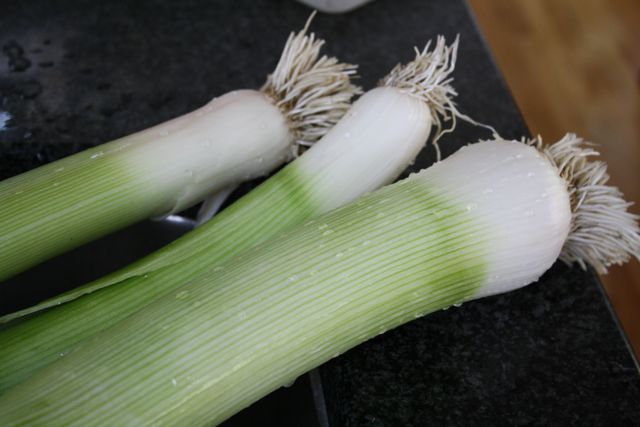
LEEKS:

A few years ago we left some leeks outside to overwinter without mulching or protection and surprisingly once the ground thawed, we were able to enjoy them well into mid spring.  Anytime storage can happen without jars and outside of the freezer is a nice plus.  Less work.  Once a staple vegetable in Europe, leeks are enjoying a "comeback" in the culinary world.  They can be used in place of onions although they are more pungent.  As part of the allium family (garlic, onions, chives, scallions), leeks have not been as rigorously studied as garlic in the medical studies.  However, because of the similarity of compounds, one can extrapolate the health benefits found in its relatives nutritional profile.  Leeks are high in manganese, folic acid, vitamins C and B6.  This year in a meta-analysis published in the journal Gastroenterolgy, it was found that large consumption of allium vegetables reduced the risk for gastric cancer.  To reduce the risk, one would need to consume 20 grams per day or the equivalent of a head of garlic.  That's really not much at all.  That study looked at prevention of disease but there are many non-clinical studies that support the organosulfur constituents in garlic have activity against certain cancerous cells.  That means treatment not just prevention.


LEEK TIPS:

When I was a cooking novice, I used to follow recipe instructions like a chemistry textbook.  I would literally use just the white parts of the leeks and discard the rest.  Now I know better!

1. Use leeks from the white to the pale green portion.  The dark green tops can be used to flavor stocks but tend to be more cabbage-like rather than onion-like in flavor.

2. Buy leeks with some of their tops on, if you can.  The tops will indicate how fresh your leeks are.

3. Don't stress about washing leeks.  The way they are grown cause grit and dirt to accumulate between some of the leaf layers.  Instead of some suggestions that tell you to soak the vegetable in water to loose the dirt, I just chop up what I need, place it in a colander and rinse.
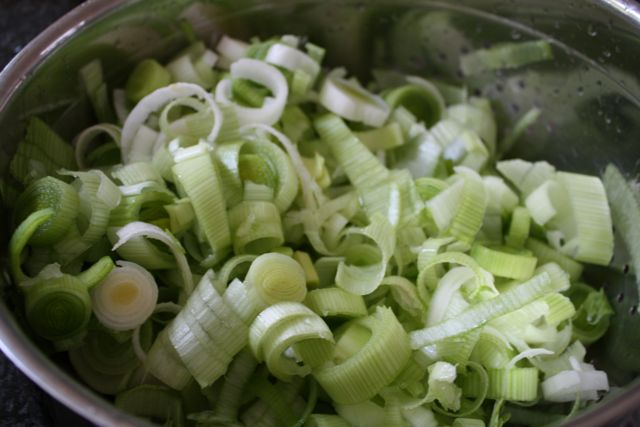
 Just chop and rinse


RECIPE: Creamy Leek Soup

This soup is best made 1-3 days ahead so that the flavors can develop.  It can be also frozen (just don't add the cream) and reheated on a lazy winter's night.  Serve with some crusty bread and a head of roasted garlic to increase your allium intake!

  • Leeks 3 pounds, trimmed and chopped, using white and pale green parts only
  • 1 medium onion, chopped
  • 1 large carrot, chopped
  • 1 small celeriac root plus tops OR 2 celery ribs
  • 1 teaspoon salt
  • 1/2 teaspoon black pepper
  • 1 stick (1/2 cup) unsalted butter
  • 1 small boiling potato (6 ounces)
  • 1/2 cup dry white wine
  • 3 cups chicken stock or vegetable stock
  • 3 cups water
  • 1 bay leaf
  • 1 1/2 cups fresh flat-leaf parsley leaves
  • 1/4 cup all-purpose flour**
  • 1/2 cup creme fraiche

To make gluten free, omit the instructions for roux (butter and flour) and add an additional large potato instead.
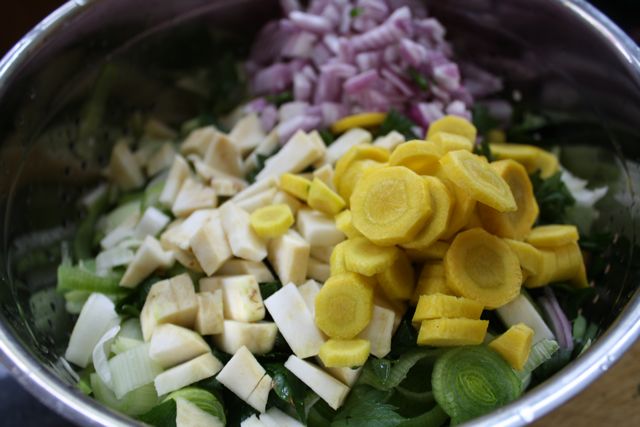
The beautiful thing when you grow food is to realize how much of what you've grown is going into the pot of food you're cooking. Either from the ground or from storage everything in this colander including the yellow carrots, celeriac and celeriac tops, to the leeks are all grown here. The rest of the recipe we provided the potatoes, parsley and even a fresh bay leaf! Rewards indeed.

Instructions:

Wash sliced leeks in a large bowl of cold water, agitating them, then lift out and drain well in a colander.

Cook leeks, onion, carrot, celery, salt, and pepper in 4 tablespoons butter in a 5- to 6-quart heavy pot over moderate heat, stirring occasionally, until softened, about 8 minutes. Peel potato and cut into 1/2-inch cubes, then add to onion mixture along with wine, stock, water, and bay leaf. Bring to a boil, then reduce heat and simmer, partially covered, until vegetables are tender, about 15 minutes.

Stir in parsley and simmer soup, uncovered, 5 minutes. Discard bay leaf and keep soup at a bare simmer.

Melt remaining 4 tablespoons butter in a 1-quart heavy saucepan over moderate heat, then add flour and cook roux, whisking, until golden, about 3 minutes. Remove from heat and add 2 cups simmering stock (from soup), whisking vigorously (mixture will be thick), then whisk mixture into remaining soup and return to a simmer, whisking.

If you have time, let the soup cool then blend it depending on the consistency you like.  I find a immersion hand blender works beautifully without all the mess.  Reheat soup, then season with salt and pepper.

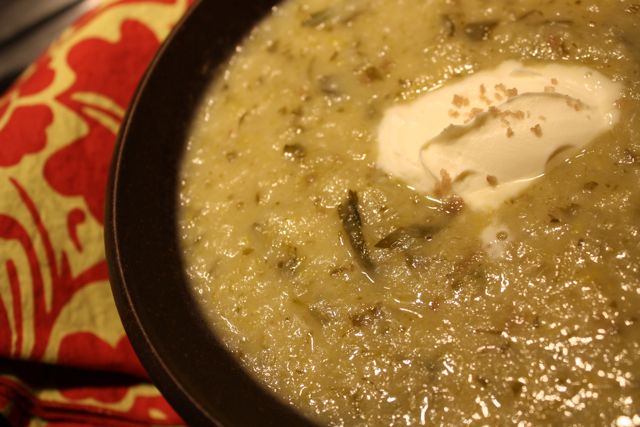
Serve soup topped with a large dollop of cream fraiche.

Adapted from Gourmet Magazine May 2007


Sunday
Sep182011

Successes and Failures of Growing after Hurricane Irene

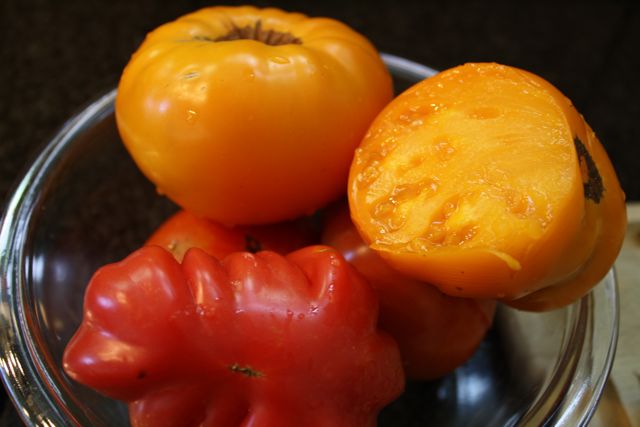
Zapotec and Kellogg's Breakfast TomatoesEach season brings certain expectations and, of course, certain challenges that never remain the same.  Farming and growing is subject to weather fluctuations occuring more often due to climate change.  This year we had historic rainfall in the area starting with heavy downpours in the spring and culminating in the arrival of Hurricane Irene last month.  We lost our peas early becuase of late frosts, then many of the vegetables we seeded or the delicate transplants we placed in the ground would get hit by pounding downpours.  The repeated downpours led to soil erosion, and lastly, when there was no place for the water to penetrate, some beds were in standing water on a few occasions.  We were lucky that we had the harvest we've had to date, albeit much less than we expected for the year.  Unfortunately,  many farms from New York to Vermont were devastated and several CSAs were no longer able supply their customers with weekly drop-offs.  The Union Square Greenmarket had significantly less vendors.  This letter from Evolutionary Organics in New Paltz summed up the impact of Irene on some of our local farmers and is a must read for those who buy locally.


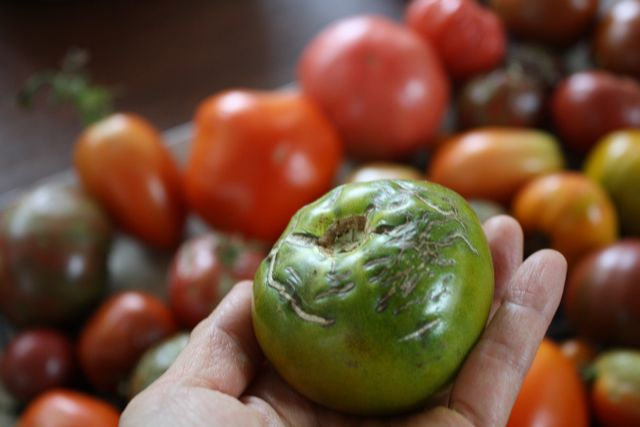
For the home gardener, many of whom grow tomatoes, this was not a good season.  It sure beat 2009 when we all had blight, but what started as a promising season of luscious fruit ended with overwatered tomatoes.  A sure sign of overwatering are tomatoes with fissures and cracks near the top of the fruit.  Multiple linear cracks near the stem of the tomato is a sign that your plant got way too much water.In case this is happening to you are not alone.  Having raised beds, which we encourage, helps with excessive water except in the case where you are getting 8 inches in an hour.  Our tomatoes were in standing water for periods of time.  They eventually drained but the damage was done, and repeatedly. Typically we are harvesting tomatoes well into the end of October but we'll be done by the end of September.  Such is life of a grower.

 Looking back at this season and also looking forward, these were the crops and varieties that did really well for us.  We plan on being fully stocked with these seedlings next spring at the farmers markets:


Favorite tomato varieties: Kellogg's Breakfast - meaty with little seeds and super productive.  Ramapo - gorgeous exemplary red tomatoes, Sungold Cherries, Pink Berkely Tie-Dye, and Lime Green Salad.

Other successes this year: Angled Luffa (Chinese Okra), Japanese Eggplant, Red Russian Kale, Leeks, Italian Rampicante Squash, Hot and Sweet Bell Peppers, and beets.

Wondering what your successes and failures were for the season?


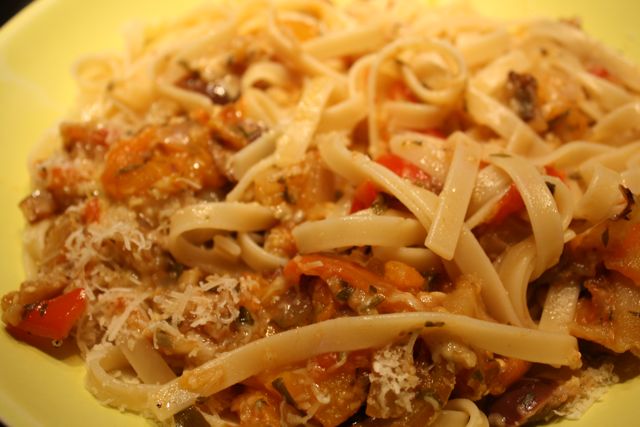
Tonight's tribute to the end of the Nightshades is an absolute favorite sauce for pasta where the eggplant and tomatoes melt in to become a substantive sauce and the brininess of the kalamata olives and anchovies create the necessary pungency to make this a dish that stands out.  Trust me, it's amazing.  Be warned, it's a bit more time consuming than it looks from first glance but so worth the effort.


Recipe: Robust End-of-the-Summer Spaghetti

Ingredients

2 lbs of eggplant, peeled and sliced 1/2” thick
2 Red or yellow bell peppers, halved
1/4 cup olive oil
1 onion, diced
2 garlic cloves, minced
3 anchovies
2-3 lbs of ripe tomatoes, peeled, seeded and chopped
1/3 cup chopped parsley

1/2 cup kalamata olives pitted and chopped
3 Tbs capers (optional)
1 Tbs dried oregano
sea salt and freshly ground pepper
1 lb spaghetti
1 cup grated Parmesean cheese

1. Preheat broiled.  Arrange eggplant on cookie sheet and brush both sides with olive oil.  Broil both sides until soft and slightly browned about 10 minutes per side.  Oil peppers and broil then skin side up, until blistered.  Stack on top and steam for another 15 minutes then peel and dice into small squares.

2. Heat the 1/4 cup olive oil in a Dutch oven.  Saute the onions, peppers, garlic, anchovies and parsley over medium high heat until softened.  Lower the heat and add eggplant, tomatoes, olives, capers, oregano and 1/2 cup water or juice from tomatoes.  Season with S and P and simmer for 30 minutes to let the flavors develop.

3. Cook pasta in a large pot of salted water and drain.  Place in a large bowl with vegetables spooned over the top, showered with cheese and garnished with extra parsley.  Toss before serving.

Adapted from Deborah Madison's Local Flavors

The amazing component here is the eggplant which literally melts and becomes the backbone of the sauce


Monday
Sep052011

Compost is Nice

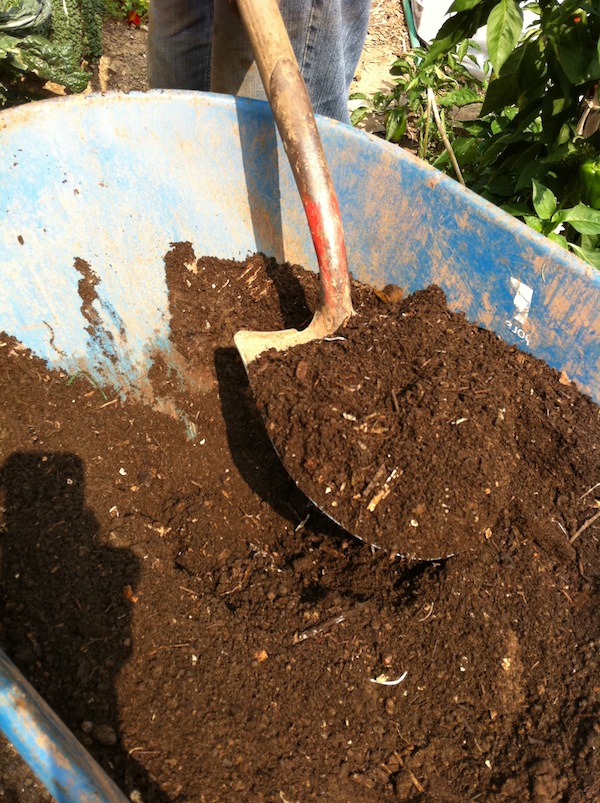
AFTER
For all of us who lug their kitchen scraps outside in the cold and dark....who scour their home looking for brown material (carbon) to match the easier to find green matter...who layer their compost bin precisely as outlined in the textbooks...who turn their pile daily to ensure the proper aerobic bacterial population....good for you. For those of us who simply throw anything we can find into the pile and manage to turn it when the inspiration or energy seems to strike (once a week)....good for us too! For this week HMG has finally produced some really nice compost following the lazy plan.

Compost when finished is a nice sight. Money savings becomes real, a forty pound bag of compost can cost between 5-12 dollars depending on where you get it, plus you have to take time to transport it as well as carry it everywhere.

Using a three bin system, HMG has produced what appears to be about 6-8 forty pound bags worth this season. Adding kitchen scraps, brown vegetable plant branches, occasional leaves (not too many) and a sprinkle of fireplace ash, we have made some pretty respectable looking compost.

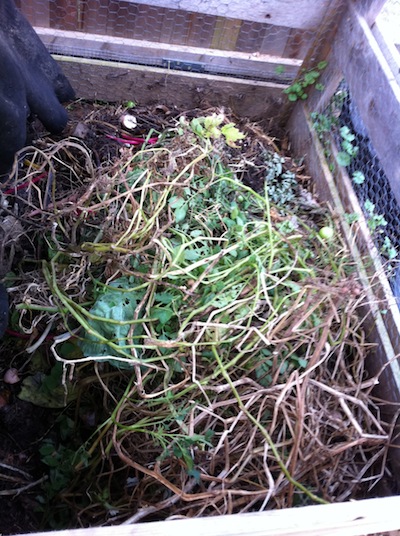
We have found with minimal attention compost is really not difficult to make. The most important aspects are to make sure you get some brown matter in there as well as to periodically turn the pile so as to prevent anaerobic bacteria from kicking in. You will know if this happens as your compost pile will begin to smell like takeout fish that was left in the car overnight. If this happens, simply turning the pile over a few times instantly cures the problem. We have found a small pitchfork the best for doing this.

BEFOREApplying the compost to needy beds is definitely a great feeling. For those of us who do this without the benefit of high heat compost, which is usually done with machine turned piles or piles which have air blown into them, we will see a nice seedling bed soon of every vegetable we have eaten for the past 6 months as those seeds have not died in the pile. Obviously this is not desired, although seeing 200 tomato seedlings in a 10 x 4 foot raised bed is interesting, simply raking them in or pulling the seedlings seems to be the best management option....and is there anything more sustainable then making your own compost? I don’t think so!


Charlie

Sunday
Aug142011

Dual Purpose Squash: Eat Now for Summer, Mature for Winter Storage

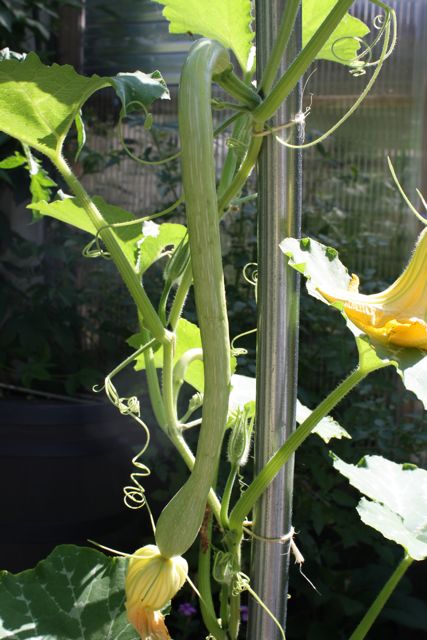
So far each summer squash has weight about 2.5 lbs each. They can be cut in half to be stored in the fridge.Summer squash is one of the fruits we DON'T grow here for various reasons.  It's so ubiquitous during the summer that neighbors and farmer's markets are usually innundated with them.  Plus it's not something we eat much of.  By the end of July, most people who receive a weekly CSA have become so tired of eating summer squash that they are more than ready to move on to the next NEW produce item from the farm; they welcome the thought of never seeing a zucchini for the rest of season.  Ahh, the perils of local and seasonal eating!  We found a great solution to this (at least if you're growing your own food) - the dual purpose squash.  The seedlings were actually grown and given to us by Rissa, one of our interns who happens to be a quite a foodie and a really great chef.  This heirloom squash has a few names:  Zucchino Rampicante,  Zucca D'albenga, Trombocino, Climbing Zucchini or Italian Trombone.  It's a slender 2 foot squash that bulbs out at the end and the mature fruits get even longer.  The Italians use the mature squash for stuffing ravioli, a venture I hope to take part of this season.


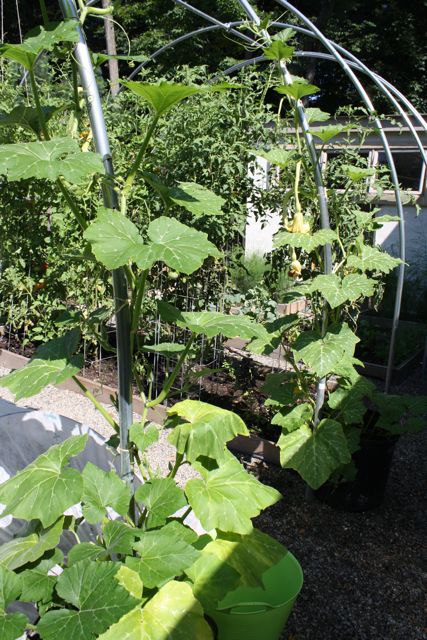
The plant is prolific and needs a lot of space to climb and ramble.  The support needs to be strong enough to accomodate the multiple fruits it produces.  We planted it in two locations: one in a very large pot at the base of the high tunnel skeleton so it would climb up on of the ribs and the other along a 6 foot wooden fence.  They are both doing well and best of all, they are squash vine borer resistant. So for container growers and for regular gardeners this plant works in both situations.

The squashes tendrils could not grab onto the metal frames so they get tied every few feet. The ones on the fence didn't need any help.

Oftentimes when you are growing as much food as we are, you can't find a way to use up all the food.  This plant solves the dilemma: pick from it when you need some summer squash in your recipe or don't pick from it and leave it on the vine to mature and store for winter use.  This is my new favorite fruit to grow and one we wil definitely make available as seedlings next spring at the farmer's market.

For now, check out this intriguing recipe for summer squash with basil, mint and honey!

Watch for winter squash recipes later in the season...hopefully ravioli stuffed with rampicante squash!

Thursday
Jul142011

Intern's Corner: A Small Space Experiment - Planting The Three Sisters

Alison Siggelko, one of our departing interns spent a full spring with us getting things in the ground and helping us immensely at the farmer's market.  We bid her a fond adieu as she heads to California for graduate school in Transpersonal Psychology.  Good luck Alison!  You will be missed!

The Three Sisters growing technique is a Native American way of companion planting with squash, corn and pole beans.  Typically you need at least a 10' x 10' space but we had a lot less to work with.  This is our experiement:


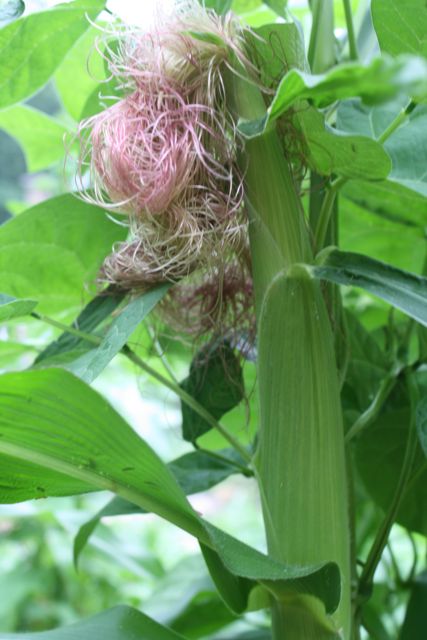
The first ear of corn. Not the cornsilk which you can make a tea from helpful in bladder infectionsA few weeks ago, the interns were asked to plant a Three Sisters garden. With free reign to designate planting mounds and seed spacing, we were initially nervous. Between a combination of how-to planting guides and the ancient myth of Three Sisters, we figured out how to lay four soil mounds and plant our first crop of corn.

    I personally remember the legend of the Three Sisters from elementary school. Corn, beans and squash were the first crops to become domesticated by Mesoamericans and were viewed with great reverence as gifts from the Great Spirit. (The legend of the Three Sisters can be found here.) What was left out of my brief education of the Three Sisters was the sustainable science of this growing method.

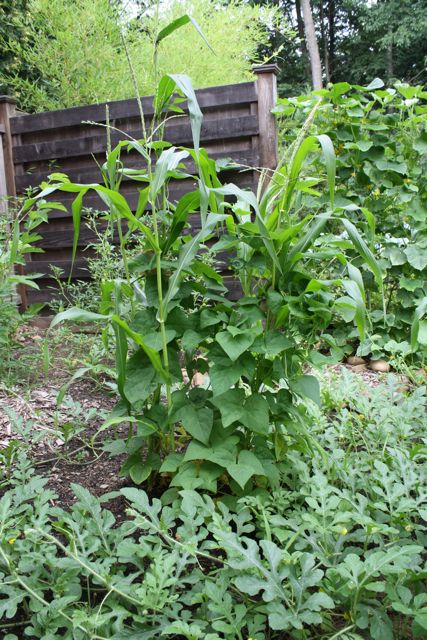
    Once our corn began to sprout, we planted pole beans around each corn plant. The corn stalk will provide a trellis for the beans to climb, and the bean's presence will not only stabilize the tall corn, but will also fix the nitrogen in the soil for the corn of following years. Squash* was planted around the corn/bean mounds providing soil cover and eventually crop residue beneficial for soil structure.
    Nutritionally the combination of the three plants is also well balanced. Corn provides carbs, beans give us protein and a balance to the amino acid found in corn, and squash fruit is chock full of vitamins.
     Of course, ancient Americans didn't understand the chemistry behind this system. In all probability, they discovered Three Sisters because these crops could be successfully cultivated while maintaining balance and health for people. It is a beautiful example of common-sense sustainability and a reminder of the importance of maintaining indigenous traditions.


Corn providing the trellis for the climbing beans and watermelon as groundcover to suppress the weedsThough none of the interns follow Native traditions, I think it’s safe to say we all felt a shimmer of the ceremonial as we built our soil mounds and planted corn seeds. In keeping with indigenous tradition we decided that there should be four mounds and that they should each represent one of the four directions (N,S,E,W). Though we giggled at our unexpected reverence for tradition, I for one felt a surprising satisfaction at combining the practicalities of farming with a respect and admiration of nature.


Alison

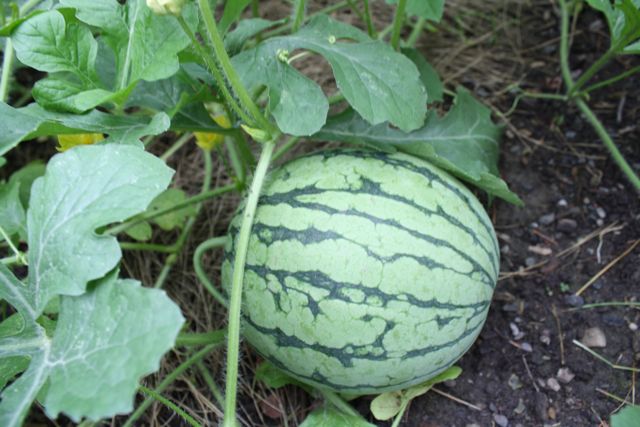
* Instead of squash, petite watermelon were planted since vine borers had been a problem in the previous year in the same location.

 Our first trial at watermelon. Everytime I see this guy it makes me happy.