alliums ameraucana Anthony Bourdain aphids Appleseed Permaculture aquaponics arthritis artichokes Asian Vegetables aussie basil baby chicks baby turnips bearss lime bee keeping beet greens beneficial insects benner tree farm Biochar Bitter Melon blight blooming hill farm boothby blonde cucumber brix broccoli brussels sprouts cabbage cabbage hill farm camp hill farm cancer caraflex celeriac chicken coop chickens children chinese tamale chives cilantro cilantro root coconut cold frames collard greens Compost coriander corn crop rotation cruciferous crucifers cucumber Dan Barber dan kittredge Dave Llewellyn detox dirty dozen dragon fruit Dutch white clover dwarf citrus eggplant Elderberries factory farms farm to table farmer's market farmers markets Fava beans ffarm to table fish oil flea beetle flowers food allergies food combining food miles founding farmers four wind growers Fred Kirschenmann french bulldog G6pd deficiency garlic garlic festival garlic scapes geese Glynwood grass-fed beef Great Outdoors Listening Tour green tomatoes greenhouse growing indoors Hanalei Hemlock Hill Farm heritage turkey heritage USA hudson valley farms hurricane Irene hyssop iced tea infections influenza Insect control isothiocyanates joan gussow jolie lampkin joong kaffir lime kale Kauai kohlrabi korean licorice mint Ladybugs late blight leeks lettuces local food locust tree maine avenue fish market menhaden meyer lemon mycelia mycorrhizal natural fertilizers nectary nightshades No Reservations Nurse cropping nutrient density okra organic Baby food organic christmas tree Organic Pest Control Parsley Paul tappenden peas Permaculture pesticides pesto petite watermelon plant sap pH plymouth barred rock pole beans potatoes preserving food purple basil qunice Radish Greens rainbeau ridge farm raised beds rampicante raw food real food campaign red hook Rockland Farm Alliance ronnybrook farm row covers salt-preserved duck eggs sambucus nigra seed saving seedlings Sheet mulching small space soil analysis soil blocks soil conductivity sorrel Squash Vine Borer star fruit sugar snap peas sustainability sustainable fishing Swiss Chard tabbouleh TEDx Manhattan terracing three sisters tomato sauce tomatoes trellis trovita orange turkana farms Tuttle Farm urban zen volt white clover winter harvest Winter Squash Young Farmers Conference
Indispensable Books and Resources
  • Edible Forest Gardens (2 volume set)
    Edible Forest Gardens (2 volume set)
    by Dave Jacke, Eric Toensmeier
  • The Winter Harvest Handbook: Year Round Vegetable Production Using Deep Organic Techniques and Unheated Greenhouses
    The Winter Harvest Handbook: Year Round Vegetable Production Using Deep Organic Techniques and Unheated Greenhouses
    by Eliot Coleman
  • The Biological Farmer: A Complete Guide to the Sustainable & Profitable Biological System of Farming
    The Biological Farmer: A Complete Guide to the Sustainable & Profitable Biological System of Farming
    by Gary F. Zimmer
  • The Garden Primer: Second Edition
    The Garden Primer: Second Edition
    by Barbara Damrosch
  • 1500 Live LadyBugs - A GOOD BUG! - Lady Bug
    1500 Live LadyBugs - A GOOD BUG! - Lady Bug
    Organic Insect Control
  • Acres U.S.A.
    Acres U.S.A.
    Acres U.S.A.

    The best farming and growing magazine money can buy!

  • Seed Starter Soil Block Maker Makes 4 Medium Blocks
    Seed Starter Soil Block Maker Makes 4 Medium Blocks

    2" Soil Blocker

  • Mini Soil Blocker
    Mini Soil Blocker
  • New York City Farmer & Feast: Harvesting Local Bounty
    New York City Farmer & Feast: Harvesting Local Bounty
    by Emily Brooks
  • What Doctors Eat: Tips, Recipes, and the Ultimate Eating Plan for Lasting Weight Loss and Perfect Health
    What Doctors Eat: Tips, Recipes, and the Ultimate Eating Plan for Lasting Weight Loss and Perfect Health
    by Tasneem Bhatia, Editors of Prevention


THE DAILY BROADFORK

Short journal entries detailing the nuts and bolts of our ventures in growing food at our micro-farm

Entries in Recipes (29)

Thursday
Sep022010

Keeping the Tradition: The Chinese Tamale

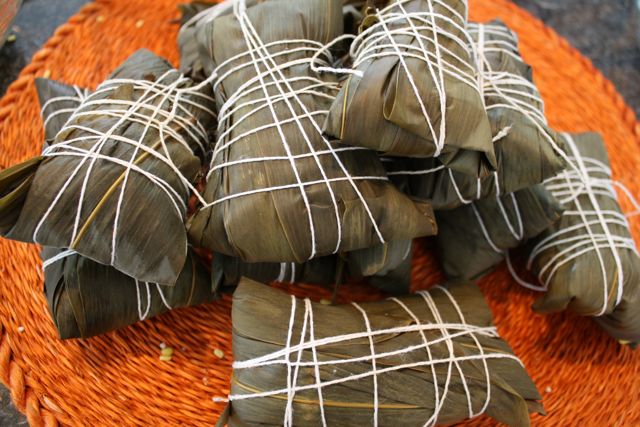
A melting pot of cultures is a great thing.  Growing up, living near, and working in New York City affords the adventurous food eater many opportunities to dine like they live in other countries.  However ethnically diverse an area may be, there are the little things that make home-cooked foods and family traditions still difficult to find and experience.  Sure, I like to taste every ethnic food available to me, but there are still many things that just don’t make it to the menu.  There are two specific food traditions that have been handed down in my Chinese family: “fon saw,” a pork filled dumpling encased in a doughy rice-based flour that is like no other you’ve ever tasted and “Joong” a Chinese version of the tamale.  You can find forms of these in Chinatown but I’ve never purchased one that tastes as good as the recipe that was handed down in my family.

As my aunts are aging, I have decided to make sure that I am as adept at making these delicious treats so that I may continue the tradition for many more years.  I’m going to document the recipe for the Chinese tamale called “Joong” from start to finish.  Like most Chinese things, this food has a fantastical story to it.  In 278 BC, Chinese scholar and poet Qu Yuan, a  favored minister of the people but unpopular with the ruling regime, drowned himself out of despair because of accusations of conspiracy and wrongdoing by his prior sovereign.  He was so beloved by the people that in order for the fish to spare his body, they threw joong into the river so that the fish would eat the tamales and not Qu Yuan.
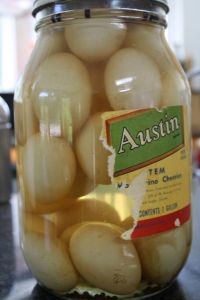
Making joong is an undertaking that starts 30 days before by salt-preserving duck eggs.  Amazingly, even in Manhattan, it was extraordinarily difficult to find duck eggs even at all the upscale foodie markets.  I didn’t want to go to Chinatown for these - who knows, they could have been made with melamine.  Instead, we got a dozen eggs from our friends Dan and Larry at By Pond Farm in NJ and the other dozen from John and Alex at Camp Hill Farm in Pomona, NY.

RECIPE: SALT-PRESERVED DUCK EGGS

2 dozen eggs
2 1/2 cup kosher salt
7 Tbs white wine
3 tsp peppercorns
14 cups water

Using a large vessel with a tight lid, add water and salt and mix until dissolved.  Add the wine, peppercorns and carefully add all the eggs.  Seal the container and let sit in a cool location out of direct light for 30 days.  Drain and eggs are ready to use.  For this recipe, you will want to use only the yolks.  Look how gorgeous they came out.
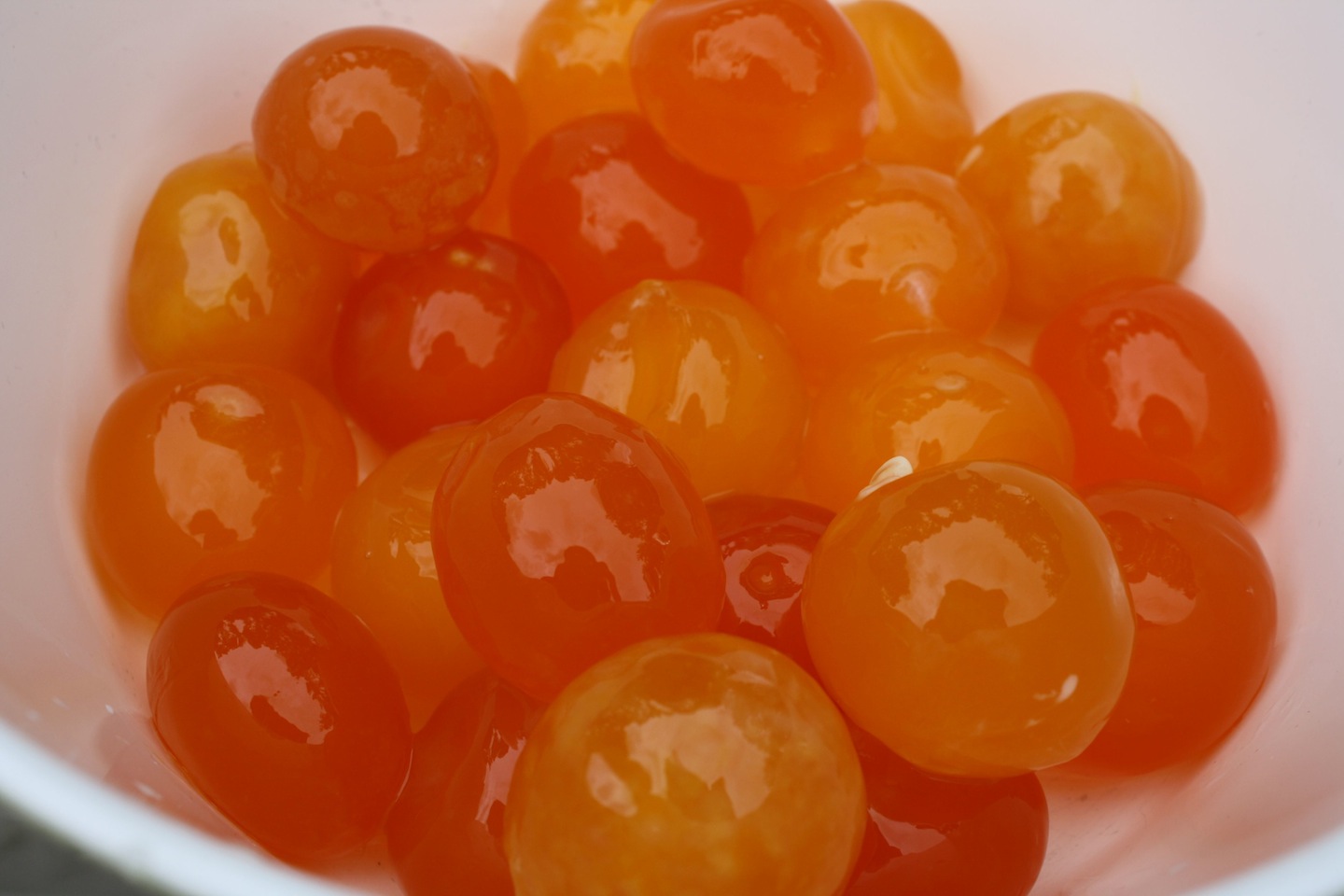
 

Looks like salmon roe. These came out so beautifully.


You want to make this traditional food in large quantities both to share with family or to freeze and enjoy in the coming winter months.  This is not a recipe that is easy and there is definite technique to the wrapping portion but once you get it, it’s easy to make.  The effort is well worth it.  It is a carbohydrate dense meal packet that is satisfying and takes little time to defrost and prepare once it is made.  There is flexibility to this meal and ingredients can be added or taken away based on preference.

RECIPE: JOONG
Makes 50-60

Ingredients

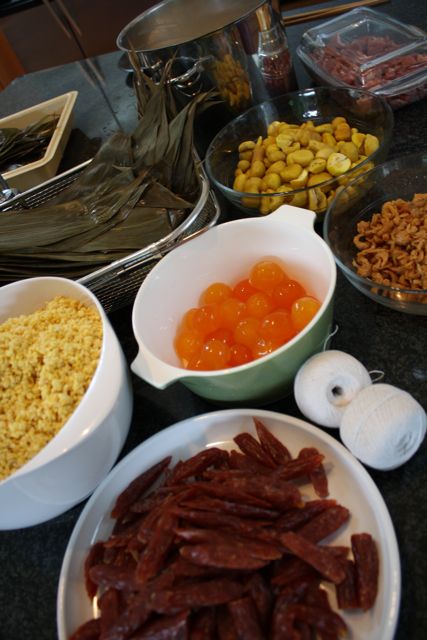
24-36 duck eggs done salt preserved 1 month in advance.  See first recipe.  The day of assembly, separate whites from the yolk and use only the yolk.  They should look like large salmon eggs, congealed.  Cut into quarters or halves depending on your preference.

2 packages of dried bamboo leaves submerged and soaked overnight

5-7 lbs Sweet Rice soaked for 30 minutes and drained.  Add 2TBs sea salt and mix throughly. Set aside.

3-4 lbs split mung beans, soaked for 30 minutes, drained.  Add 1 Tbs sea salt and mix throughly.  Set aside.

1-1.5 lbs Chinese sausage “lap cheong”, steamed, skin removed and cut into 1/2” diagonal strips. Don’t get the lean variety.

3.5 lbs pork shoulder roast (or pork butt) cut into 3/4” pieces and salted overnight.  My pork was from White Thunder Organics.

1 lb Dried Shrimp soaked for 30 minutes and drained

1 lb raw peeled peanutsChinese sausage: "lap cheong" - so good!

2 lbs chestnuts, frozen, steamed and drained

Bakery twine

1 DAY IN ADVANCE:

Soak bamboo leaves in a large basin for at least 24 hours.  You will need a few pots or bowls filled with water to weigh down leaves so they are completely submerged.


ASSEMBLY DIRECTIONS

Soak and steam all necessary ingredients and have them “mise en place” for assembly.
 

2. For assembly see this video

on how to layer, fill, fold, wrap and tie the tamale.  You will need 4 bamboo leaves for each Joong.
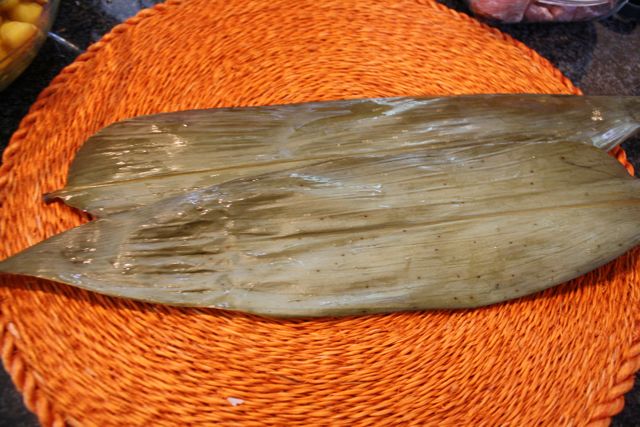
The starting point in ensuring the tamale is securely wrapped. Overlap leaves like above.


Have several large stockpots 3/4 full of water ready.  Bring to boil and place joong in the pots enough to submerge them in the water.  Bring back to boil then reduce to simmer, cover and cook for 4 hours.

4. Remove joong, cut twine, discard leaves and ENJOY!  The rest can be easily frozen for 6+ months.  To defrost, steam for 25-30 minutes.
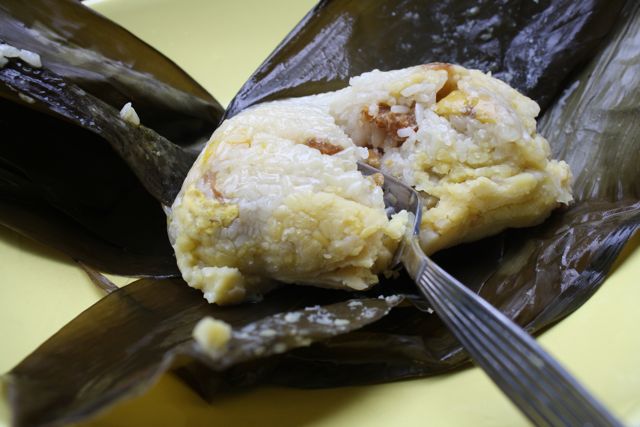
Comfort food Chinese style


This recipe was from my Aunt Betty and it is in memory of my Uncle Wing.



Sunday
Jul182010

Weekly Musings: The Curious Cabbage

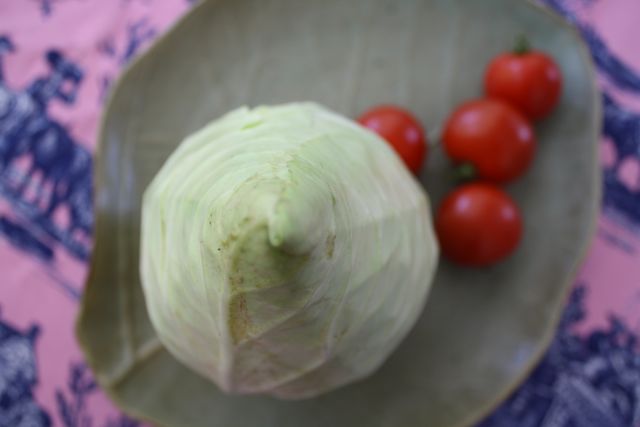
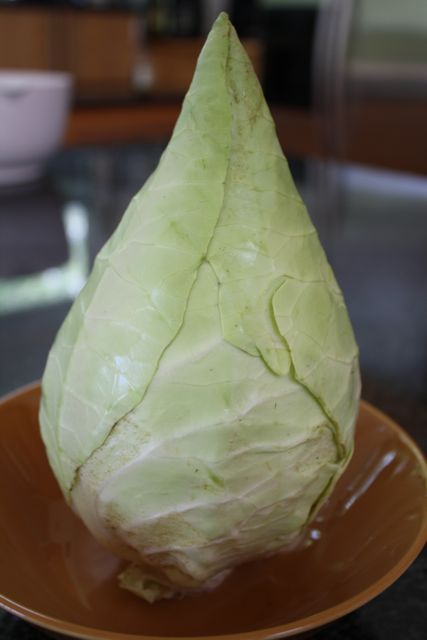
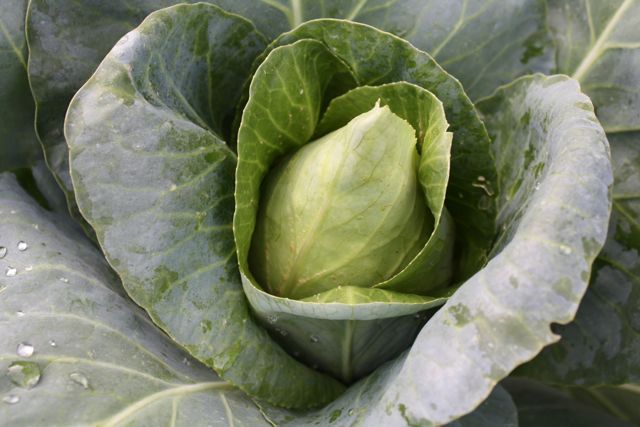
Aerial view of the Caraflex cabbageThis growing season has been unusual.  Lilacs blossomed 2 weeks earlier in the spring and the crepe myrtles that are normally late bloomers in August, are already on the way out in mid July.  As other growers and gardeners in our area have confirmed, the sustained heat wave accompanied by a very buggy season filled with cucumber beetles, squash vine borers, earwigs and slugs, has made for challenging growing conditions.  Heat came on early, big and strong this summer forcing a premature end to peas, sugar snaps, lettuces and mustard greens.  Surprisingly, the cabbage, traditionally a cool-loving crop, has managed to form beautifully in the heat with little fuss.  Well, that is, certain varieties of cabbage are doing well.  Napa or Chinese cabbage was devastated by earwigs that set up hotels deep between the leaves and left us with doily cabbage heads that soon after, bolted from the heat.  We are having success with two varieties of cabbage that we picked because of their compact nature.  Many people do not grow cabbage in their home gardens because of the space requirement.  Makes little sense to build 1 story homes on a city block when you can put up skyscrapers, right?  We grew them anyway to experiment and promote a polyculture farm and chose these two varieties: a mini red cabbage and a funny-looking cone shaped pointed mini cabbage called Caraflex. From a small farm financial standpoint it seems crazy to grow things that are so space intensive.  Flying Tomato Farms in South Dakota estimated that with the space, labor, and materials it takes to harvest 15 cabbages from a 25 foot row in their small farm, they should charge $21 per cabbage head to make up for the gross amount that can be made in the same space growing a lettuce mix.  They opted not to charge that amount and instead, viewed the small cabbage harvest as a treat.

MEDICINAL PROPERTIES

As part of the cruciferous family of vegetables, cabbage produces sulfur and nitrogen containing glucosinolates.  That breaks down to form isothiocyanates which may help to prevent cancer by helping to eliminate carcinogens and enhancing the transcriptions of tumor suppressing proteins in the body.  Many of these compounds contribute to the distinctive bitter and sulphur tasting qualities and are decreased with high heat cooking or microwaving.  Summer heat and drought will increase levels of isothiocyanates increasing the bitterness and the cooler temperatures of fall will make for milder tasting crucifers.  There are particular isothiocyanates that can interfere with thyroid function particularly if there is an iodine deficiency which is becoming more and more common with the increased use of sea salt and the demineralization of our soils.

Interestingly, cabbages with open leaves accumulate more vitamin A and C and carotenoids than heading varieties whose inner leaves never see the light of day.  Caraflex is a heading variety and the benefit of these cabbages is their higher sugar content and better storage life.  Caraflex will keep in the refrigerator 8 weeks after harvest.


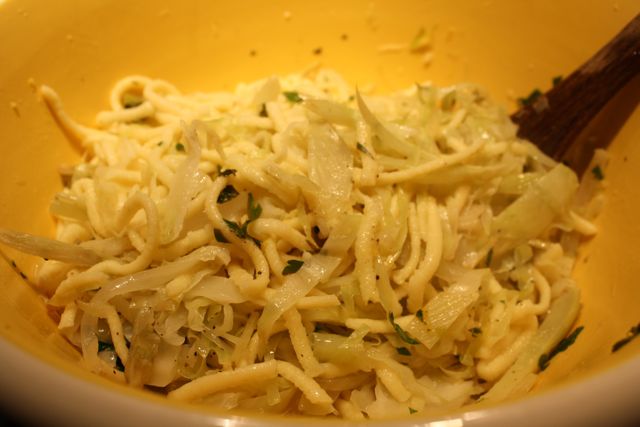
Recipe: Cabbage and Fennel with Parsley Lemon Butter in Egg Noodles

Serves 2 hungry people

1/2 small Caraflex or Savoy cabbage
1 large fennel bulb, cored
1 large leek, white part only
4 Tablespoons of unsalted butter
sea salt and freshly ground pepper
juice and zest of 1 lemon (Meyer lemon if you have)
3 Tablespoons of parsley or chervil
8 oz egg noodles (I used spaetzle)

1. Cut cabbage, fennel and leeks into thin slices, wash but don’t dry.

2. Cook egg noodles in boiling, salted water and drain.

3. Melt 1 tablespoon of butter in a large wide skillet.  Add vegetables and 1/2 tsp of salt.  Cover pan and cook gently for 10 minutes checking halfway to make sure there is enough moisture in the pan so there is steaming and not browning of the vegetables.  Meanwhile, simmer lemon juice in a small pan until slightly reduced.  Remove from heat and whisk in remaining butter.

4. Finely chop lemon zest with the parsley.  Add half in the butter mixture and the other half to the vegetables.

5. Combine the noodles, vegetables and zest-herb mixture in a large bowl and taste for additional salt and pepper.


 Recipe adapted from Deborah Madison's book Local Flavors


Sunday
Jul112010

Remedy for the Heat: Hyssop, Mint and Cucumber Iced Tea

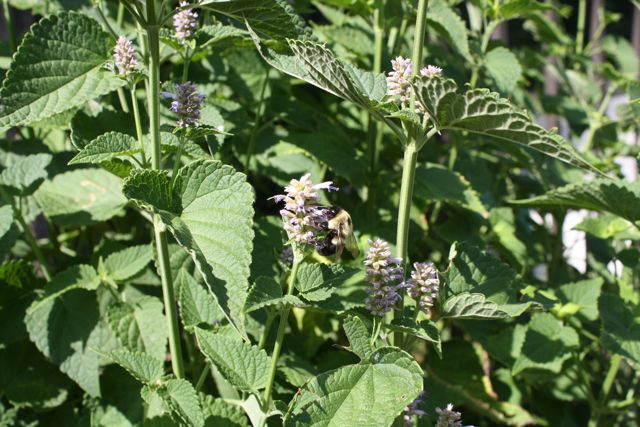
I've seen bees "sleep" on these Giant Hyssop flowersThis season has been the complete antithesis to the 2009 cool and wet summer in the Northeast.  Last year we remember never having to water our crops after May 25th.  This summer has had more days in the 90's than I can remember.  Lawns in the neighborhood are brown and on the 5000 square feet that make up our micro-farm, we've needed to do twice a day watering by hand, which take up to 2.5 hours a day.  Raised-beds have the benefit of warmer soil earlier in the season but will also dry out more quickly.

Keeping cool has been challenging for some of our vegetables and tender young seedlings.  Use of open well-ventilated light-weight row covers are extremely helpful for this but the bigger challenge is how we keep ourselves cool and still do productive work outside.  The answer is not cranking the AC but a refreshing herbal iced tea made with some important and tasty perennial herbs and our prolific cucumbers.

There are many varieties of hyssop (Hyssopus officinalis) most notably Anise Hyssop (Agastache foeniculum) and the type that we grow called Korean Licorice Mint or Giant Hyssop (Agastache Rugosa).  This bushy 4 foot licorice tasting perennial is important in our micro-farm since it's nectar-rich purple flowers are a heavy attractor to bees, butterflies and hummingbirds.  Although the flowers are edible, I leave them to the pollinators.  They also attract the much unwanted white cabbage butterfly that lays its eggs on brassica vegetables.  Cabbage worms are responsible for the destruction of young broccoli and brussels spout seedlings and our organic control has been row covers and manual removal of these critters.

Native Americans have used the hyssop plant leaves as a breath freshener, tea infusion, cough depressant, and like Stevia, a natural sweetener. This plant also self seeds and creates many volunteers that we dig up and transplant to other places.


RECIPE: HYSSOP, MINT AND CUCUMBER ICED TEA

Hyssop leaves

Mint leaves

Filtered Water

Sun

1/4 cucumber, sliced (I used Armenian cucumber)

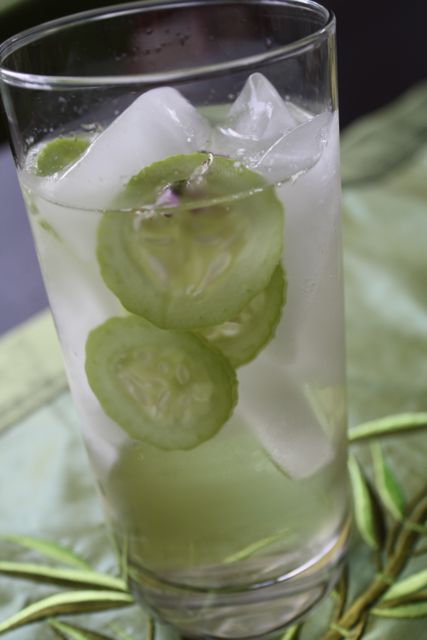
Optional: thai basil flowers for garnish


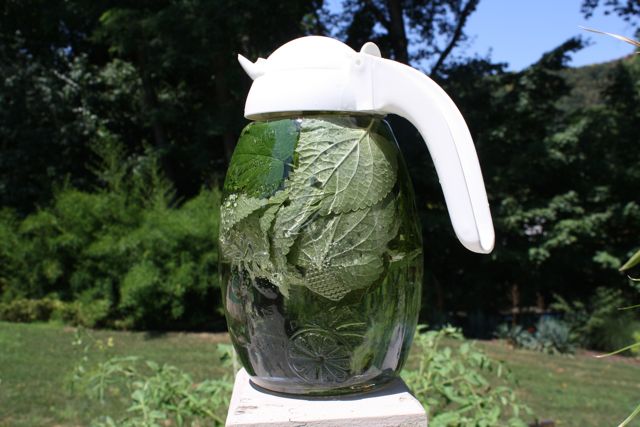
Fill a half gallon jar or container heavily packed with leaves of hyssop and mint.  Fill with filtered water, cover and let brew in the full sun for a day.  Add cucumber slices and chill the contents either by refrigerating or adding ice and enjoy.  Once used, you can refill the water and enjoy again.


Recipe adapted from Ethan and Dyami of Appleseed Permaculture

Friday
Jun112010

The Raw Food Detox: Transitioning Back With A Renewed Perspective On Food

Freshly shucked peas. The work it takes makes you think twice about using that bag of frozen peas as an icepack for your knee.Two weeks ago, in an attempt to detox from a suboptimal diet, we began a strict 7 day raw food cleanse knowing full well that we'd be irritable, hungry, weak and likely symptomatic with headaches, dizziness and weakness.  We knew we'd have to overcome it with persistence and discipline.  And we did it!  What's more surprising is that we are continuing with this detox program but attempting  to make it seasonable, local and real world.  The reason is this: we feel better, lighter, trimmer, our sleep is deeper and eating this way has forced us to enjoy and appreciate fruits and vegetables even beyond the level we reached from growing our food for the last 2 years.  It has also forced a sense mindfulness and presence during eating because it has allowed the clear clean notes of the food to shine through unencumbered by extraneous fillers like sauces, bread and elaborate seasonings.  In a nutshell, this was, for 1 week, a vegan, extremely low carbohydrate (but not carb-free) diet.  After the first week we began adding animal meats back in and some more starches.


The Basic Principles:

1. Eat as much raw foods (cooked no higher than 112 degrees) with the larger meals at dinner.

2. Crucial combination of foods.  This was the most difficult for us.  Though I am very aware of how fermentation can occur with certain combination of food types  (I've had several patients with digestive issues get dramatically better) it is VERY hard not to have protein with carbs.  Eggs without bread?  Meats without potatoes? Chicken without rice? 

The food groups to keep apart for 3-4 hours: a)Animal meats, eggs, raw cheese and fish  b)starches (rice, pasta, bread and cooked legumes)  c) nuts/seeds/dried-fruits   d) Fresh fruits.  Non-starch vegetables may be combined with any of these.

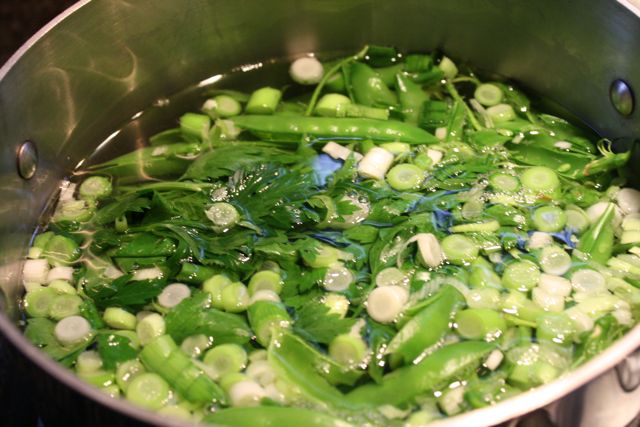
This is based on how quickly food leaves the digestive track and I have seen patients experience less bloating and gas with food combining principles.  The principle is that our digestive tracks were not designed to handle complex meals.  Each food type has very specific enzymes produced by the body to breakdown those substances, for example, lipase is made to breakdown fat, lactose for milk sugars etc.  Food combing is not new.  Carlos Gracie, founder of the Brazilian Gracie Jiujitsu, has championed a food combining diet. He lived until the age of 92 and his diet and teachings still live on.Broth made from leeks, pea pods and parsley


Observations.

This is NOT a local food diet.  In fact, I felt quite guilty about consuming a ton of tropical fruits like bananas, coconuts and grapes from chili, apples from New Zealand.  The best I could do were berries from California although strawberries are just coming into season locally but hard to find organically grown. [FYI: Non-organic California strawberries should have a surgeon general's warning.  In 2006, 280 lbs of pesticides (known carcinogenic ones included) were applied PER acre for a total of 9 million pounds].  What we did use locally from our farm was tons of siberian and tuscan kale, peas, sugar snap peas, yellow and green beans, lettuces, edible flowers, tons of herbs, collard greens, kohlrabi leaves, small fava beans, carrots, mustard greens, garlic scapes and celeriac stems.


As physicians who are already very conscious about nutrition and health, especially me, this took us to the next level and showed us that we really had a great deficit in fruits and vegetables in our diet.  I love fruits but I do not go out of my way to obtain it because of seasonality issues, organic availability and shelf life.  Now, I can't stock enough fruit in my house but better yet, our plans for an edible permaculture forest garden will provide us with paw paws (great local substitute for bananas), strawberries, raspberries, black and blue berries, currants, gooseberries, and sweet cherries. There are also plans to install a mini-orchard with apples and stone fruits next year.


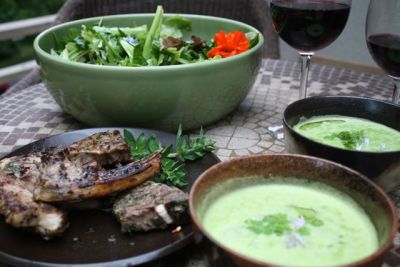
So, we continue our quest for optimal eating and growing with a celebratory LOCAL cooked meal with all HMG produce and lamb chops from McEnroe's farm in Millerton NY.   Tonight's menu:

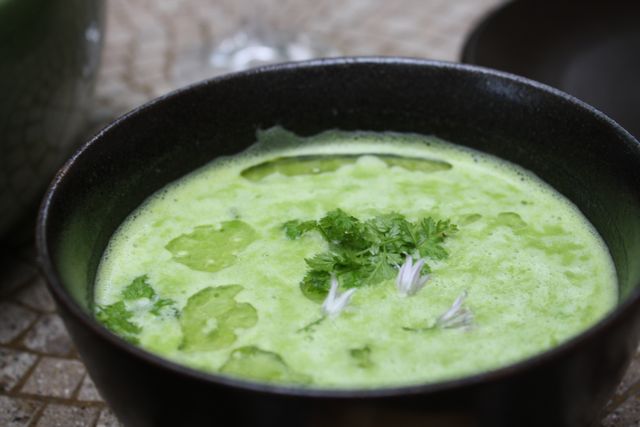
Elixir of Fresh Peas

Herb Salad with purslane, celeriac and parsley leaves, basil and lettuces

Grilled Lamb chops with oregano and lemon


ELIXIR OF FRESH PEAS

1 bunch scallions or 2 small leeks including 2" of the greens, thinly sliced
5 large parsley stems with leaves
sea salt and freshly ground white pepper
1 1/2 lbs of fresh pod peas, shelled and reserve the pods for the stock
1 tsp unsalted butter
1/2 cup thinly sliced onion or young leek
1/2 tsp sugar (optional)
truffle oil, garnish with fresh chervil and chive blossoms


1. Bring 1 qt of water to boil.  As it's heating, add scallions, parsley and 1/2 tsp salt. Add about 3 cups of the pea pods.  Once water boils, lower heat and simmer for 20 minutes then strain.

2. Melt butter in a soup pot and add the sliced young leek/onion.  Cook over medium heat for a minute then add 1/2 cup of the stock.  After 4-5 minutes add the peas, 1/2 tsp salt and optional sugar.  Pour in 2.5 cups of the stock and bring to a boil and simmer 3 minutes

3. Transfer soup to a blender or processor.  Puree.  Serve immediately in small soup bowls, adding a few drops of truffle oil to each bowl, chervil and chive blossoms as garnish

Wine is back. To the Village Vitner of Nyack, we await a celebratory wine tasting you promised! 


 Recipe adaped from Deborah Madison, Local Flavors


Thursday
Apr222010

Weekly Musings: Spring Lettuce - Guest Writer and Nyack Chef Jolie Lampkin

This journal entry, we invited a local Nyack Chef, Jolie Lampkin, who purchases our produce for her clients (and herself!) to write about what is abundant at the moment: spring lettuces. Jolie is singlehandedly able to consume the entire contents of a large bag of our salad greens in a couple days (no small feat!) so we think she's the perfect author for this article on lettuces. A gardener and veggie-lover, her focus is using local and sustainably grown ingredients as inspiration to create meals that are healthy, imaginative, and delicious. She specializes in fresh, seasonal cooking for busy families and intimate multi-course dinner parties for special occasions....
 
 
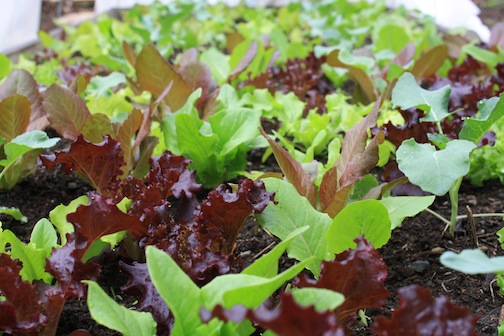
"Spring is here at last, bringing with it the first green leaves, those wild pinks and yellows of daffodils and tulips, that heady scent of lilacs. We venture outside, half-delirious, spring-dizzy, our tender winter arms and legs like white shoots soaking up the sun on those first warm days. It's with this change in the weather that I start to crave salad greens. Goodbye, savory stews of winter, long-simmering pots of soup! Now's the moment for something really fresh-tasting and light.
 
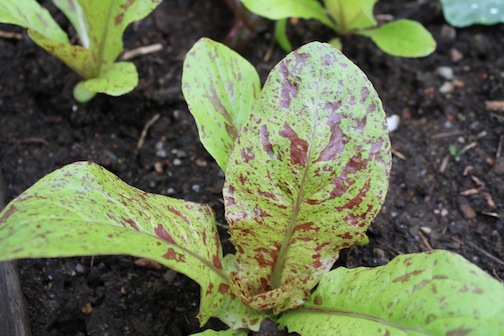
In times not so long ago, our farmer ancestors survived the long winters by storing hardy fall fruits and vegetables in underground root cellars (think cabbages, root vegetables, onions and apples), and by canning the more perishable fruits and vegetables. Beans and grains were dried, to be made into nourishing soups and ground for loaves of bread; meats and cheeses were preserved by salting. Conspicuously absent from the winter diet, however: fresh greens. So it's no wonder that after a winter of eating all that heavy food, people were thrilled by the appearance of the first early spring greens. They'd eat them as salad, as we do now, but also concoct spring "tonics", thought to help purify the body. Tonics might include a bit of whatever was around--dandelion, nettle, watercress, and violet leaves--all valuable sources of many of the vitamins and minerals which would have been lacking in the winter diet. A new favorite lettuce: "Spouted Trout
 
Of course, these days we can eat salad--and pretty much anything we want--year round. Whether we should or not, though, is another thing entirely (is that January tomato anything at all like a July tomato?). But even if you're not eating exclusively seasonal produce, many people do find themselves naturally leaning towards the heartier fare during the fall and winter and lightening up during the spring and summer months. So if, like me, you find yourself scarfing down salad by the bowlful lately, don't be alarmed! This is a good thing--your body is telling you what it needs--and you should listen.
 
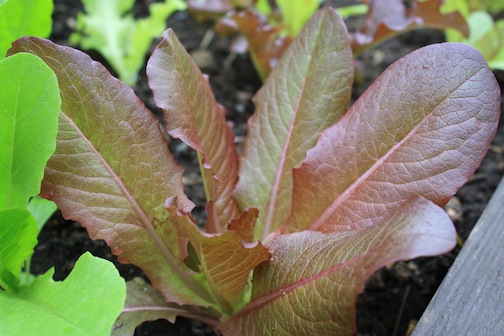
Lucky for us salad-lovers, lettuces are easy to grow, and are actually at their best in cool temperatures. This is because cold weather encourages lettuce to produce more sugars, resulting in much better flavor. Ever tried to grow lettuce in the summer? Not only will it tend to bolt quickly, but it will most likely be more bitter than you'd like. Because of this, it's best to grow it in partial shade during the summer months.
 
Chives, an early spring arrival, have a great assertive flavor. They're deliciously oniony without being overpowering. Also easy to grow, they are perennials and will come back each spring. They like a lot of sun and will even continue to do well into the early summer months, if you continue to cut them back. Their purple blossoms are also lovely in the garden or as a garnish, if you allow them to go to seed.
 
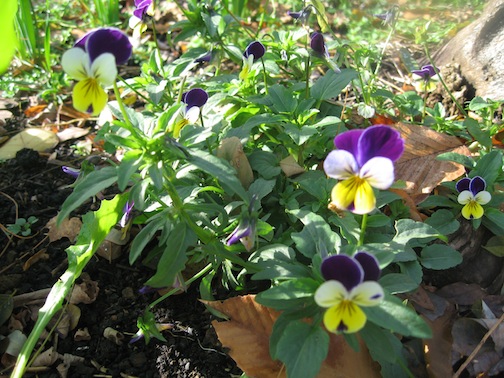
Johnny-jump-ups (violas, a cousin of the violet), our guest star, thrive in cool weather as well, but will do fine into the summer if planted in a partly shady area and consistently pinched back. Their blossoms have a delicate, mild flavor and look beautiful in salads. The leaves and blossoms are also very high in vitamin C. Johnny Jump-Ups
 
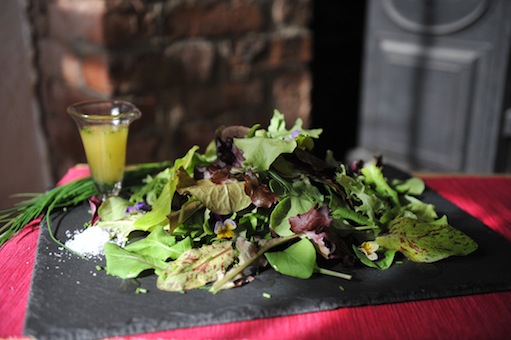
So here's a spin on the idea of spring tonic: a recipe for a simple salad with some of the first flowers of the season, with a dressing that tastes both subtle and intoxicating. It allows the flavors of the lettuces to shine, while truffle oil lends a note of mystery. Arugula's hiding in the mix, with its unexpected peppery bite. Chives give things a little zip. The Johnny-jump-ups are my nod to the violet leaves featured in old-time tonics--and besides, they're just gorgeous".
 
Spring salad with truffle oil vinaigrette

 
1T Champagne vinegar
1/4t fresh lemon juice
3T white truffle oil
2T extra-virgin olive oil
salt (I like fleur de sel) and freshly ground black pepper, to taste
 
Hook Mountain Growers lettuce mix with Johnny-jump-ups, washed and spun till very dry in a salad spinner
1T chopped chives
 
In a small bowl, whisk together the Champagne vinegar and lemon juice. Slowly drizzle in the oil, whisking as you go till the mixture is emulsified. Add the salt and pepper and adjust to taste. Toss a spoonful or two of the vinaigrette around with the greens (you might not need all of it, depending on how much salad you plan to eat--the leaves should be very lightly coated with the vinaigrette), add the chives and serve immediately. If you're a salt fiend like me, you may want to sprinkle a little fleur de sel on top of the dressed salad as well.

 
Jolie Lampkin

For more information on what Jolie offers, you may contact her at jolielampkin@gmail.com

photo by Jolie Lampkin